
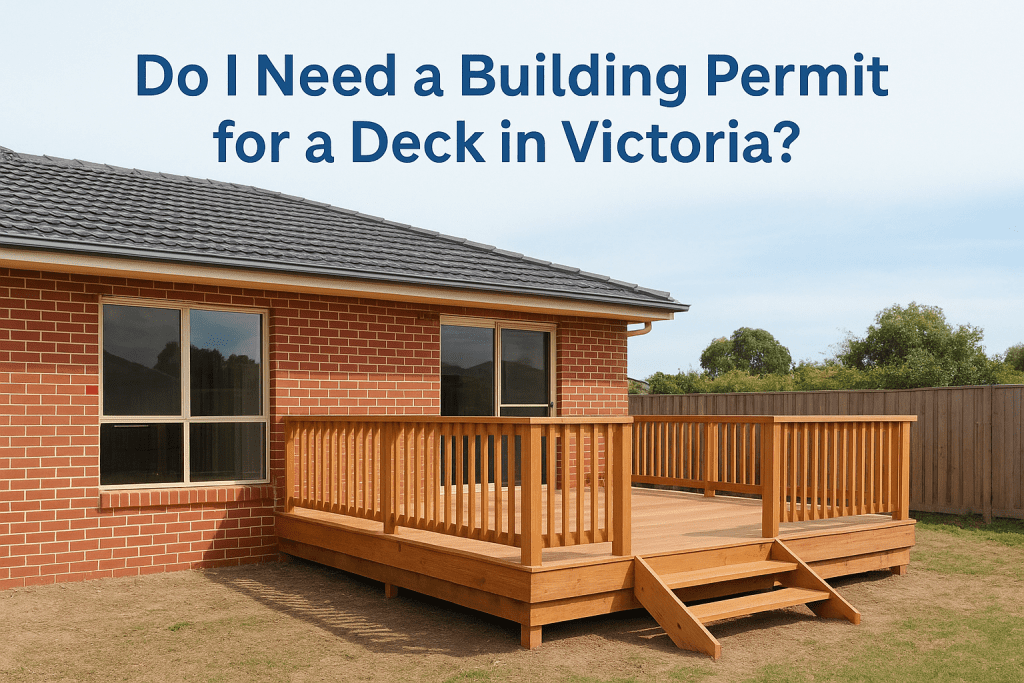
Do I Need a Building Permit for a Deck in Victoria?
If you’re planning to add a deck to your home in Melbourne’s northern or western suburbs, one of the first questions you’ll likely ask is: do I need a building permit for a deck in Victoria? The short answer is, it depends. Factors like the deck’s height, size, and proximity to your property boundaries all determine whether you can build freely or need to go through the permit process. Getting this wrong can lead to fines, forced removal of the structure, or complications when you eventually sell your property. At Transformer Homes, we handle deck builds and home additions across Melbourne, and permit questions come up in nearly every initial conversation we have with homeowners. The rules aren’t always straightforward, and there’s a common mix-up between building permits and planning permits, two separate approvals that serve different purposes and may both apply to your project. This article breaks down exactly when a building permit is required for a deck in Victoria, what exemptions exist under current regulations, and how local council rules might add extra requirements on top of state-level legislation. We’ll also cover the practical steps to get your permit sorted so your project stays compliant from day one. Whether you’re considering a small ground-level entertaining area or a raised deck attached to your home, you’ll have a clear picture of what’s needed before any work begins. Why deck permits matter in Victoria Victoria’s building regulations exist to protect you, your family, and anyone who uses your property. Deck structures, particularly raised or attached ones, carry real structural and safety risks if designed or built without proper oversight. A permit isn’t just bureaucratic red tape; it’s a mechanism that ensures a registered building surveyor reviews your plans against the National Construction Code (NCC) and the Building Regulations 2018, which set minimum standards for structural integrity, materials, balustrade heights, and fall protection. Understanding why these rules exist makes it easier to navigate them without frustration. The legal framework behind deck regulations In Victoria, the Building Act 1993 and the Building Regulations 2018 govern most residential construction work, including decks. These laws operate at the state level, but your local council can layer additional requirements on top through its local planning scheme. When homeowners ask "do I need a building permit for a deck in Victoria?", the full answer comes from reading both layers together. State regulations set the baseline thresholds for when a permit is required, while local planning overlays can add further restrictions based on neighbourhood character, heritage overlays, or environmental sensitivity zones. These regulations also connect to consumer protections under the Domestic Building Contracts Act 1995. For any residential building work valued over $10,000 in Victoria, your builder must hold domestic building insurance (DBI), which only applies to permitted and inspected work. Builds that skip the permit process fall outside this insurance framework entirely, leaving you without cover if defects appear or the builder becomes insolvent. What happens if you skip the permit Building without a required permit puts you in a position that is difficult and expensive to recover from. Your local council holds the authority to issue a building notice or order, which can require you to alter or demolish non-compliant work at your own cost. This is not a remote possibility; councils across Melbourne’s northern and western suburbs actively respond to neighbour complaints and carry out proactive site inspections, particularly in established residential areas with higher development activity. Selling a property with an unpermitted structure is a serious problem. Conveyancers and buyers’ solicitors routinely check council records, and an undisclosed permit issue can stall or collapse a sale at the worst possible time. Retrospective permits, sometimes called "as-built" approvals, are available but come with no guarantees. A building surveyor will assess the completed structure against current standards, and if it falls short, you may need to modify or pull down sections of the deck before any approval can be granted. The cost of fixing non-compliant work after the fact almost always outweighs the time and fees involved in getting the permit right from the start. When you need a building permit for a deck Under Victoria’s Building Regulations 2018, most decks attached to or built near your home will require a building permit. The regulations do allow for some exempt structures, but those exemptions come with strict size and height limits that many residential deck projects don’t meet. If you’re asking "do I need a building permit for a deck in Victoria?", the starting point is understanding the specific thresholds that trigger the permit requirement rather than assuming your project is small enough to qualify for an exemption. If your deck connects directly to your home as a structural element, a building permit is almost always required regardless of its size. The key thresholds under Victoria’s Building Regulations 2018 Schedule 3 of the Building Regulations 2018 sets out the conditions under which a deck or similar structure can be built without a permit. Your project needs to meet all of the following criteria simultaneously to qualify for an exemption. Missing even one condition means you need a permit before any work starts. Height above ground: The finished floor level must sit no more than 800mm above the existing ground level at any point along the structure. Floor area: The total floor area must not exceed 40m², though your local council’s planning overlay may impose tighter limits on top of this. Setbacks: The structure must maintain the required minimum distance from your property boundaries as set by both state regulations and your council’s local planning scheme. Structural connection: Any deck that attaches to your home as a structural element falls outside the standard exemption and requires a permit regardless of height or area. Your project’s compliance also depends on whether footing excavation could affect neighbouring land or existing underground services. A registered building surveyor can assess your specific plans against these thresholds and confirm what approvals you need before any ground is broken. Deck, pergola,
