
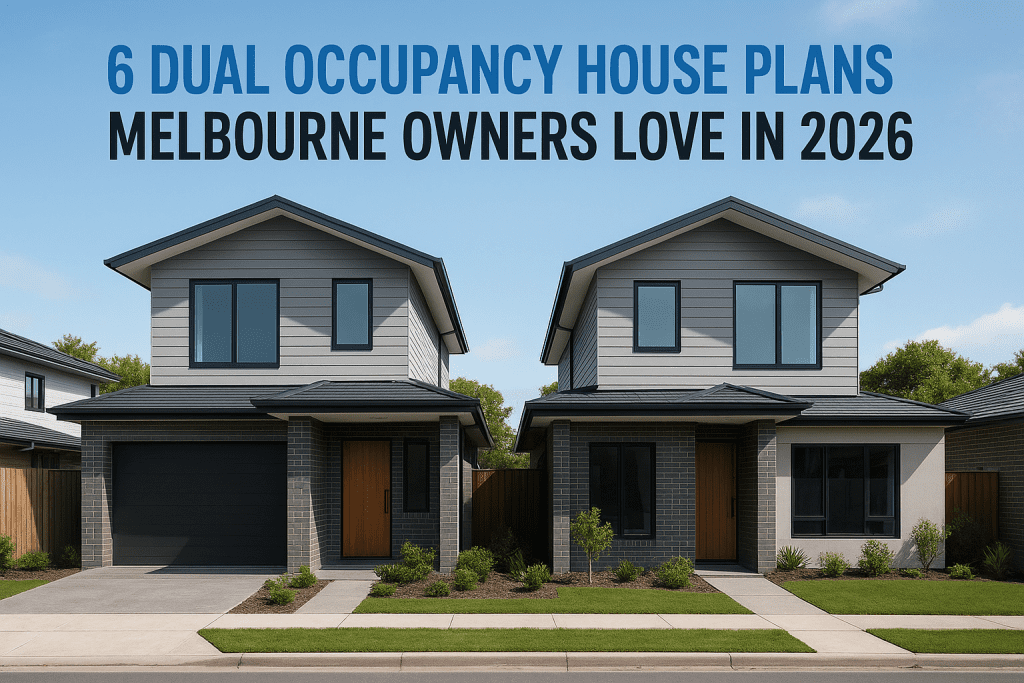
6 Dual Occupancy House Plans Melbourne Owners Love In 2026
Melbourne’s property market keeps pushing homeowners and investors toward smarter ways to use their land. If you’ve been searching for dual occupancy house plans Melbourne builders actually deliver well, you’re not alone, it’s one of the most common enquiries we receive at Transformer Homes. The appeal is straightforward: two dwellings on one block, whether that means rental income, housing for extended family, or a solid return on investment. But not every floor plan suits every block. Orientation, council overlays, and neighbourhood character all shape what you can realistically build in Melbourne’s northern and western suburbs. Choosing the wrong design early on can cost you months in permit delays and thousands in redesign fees. That’s why we’ve pulled together six dual occupancy house plans that Melbourne owners are choosing right now in 2026. Each one reflects layouts and configurations we build regularly, so you’ll know exactly what’s achievable before you speak to a builder. Let’s get into them. 1. Transformer Homes side-by-side duplex plan The side-by-side duplex is the most requested layout in our dual occupancy house plans Melbourne range. Two dwellings sit next to each other on the same block, each with its own street frontage, private open space, and front entry. This structure makes subdivision and separate titling straightforward, which is why so many Melbourne owners choose it first. What this plan looks like Each dwelling in this layout typically carries two or three bedrooms, an open-plan kitchen and living zone, and a single or tandem garage at the front. The shared party wall runs down the centre of the block, keeping both floor plates roughly equal in size. You can mirror the two plans exactly or design them independently to suit different household sizes or target markets. Best block types for this layout in Melbourne Your block needs width more than depth for this plan to work well. Sites measuring at least 15 metres wide give each dwelling a comfortable frontage and room for a garage without forcing a tight, awkward entry sequence. Suburbs like Reservoir, Thomastown, and Preston regularly offer blocks in the 600 to 900 square metre range that suit this configuration. A 15-metre minimum frontage is a common trigger point for side-by-side duplex approval in Melbourne’s northern suburbs, but your local council zone may set a different threshold, so confirm this with a town planner before committing. Design choices that improve privacy and liveability Position bedroom windows away from the shared boundary to reduce overlooking issues with your immediate neighbours. A masonry party wall combined with acoustic insulation batts between the two dwellings gives each household real separation rather than just a nominal divide. Staggering the entry doors slightly also prevents the finished product from looking like a single institutional building. Key Melbourne planning checks to run early Check ResCode compliance before locking in any floor plan, particularly around side setbacks, rear setback, and private open space minimums. Your local council’s planning scheme will also flag any neighbourhood character overlay or heritage overlay that restricts wall heights, materials, or front setback distances. Build cost drivers and budget expectations The party wall and shared services connections are the two biggest cost levers in this design. Splitting a single sewer or stormwater connection internally costs less than running two separate connections to the street. For a standard two-by-three-bedroom side-by-side duplex in Melbourne’s northern suburbs, expect total build costs to sit between $550,000 and $750,000 in 2026, depending on finishes, site conditions, and council requirements. 2. Front and rear dual occupancy plan with shared driveway A front-and-rear layout places two dwellings on a single block, one behind the other, connected by a shared driveway running along one side. This is one of the most versatile dual occupancy house plans Melbourne owners choose when a side-by-side design simply won’t fit the site. What this plan looks like The front dwelling sits at street level with a conventional setback and garden, while the rear unit has its own private courtyard behind it. Both share a single driveway access point from the street, which keeps crossovers to one and simplifies council approval in most zones. When this layout beats a duplex Blocks narrower than 14 metres often rule out a side-by-side configuration altogether. A front-and-rear plan works well on longer, thinner sites of 400 to 600 square metres, which are common in suburbs like Coburg, Northcote, and Reservoir. Confirm with your council whether the rear dwelling needs a minimum private courtyard area, as requirements vary considerably across Melbourne’s northern and western planning schemes. Parking, driveway width, and turning design Your driveway needs a minimum clear width of 3 metres to satisfy most Melbourne councils, along with an adequate turning area near the rear garage. Poor turning design is one of the most frequent reasons permit applications stall, so get a traffic engineer’s input before your plans are finalised. Private open space and overlooking controls to watch The rear dwelling carries the greatest overlooking risk from upper-floor windows on the front building. Position first-floor bedroom and living windows carefully, or use screening and obscured glazing to satisfy ResCode requirements without sacrificing natural light. Build cost drivers and budget expectations Shared driveway construction and separate stormwater drainage for each dwelling are the main cost drivers in this configuration. Budget $500,000 to $700,000 for a typical front-and-rear dual occupancy in Melbourne’s northern suburbs, with site conditions and finish levels shifting the final number. 3. Corner block dual occupancy plan with separate street access Corner blocks give you something most Melbourne sites simply cannot: two separate street frontages from a single title. That extra frontage means each dwelling can have its own driveway, letterbox, and entry, making both homes feel genuinely independent rather than bolted together. What this plan looks like Each dwelling faces a different street, so residents never share an access point. One unit sits at the primary street frontage, while the second faces the side street. Both carry separate garages, private open space, and utility connections, which simplifies future subdivision into
