
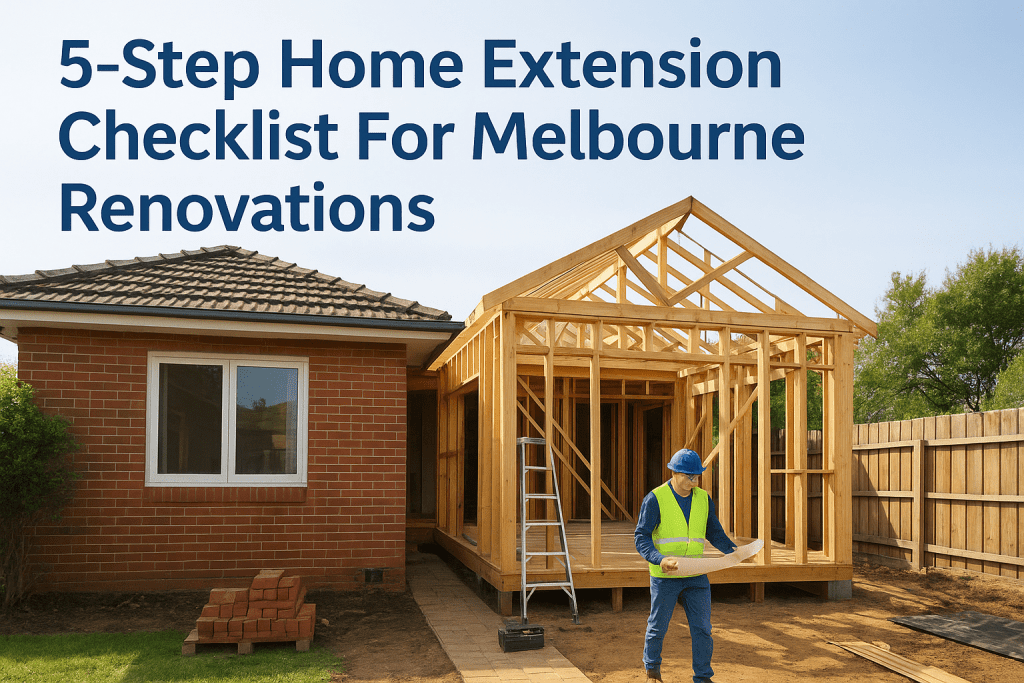
5-Step Home Extension Checklist For Melbourne Renovations
Planning a home extension in Melbourne involves dozens of moving parts, budgets, permits, designs, timelines, and trades all need to line up before a single wall goes up. Miss one step and you’re looking at costly delays, rejected permits, or a finished result that doesn’t match what you had in mind. That’s exactly why having a solid home extension checklist matters. It keeps your project organised and gives you control over every major decision from day one. At Transformer Homes, we’ve guided homeowners across Melbourne’s Northern and Western suburbs through extensions of all sizes, from rear additions in Northcote to full second-storey builds in Preston. We’ve seen what happens when preparation is thorough, and what goes wrong when it isn’t. That hands-on experience is baked into every step of this guide, so you can move forward with clear expectations and fewer surprises. Below, we’ve broken the entire process into five practical steps that cover budgeting, design, council approvals, construction, and final handover. Whether you’re extending your family home or adding a new living zone, this checklist will help you stay on track and avoid the mistakes that catch most Melbourne homeowners off guard. 1. Engage the right Melbourne extension team The first item on your home extension checklist is assembling the right team. Who you hire shapes every decision that follows, including your design options, your permit pathway, and your final build cost. Decide if you need an architect, designer, or design and build An architect suits complex or heritage-sensitive projects where custom design is critical. A design-and-build firm like Transformer Homes handles both the drawings and the construction under one contract, which simplifies communication and reduces the risk of scope gaps. Confirm builder registration, insurance, and extension experience Always verify that your builder holds a current registration with the Victorian Building Authority (VBA) and carries domestic building insurance. Ask specifically about their extension track record in Melbourne’s Northern and Western suburbs, where site conditions and council requirements vary considerably. Checking VBA registration takes two minutes at vba.vic.gov.au and protects you from unlicensed work that can void your insurance. Bring in the right consultants early Depending on your site, you may need a structural engineer, geotechnical assessor, or heritage consultant before design can progress. Bringing these specialists in early prevents costly redesigns and keeps your programme moving without interruption. Define your scope before anyone prices the job Write down what rooms you want, the approximate size, and your preferred finishes before approaching builders for quotes. A clear brief means every quote prices the same job, which makes comparisons accurate and meaningful. Fast checks for Melbourne sites and existing homes Pull your Certificate of Title to check for easements and overlays before your first design meeting. Your local council’s planning portal will show zoning rules and setback requirements that directly affect what you can build on your block. 2. Set a realistic budget and finance plan The second step on your home extension checklist is establishing a realistic budget before design begins. A clear financial plan prevents scope creep and keeps your project on solid ground from the start. Build a budget that matches your goals and site constraints Melbourne extensions generally cost $2,500 to $4,500 per square metre, depending on complexity and finishes. Site conditions such as slope or poor soil can add significant costs before construction even begins. Include soft costs that people forget Permits, engineering reports, and design fees can add 10 to 15 percent to your total project cost. Always budget for surveying, energy assessments, and council contributions to get an accurate overall figure. Leaving soft costs out creates a false sense of affordability before a single trade steps on site. Set a contingency you can actually access Reserve at least 10 percent of your total budget as a contingency. That money must be liquid and accessible, not locked in equity you cannot draw on quickly. Plan cash flow and progress payments Victorian contracts use staged progress payments tied to construction milestones. Confirm each payment trigger upfront so your cash flow aligns with the build schedule. Avoid overcapitalising in your suburb Research recent comparable sales before committing to a large extension. Spending beyond the suburb price ceiling risks not recovering your investment when you sell. 3. Secure permits and approvals in Victoria The third step on your home extension checklist is navigating Victoria’s permit system without delays or rejected applications. Work out if you need a planning permit, building permit, or both Most Melbourne extensions require a building permit, and many also need a planning permit depending on your zone, overlay, or street setback. Confirm both requirements with your local council before you finalise any drawings. Check overlays, easements, and title restrictions early Your Certificate of Title and your council’s planning portal reveal easements, heritage overlays, and neighbourhood character controls that directly limit what you can build and where. Discovering a heritage overlay after your design is complete means redoing drawings at your own cost, so check your title on day one. Prepare drawings and reports councils commonly expect Planning applications typically require architectural drawings with site analysis, shadow diagrams, and neighbourhood character statements. Building permit submissions also need a structural engineer’s report and an energy assessment. Handle neighbours and boundary conditions the right way Boundary setbacks and overlooking provisions under ResCode govern what you can build near a shared fence. Notifying adjoining neighbours before you lodge reduces the risk of formal objections slowing your approval. Know what can delay approvals and how to reduce risk Incomplete applications are the leading cause of permit delays in Victoria. Submit a complete, well-prepared package the first time and follow up with your council regularly to keep your application progressing. 4. Lock in your contract and get the site ready The fourth step on your home extension checklist is signing a solid contract and preparing your property before construction starts. Compare quotes on a like-for-like basis Review every quote against the same scope and specifications. A lower price often
