
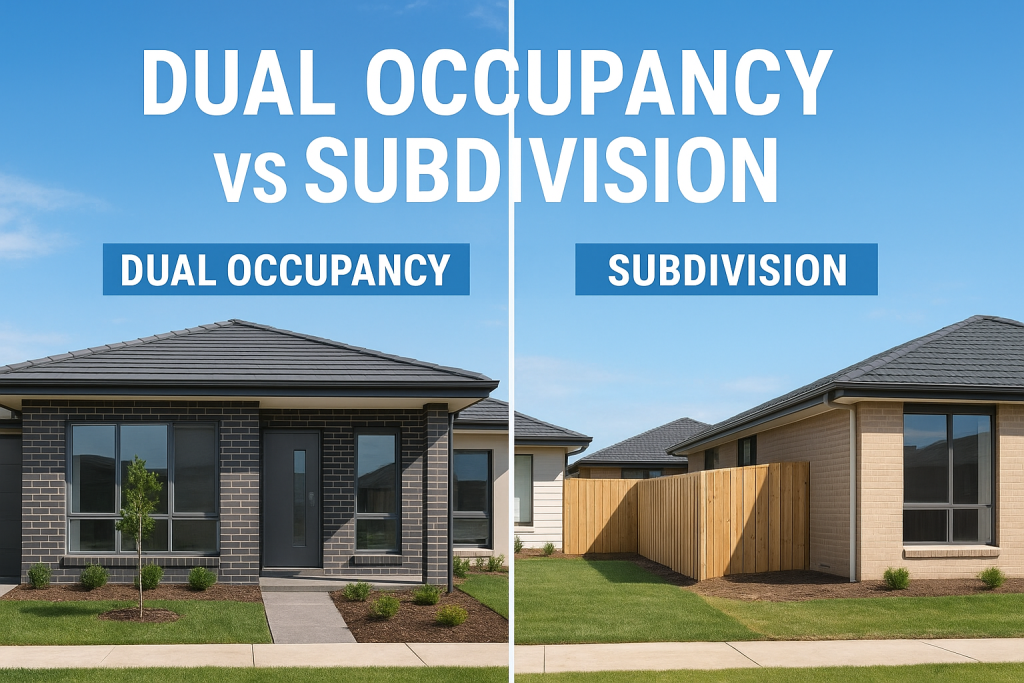
Dual Occupancy vs Subdivision: Key Differences in Victoria
If you own a block in Melbourne’s northern or western suburbs, you’ve probably weighed up dual occupancy vs subdivision, two strategies that sound similar but work very differently under Victorian planning rules. One lets you build two dwellings on a single title. The other splits your land into separate legal titles that can each be sold independently. The path you choose affects everything from council approvals to your long-term return on investment. The confusion between these two options is common, and understandable. Both involve putting more than one home on a property, yet the planning requirements, costs, and ownership structures differ significantly. Getting them mixed up can mean delays, unexpected expenses, or a strategy that doesn’t actually match your goals. Understanding the technical and legal distinctions upfront saves you from costly backtracking later. At Transformer Homes, we build dual occupancy and townhouse projects across Melbourne, so we see these decisions play out on real sites every week. This article breaks down how each option works in Victoria, what the key differences are, and which approach is likely the better fit for your property and budget. Why the difference matters in Victoria Victoria has its own planning framework under the Planning and Environment Act 1987, and the rules here don’t always match what you might read about New South Wales or Queensland. Whether you pursue dual occupancy or subdivision determines who owns what, when they can sell, and how much the whole project costs you from start to finish. Title ownership changes everything With a dual occupancy, both dwellings sit on the same land title. You can rent out both, live in one and rent the other, or sell them together as a package. But you cannot sell each dwelling separately unless you also subdivide afterward, which adds another layer of approvals and cost. In Victoria, the choice between dual occupancy vs subdivision shapes your entire investment strategy well before a slab is poured. Subdividing first, on the other hand, gives each dwelling its own Certificate of Title from the moment construction is complete. That means you can sell one lot independently and recover capital earlier, which suits investors who need to manage cash flow across multiple projects rather than wait for a single combined sale. Victorian planning zones set the rules Your local council’s planning scheme and the residential zone your block sits in dictate what you can and cannot do. In Victoria, zones like the General Residential Zone (GRZ) and the Neighbourhood Residential Zone (NRZ) carry different minimum lot sizes, setback rules, and subdivision requirements. A block in Preston or Thornbury that comfortably fits a dual occupancy build may not meet the minimum lot size needed for a two-lot subdivision. Knowing your zone before you commit to a design means you avoid spending money on plans the council will reject at the permit stage. Dual occupancy vs subdivision at a glance The simplest way to separate dual occupancy vs subdivision is by asking one question: do you want one title or two? A dual occupancy means two homes on a single land title. A subdivision creates separate legal titles for each lot, each independently sellable. The title structure you choose at the start determines your exit options for years to come. What each option gives you Here is a quick comparison of how the two strategies differ across the details that matter most on a Melbourne block. Feature Dual Occupancy Subdivision Number of titles One Two (or more) Sell dwellings separately No (without further subdivision) Yes Separate rates notices No Yes Planning process Development permit Development permit + plan of subdivision Best suited for Rental income or shared ownership Independent sales and capital recovery Choosing dual occupancy works well if you plan to hold both dwellings long-term and collect rent. Subdivision gives you the flexibility to sell one lot, recover capital, and fund your next project without waiting on a combined sale to settle. How approvals and rules work in Victoria Both options require a planning permit from your local council, but the approval process for dual occupancy vs subdivision involves different steps and different agencies. Understanding what each process demands upfront stops you from underestimating your timeline. Getting a dual occupancy permit A dual occupancy development needs a planning permit that covers design, setbacks, and overlooking rules under your council’s planning scheme. Once the permit is issued and construction is complete, you apply for an occupancy certificate through your building surveyor. No further title work is required unless you later decide to subdivide. Subdividing your land in Victoria Subdivision in Victoria involves an additional layer of approvals. After your planning permit is granted, your surveyor prepares a plan of subdivision, which gets certified and then lodged with Land Use Victoria for title registration. Each stage requires separate fees and sign-offs, including from utilities like water and gas authorities. The subdivision process in Victoria typically adds several months to your overall project timeline compared to a straightforward dual occupancy build. Your block’s zoning and overlay conditions determine which path is even available to you, so checking your council’s planning scheme early is essential before committing to either strategy. Costs, timelines, and money outcomes to expect Understanding the financial commitment and realistic timeframe for each option helps you plan without surprises. The total cost difference between dual occupancy vs subdivision is not just about construction; it also includes planning fees, surveyor costs, and title registration charges that subdivision requires and dual occupancy does not. What you’ll spend on each path A dual occupancy build in Melbourne’s northern and western suburbs typically costs between $550,000 and $800,000+, depending on size and inclusions. Subdivision adds a surveyor’s plan of subdivision, Land Use Victoria registration, and utility authority approvals on top of that, which can push your total spend up by $15,000 to $30,000. Subdivision costs more upfront, but selling each lot independently can return capital far sooner than holding a dual occupancy as a long-term rental. How long each process takes
