
You’ve committed to the renovation. The plans are drawn, the builder is locked in, and then it hits you, you still need to live here while all of this happens. Figuring out how to renovate a house while living in it is one of those challenges that sounds manageable in theory but gets real the moment your kitchen disappears behind plastic sheeting.
Dust on your toothbrush, detours through your own hallway, and cooking dinner on a portable stove in the garage, it’s not glamorous. But with some planning and clear communication with your builder, it doesn’t have to be miserable either. At Transformer Homes, we’ve guided hundreds of Melbourne homeowners through renovations and extensions without them needing to move out or lose their minds.
Below, we’re sharing six practical tips drawn from real project experience, the kind of advice that helps you stay comfortable, stay safe, and actually enjoy watching your home transform rather than dreading every dusty morning.
1. Plan the build with a builder-led scope and timeline
Before a single wall comes down, you need a clear scope of works and a realistic timeline that accounts for you still living in the house. This is not just about knowing what gets built when. It is about knowing which rooms become inaccessible, for how long, and what you need to have in place before that happens.
What to do
Sit down with your builder before construction starts and map out the full sequence of works in writing. Ask them to flag which areas of the home will be active build zones at each stage, and when utilities like water, gas, or power will be temporarily interrupted. A good builder will structure the timeline around your living arrangements, scheduling the most disruptive work in short, concentrated blocks rather than letting it stretch across weeks.
Use this checklist when reviewing your build plan:
- List which rooms will be closed off at each stage and for how long
- Confirm exact dates for any utility interruptions
- Agree on site access hours and start times with your builder upfront
- Lock in a weekly check-in to review progress and flag issues early
Why it matters
When you are working out how to renovate a house while living in it, the timeline is your single most important planning tool. Without a sequenced plan, trades can overlap in ways that make your living space completely unworkable. A builder-led scope gives you predictability, which makes it possible to plan around the disruption rather than simply react to it each morning.
A written scope and stage-by-stage timeline is the difference between a manageable renovation and months of daily surprises.
Costs and trade-offs
A detailed pre-build planning session may add a small amount of time upfront, but it consistently saves money and stress later. Scope changes mid-build are one of the biggest drivers of budget blowouts and schedule delays, and most are avoidable with thorough preparation before works begin. Some builders charge for detailed pre-construction documentation, so ask about this early and treat it as a worthwhile investment rather than an added cost.
2. Create a clean, lockable living zone
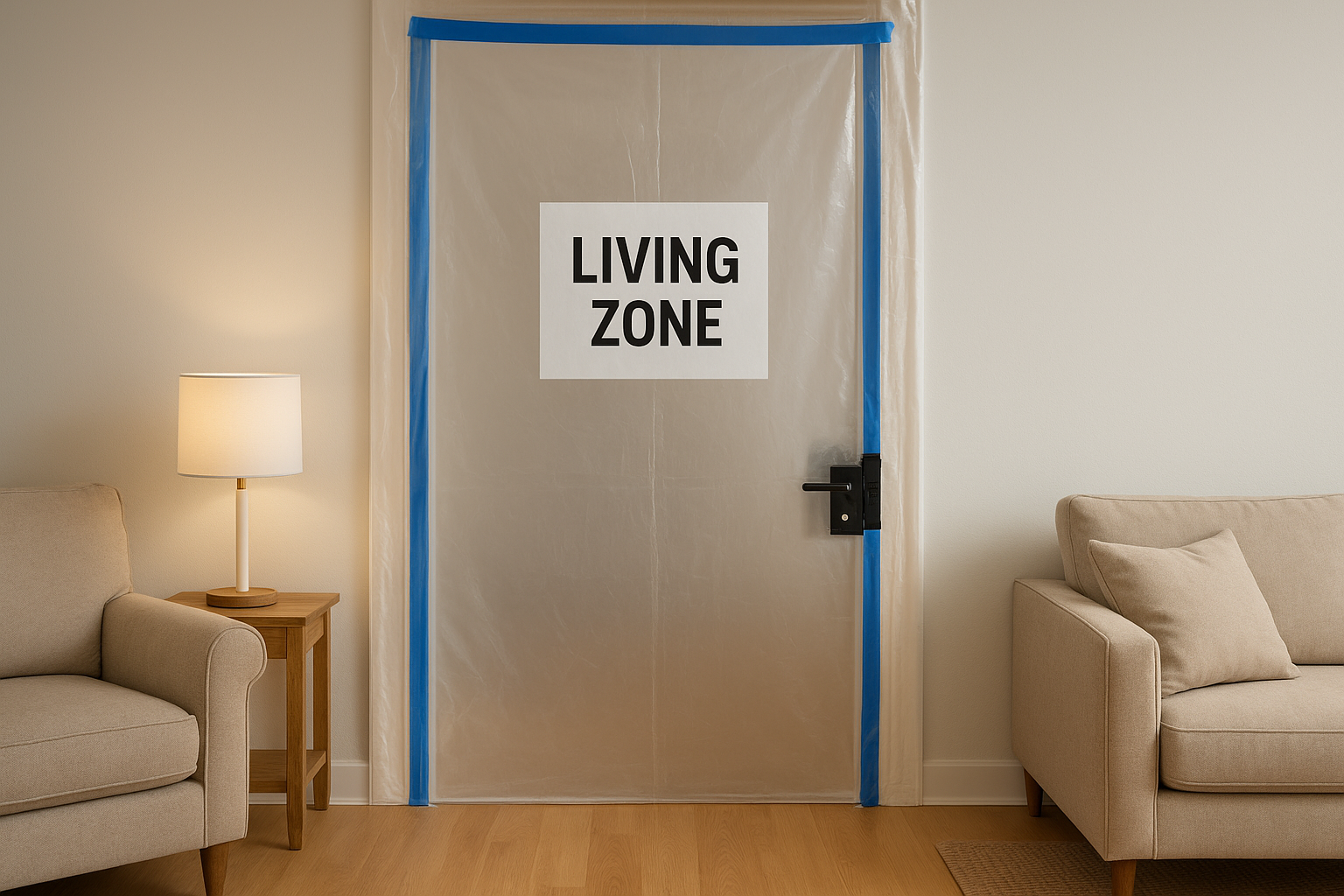
One of the smartest moves you can make when figuring out how to renovate a house while living in it is to designate a clean zone before the first tradie arrives. Pick two or three rooms that stay completely off-limits to construction and treat them as your private retreat for the entire duration of the build.
What to do
Work with your builder to physically separate your living zone from the active work area using temporary hoarding boards or heavy-duty zip-seal dust barriers. Add a keyed lock or latch to the entry point so trades cannot accidentally wander through. Keep your bedroom, a bathroom, and a basic living area on the same side of the barrier so you are not crossing the work zone multiple times a day.
- Label the living zone entry clearly for all trades on day one
- Remove valuables and store them inside the locked zone before works begin
- Confirm the zone boundaries with your builder in writing before construction starts
Why it matters
A dedicated living zone gives you a reliable retreat from the noise and dust, and it reduces your daily stress considerably. Without a clear boundary, the build gradually creeps into every corner of the house.
The cleaner and more defined your living zone, the more sustainable the renovation becomes across weeks or months.
You also protect your personal belongings and surfaces from incidental damage, which is a common source of disputes between homeowners and builders.
Costs and trade-offs
Temporary hoarding and dust barriers cost a few hundred dollars in materials but save significant cleaning time and reduce the risk of damage to your belongings. The main trade-off is that your usable living space shrinks, so declutter and move non-essentials into storage before works begin to make the zone as functional as possible.
3. Set up temporary kitchen and bathroom basics
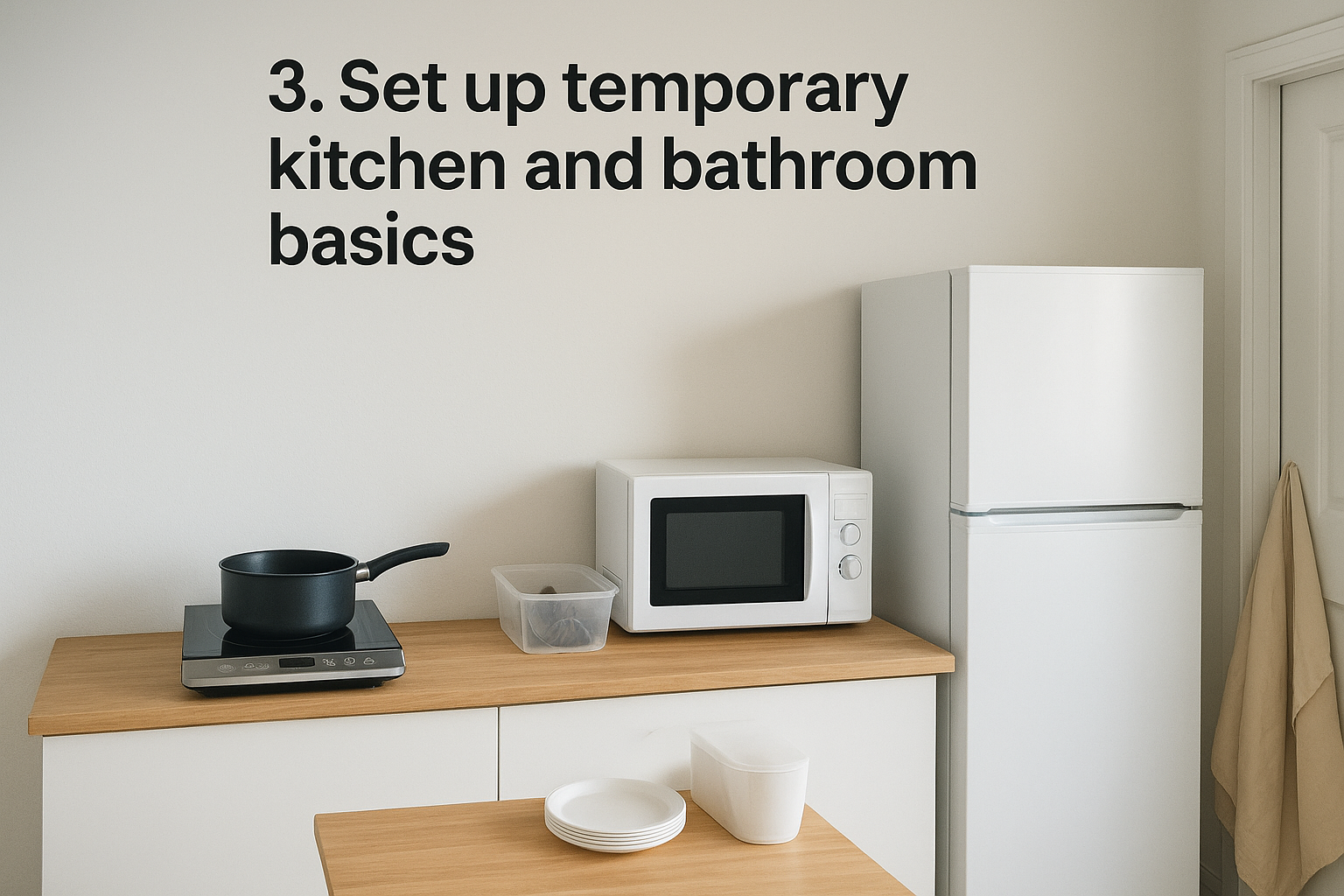
Losing your kitchen or bathroom mid-renovation is one of the biggest practical hurdles when working out how to renovate a house while living in it. Setting up a simple temporary version of each keeps your household running without requiring you to eat out every night or shower at the gym.
What to do
Focus on the bare minimum you need to function comfortably. For the kitchen, a portable induction cooktop, a microwave, and a bar fridge placed in the laundry or garage will cover most meals. Stock a plastic tub for washing dishes and connect a short hose to the laundry sink if your main sink is offline.
- Set up a portable cooktop and microwave in a dry, ventilated space
- Position a bar fridge within easy reach of your temporary prep area
- Keep a basic supply of paper plates and disposable cups to reduce washing up
- Confirm with your builder the exact dates when bathroom and kitchen access ends
Why it matters
Without a functional bathroom, daily life breaks down fast. Even a basic temporary setup reduces the mental load of the renovation considerably and keeps your household on a normal routine.
The less disruption to your daily basics, the more energy you have to focus on the decisions that actually shape the finished home.
Costs and trade-offs
A temporary kitchen setup costs between $200 and $600 depending on what you already own. The trade-off is limited cooking capacity, so plan simpler meals and batch cook on days when your builder confirms lighter activity on site.
4. Control dust, noise, and access routes
Dust and noise are the two things that wear people down fastest when figuring out how to renovate a house while living in it. Getting ahead of both issues before they become a daily problem makes the whole experience far more bearable.
What to do
Talk to your builder about setting up dedicated access routes for trades so tools, materials, and workers move through one clear path rather than tracking across your living space. Ask about negative air pressure systems or industrial dust extractors for high-dust tasks like sanding or cutting. At a minimum, seal internal doorways with zipper dust barriers and place heavy-duty floor protection along all trade access paths.
- Agree on a single entry and exit route for tradies before works begin
- Use zipper dust barriers on all doorways connecting the build zone to your living area
- Ask your builder to schedule high-noise tasks (such as demolition and concrete cutting) during the middle of the day rather than early morning
- Place adhesive floor protection film along all active corridors
Why it matters
Uncontrolled dust spreads through an entire house within hours, coating surfaces and getting into HVAC systems. Managing access routes also reduces the risk of tools or debris ending up in your living zone.
A clear trade access route keeps the build contained and your living area genuinely liveable.
Costs and trade-offs
Floor protection film and dust barriers typically cost between $100 and $300 for an average renovation. The main trade-off is that restricting access routes can slow trade movement slightly, so factor this into your timeline discussion with your builder early.
5. Run a safety plan for kids, pets, and trades
One of the most overlooked parts of working out how to renovate a house while living in it is managing the safety of everyone moving through your home daily, including children, pets, and the trades themselves. A basic written safety plan prevents accidents and removes a major source of ongoing stress.
What to do
Talk to your builder about establishing clear site rules before works begin. Ask them to brief all trades on where children and pets are housed and to keep hazardous materials, power tools, and open cavities properly secured or fenced off at the end of each working day.
- Keep young children and pets out of the active build zone at all times
- Ask your builder to confirm the site is secured and tools are stored before trades leave each afternoon
- Use baby gates or temporary fencing to block all access points between your living zone and the build area
- Store chemicals, adhesives, and loose materials in a locked cabinet away from children and animals
Why it matters
Construction sites inside homes carry genuine risks, from loose nails on the floor to open wall cavities and unsecured power leads. A safety plan makes responsibilities clear for every person on site, which protects your family and reduces liability all around.
When trades know your household situation upfront, they take far more care around the areas that matter.
Costs and trade-offs
Temporary fencing and baby gates cost between $50 and $200 and are straightforward to install. The main trade-off is that enforcing these boundaries requires consistent follow-through from both you and your builder every single day throughout the build.
6. Protect your budget, schedule, and sanity
When you’re working out how to renovate a house while living in it, the emotional and financial toll can sneak up on you if you don’t actively manage both. Budget creep and schedule blowouts are two of the most common reasons homeowners hit a wall midway through a project, and both are largely preventable with a few simple habits.
What to do
Set a contingency budget of 10 to 15 percent on top of your quoted build cost before works begin, and treat it as a non-negotiable buffer rather than a bonus spending pool. Keep a simple running log of every variation, change, or additional cost as it comes up so nothing surprises you at the final invoice.
- Track all variations in writing and get builder sign-off before any extra works proceed
- Review your budget log weekly alongside your builder check-in
- Set firm decision deadlines for finishes and fittings to avoid delays caused by late selections
Why it matters
Scope changes and late decisions are the two biggest drivers of cost and time overruns on residential builds. Staying on top of both means you finish the project closer to your original budget and timeline, which protects your wellbeing just as much as it protects your wallet.
A weekly budget and progress check-in with your builder keeps you informed rather than anxious.
Costs and trade-offs
The main cost here is time, specifically the discipline to review numbers and decisions regularly throughout the build. The trade-off is that tighter financial oversight can occasionally create friction if not handled respectfully, so frame every conversation around shared goals rather than disputes.
Next steps
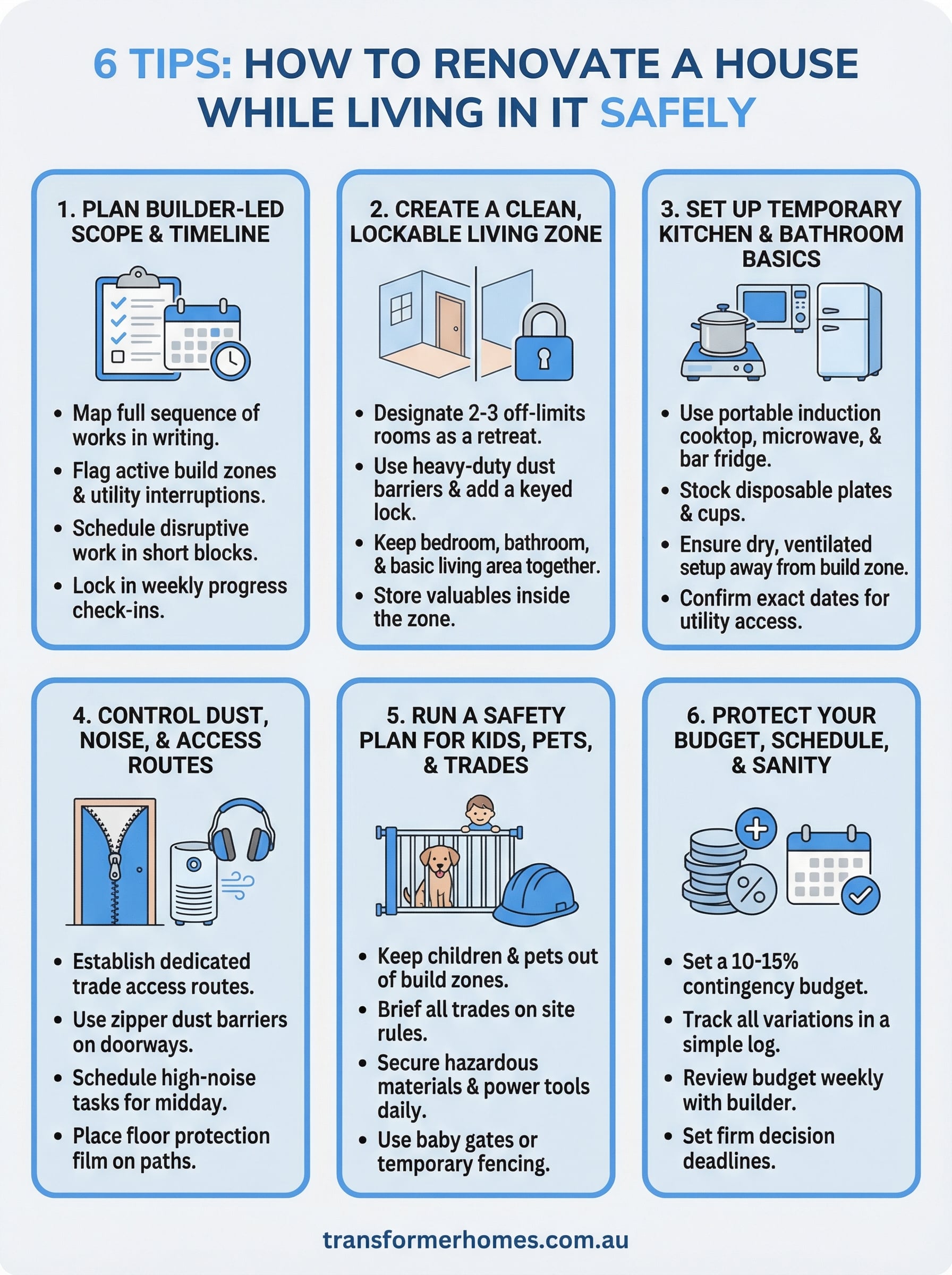
Knowing how to renovate a house while living in it comes down to preparation, clear boundaries, and a builder who communicates with you throughout the process. The six tips above give you a practical framework to stay safe, comfortable, and in control from the first day on site to the last.
Start by reviewing your current build plan against each tip. Identify any gaps, whether that’s a missing contingency buffer, no designated living zone, or an unclear access route for trades, and raise them with your builder before works begin. The earlier you address these details, the smoother the build runs.
If you are planning a home renovation or extension in Melbourne and want a team that manages the process with your household in mind, talk to Transformer Homes about your project. We build around your life, not the other way around.
