
Your main bathroom does more heavy lifting than any other room in the house. It’s where your day starts and ends, yet it’s often the last space to get any real attention. If you’ve been searching for main bathroom renovation ideas that actually suit Melbourne homes, not just recycled Pinterest boards from overseas, you’re in the right place. The good news: a well-planned bathroom renovation can completely change how your home feels without the cost or disruption of a full rebuild.
At Transformer Homes, we’ve renovated bathrooms across Melbourne’s Northern and Western suburbs for years. We’ve seen what works in real Melbourne homes, from compact Northcote terraces to larger family builds in Thomastown. That hands-on experience shapes every idea on this list. These aren’t generic suggestions; they’re grounded in what we’ve built, what our clients love, and what holds up over time.
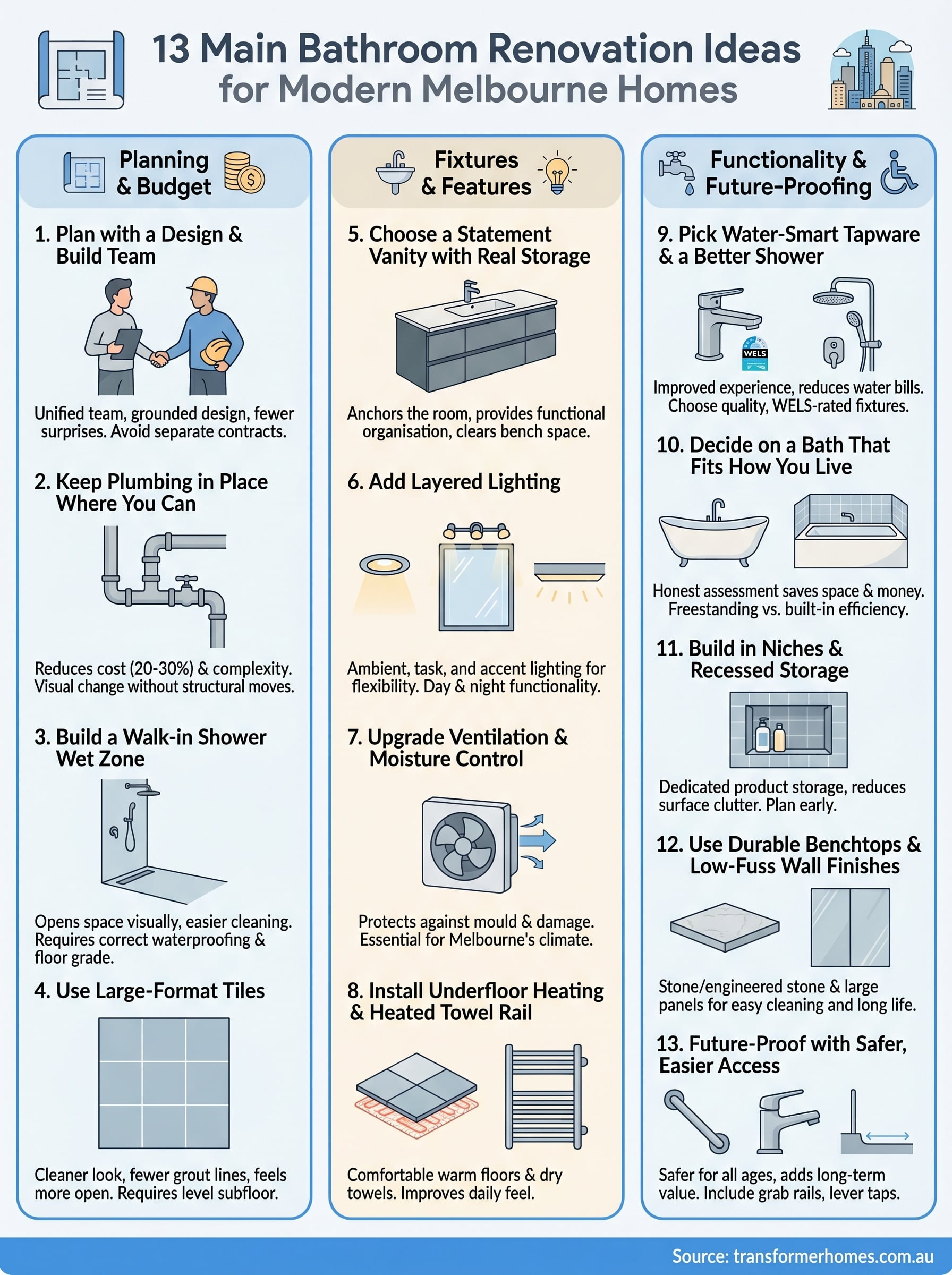
Below, we’ve pulled together 13 practical and stylish ideas to guide your next main bathroom project. Whether you’re after a full gut-and-redo or a smart refresh that stretches your budget, you’ll find options worth considering. From layout choices and tile trends to storage solutions and fixture upgrades, each idea is tailored for the kind of homes we work on every day. Let’s get into it.
1. Plan it with a design and build team
Starting a bathroom renovation without a clear plan is one of the most expensive mistakes you can make. Working with a design and build team from the beginning means your ideas, your budget, and your timeline all move in the same direction from day one. This is especially true for main bathroom renovation ideas that involve layout changes, structural work, or anything beyond a simple cosmetic refresh.
What this idea changes in a main bathroom
A design and build approach changes the entire process of how your bathroom takes shape. Instead of hiring a designer separately and then finding a builder, you work with one team that handles both. This removes the gap where miscommunication usually happens, and it means your design is always grounded in what’s actually buildable within your space and budget.
This matters because decisions made on paper are far cheaper to change than decisions made on site. A combined team catches structural limitations, waterproofing requirements, and council considerations early, before those issues cost you time or money mid-build.
Design choices that suit modern Melbourne homes
Melbourne homes, particularly in the Northern and Western suburbs, often come with constraints that generic plans don’t account for, including narrow layouts, older plumbing configurations, or heritage overlays that affect what you can modify. A local design and build team understands these conditions and steers you toward finishes, layouts, and fixtures that work with your home’s structure rather than against it.
Working with a team that already knows Melbourne’s building environment means fewer surprises once work begins on site.
Budget and timeframe expectations
For a full main bathroom renovation with a design and build team, expect to invest between $20,000 and $40,000 depending on size, finishes, and the extent of structural changes. Timeframes typically run six to twelve weeks from design sign-off to completion, though solid upfront planning can shorten this considerably.
| Renovation scope | Estimated cost | Typical timeframe |
|---|---|---|
| Cosmetic refresh | $8,000 to $15,000 | 2 to 4 weeks |
| Full renovation, layout retained | $20,000 to $30,000 | 6 to 8 weeks |
| Full renovation, layout changed | $30,000 to $40,000+ | 8 to 12 weeks |
Mistakes to avoid before you start
The biggest mistake people make is jumping straight to fixtures and finishes before locking in a solid design brief. Without a clear scope, costs increase quickly as decisions get made on site rather than on paper. Also avoid signing contracts that separate design and construction into two unrelated agreements, as this is typically where budget overruns and timeline blowouts begin.
2. Keep plumbing in place where you can
Moving plumbing is one of the fastest ways to blow a bathroom budget. When you shift drains, pipes, or waste lines, you’re paying for labour, re-routing, and often patching up floors and walls afterward. If your main bathroom renovation ideas include a fresh layout, check first whether the existing positions actually cause a problem, because sometimes they don’t.
What this idea changes in a main bathroom
Keeping your wet areas, toilet, and vanity in roughly the same positions reduces the cost and complexity of your renovation significantly. Trades work faster, waterproofing is more straightforward, and you’re less likely to uncover unexpected issues inside walls or subfloors mid-project.
Design choices that suit modern Melbourne homes
Most Melbourne bathrooms, particularly in older homes in Preston, Northcote, and Reservoir, have plumbing on external or shared walls. Working within those positions doesn’t limit your design as much as you’d think. You can still update tiles, fixtures, storage, and lighting while keeping the structural layout intact.
The biggest visual transformation usually comes from what’s on the surface, not where the pipes sit.
Budget and timeframe expectations
Renovating without relocating plumbing can keep your total project cost 20 to 30 percent lower than a layout change requires. A straightforward refresh with plumbing in place typically runs between $15,000 and $22,000 for a full main bathroom, with a shorter programme of four to six weeks.
Mistakes to avoid before you start
Don’t assume you need to move anything before a plumber has inspected your current setup. Many homeowners pay to shift plumbing unnecessarily because they didn’t get advice early enough. Ask your builder to assess the existing configuration before committing to a new floor plan.
3. Build a walk-in shower wet zone
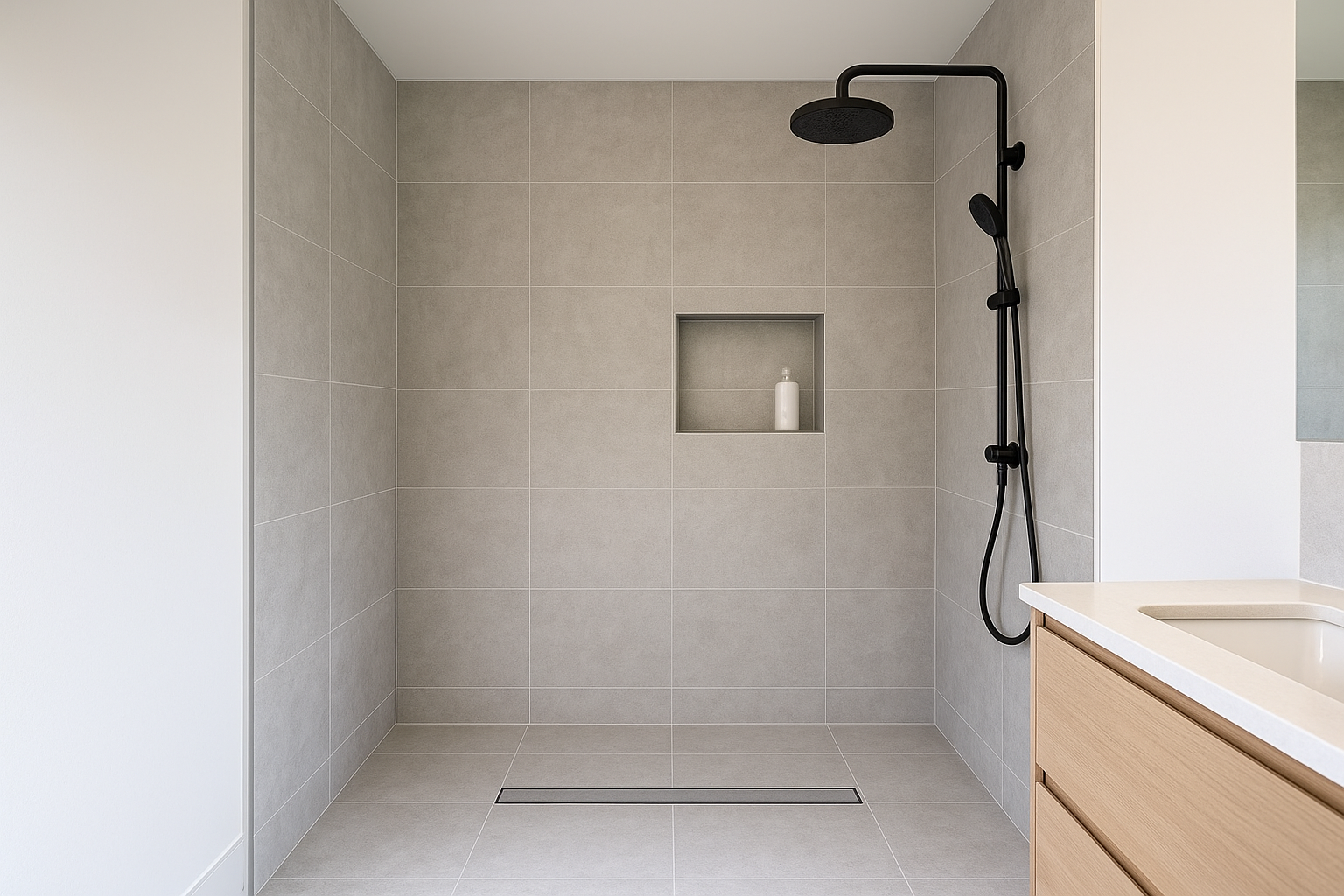
A walk-in shower wet zone is one of the most popular main bathroom renovation ideas for good reason. Removing the screen or enclosure opens up your bathroom visually and makes cleaning far simpler. If your current shower feels cramped or dated, this single change can make the entire room feel newer and larger without altering the footprint.
What this idea changes in a main bathroom
A wet zone replaces your framed or semi-frameless shower screen with a fully waterproofed open shower area that drains across a wide linear drain or central floor drain. It removes the visual barrier, reduces the number of surfaces that collect soap scum, and makes the space easier to move around in day to day.
A well-built wet zone relies entirely on correct waterproofing and floor grading, which is where corners are most often cut.
Design choices that suit modern Melbourne homes
Melbourne homes suit a floor-to-ceiling tiled wet zone with a recessed niche and a fixed shower panel rather than a hinged door. Linear drains along the wall look clean and work well in narrow shower runs, which are common in older terrace and semi-detached homes across Northcote and Preston.
Budget and timeframe expectations
A wet zone installation typically adds $2,000 to $5,000 to a standard shower replacement, depending on the waterproofing scope and drain type. Within a full renovation, most wet zones are completed within one to two weeks of tiling.
Mistakes to avoid before you start
The most common error is underestimating the slope required for proper drainage. If your floor isn’t graded correctly toward the drain, water pools outside the wet zone. Always confirm your tiler and waterproofer are working from the same specification before any tiles go down.
4. Use large-format tiles for a cleaner look
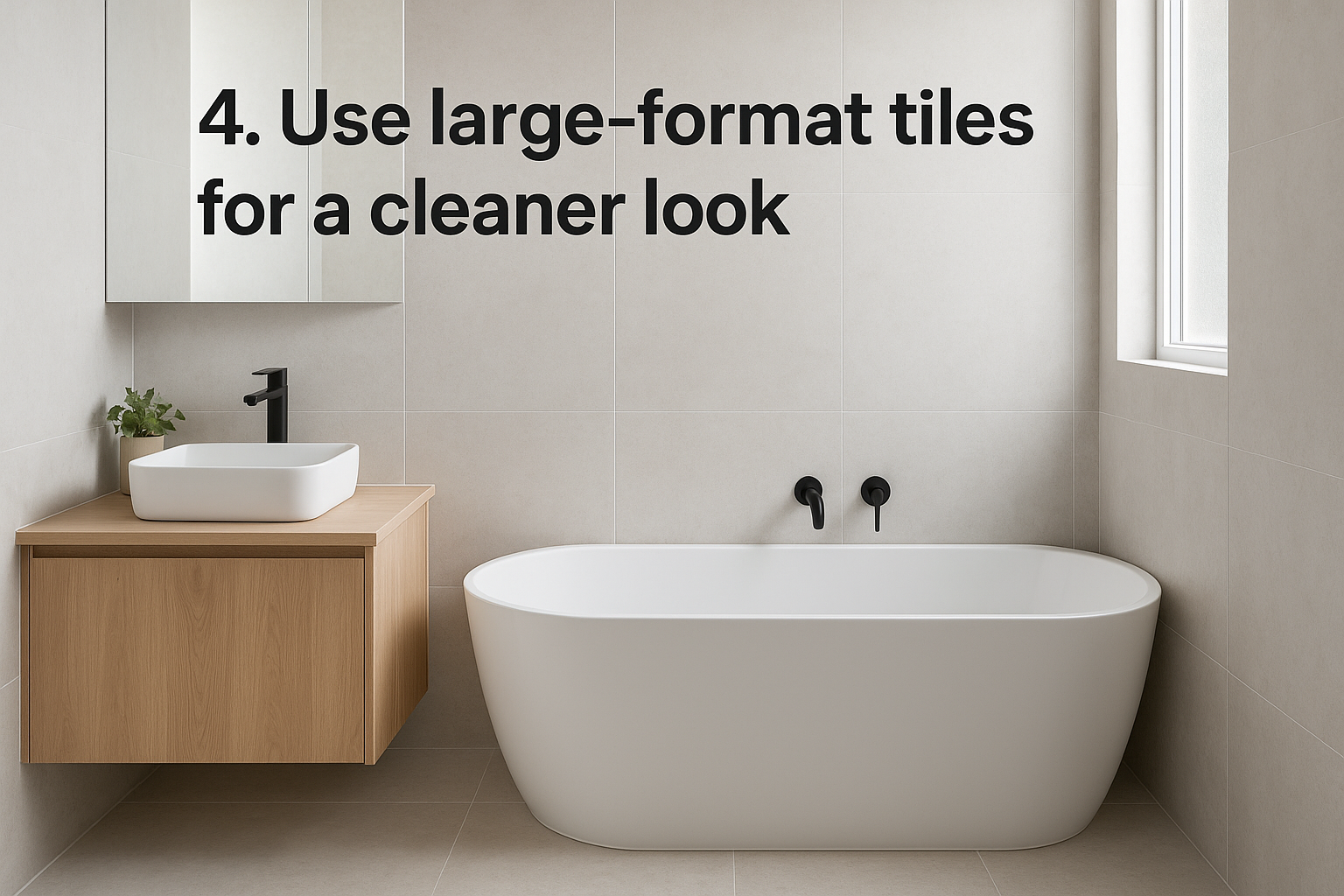
Large-format tiles have become one of the most practical main bathroom renovation ideas for homeowners who want a polished result without excessive visual noise. Fewer grout lines mean less cleaning, a less cluttered look, and a surface that holds up well over time.
What this idea changes in a main bathroom
Large-format tiles, typically 600x600mm or larger, reduce the number of grout joints across your floor and walls. That reduction makes your bathroom feel more open and cohesive, particularly in rooms that lack natural light. The surface becomes easier to wipe down, and the overall finish reads as more considered and modern.
Fewer grout lines do more for a bathroom’s appearance than almost any other single tiling decision.
Design choices that suit modern Melbourne homes
In Melbourne homes, rectified porcelain tiles in matte or honed finishes work well across both floors and feature walls. Sizes like 600x1200mm on walls create a strong vertical line that makes low-ceilinged bathrooms feel taller. Warm stone-look tones suit the earthy palettes popular across Northcote and Preston, while cool concrete finishes suit newer builds further west.
Budget and timeframe expectations
Large-format tiles cost more per square metre than standard sizes, and installation labour increases because the substrate preparation needs to be more precise. Budget $80 to $150 per square metre for supply and installation, depending on the tile selected. Most tiling for a full main bathroom takes three to five days to complete.
Mistakes to avoid before you start
Do not select oversized tiles without first checking your subfloor is level and structurally sound. Large tiles crack when laid over an uneven surface. Always confirm your tiler has experience with large-format installation specifically, as the technique differs significantly from standard tiling.
5. Choose a statement vanity with real storage
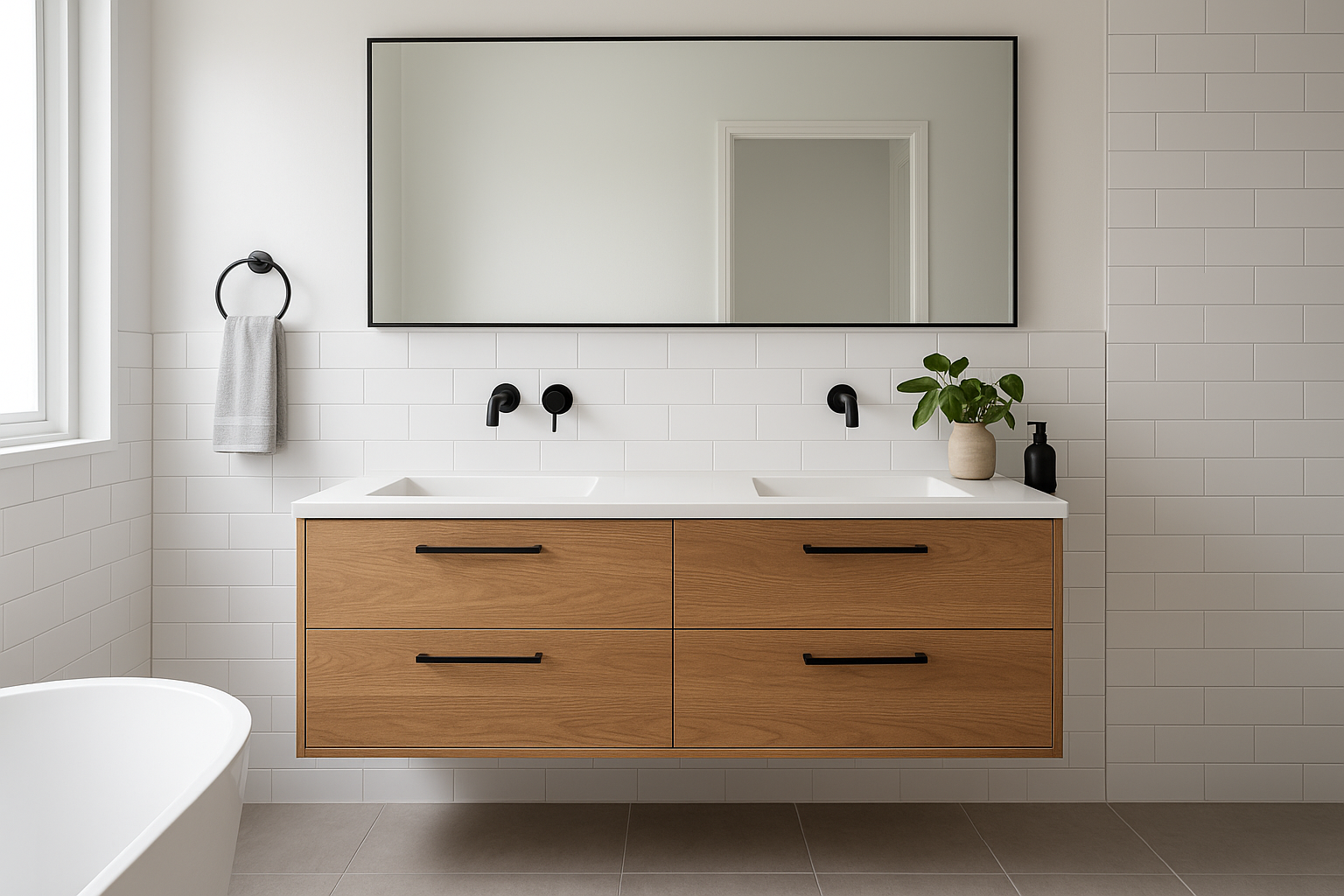
Your vanity is the centrepiece of your main bathroom, yet most renovations treat it as an afterthought. A well-chosen vanity does two things simultaneously: it anchors the visual character of the room and provides functional, organised storage that keeps your bench clear and your bathroom feeling calm.
What this idea changes in a main bathroom
Replacing a standard vanity with a purpose-built unit transforms both the look and the daily function of your bathroom. Wall-hung versions lift off the floor and make cleaning easier, while deeper drawers replace the shallow, poorly organised cupboards found in most original bathroom fitouts. This single upgrade has a bigger impact on how your bathroom feels day to day than almost any other fixture change.
A vanity with proper internal organisation removes the need for extra storage units that eat into your floor space.
Design choices that suit modern Melbourne homes
Timber-look and matte white vanities suit the warm, earthy tones popular in Melbourne’s Northern suburbs, while stone benchtops in honed white or grey work well across both older character homes and newer builds. For main bathroom renovation ideas that need to balance style with practicality, a 1200mm to 1500mm double-bowl vanity gives multiple users space without overcrowding the room.
Budget and timeframe expectations
A quality wall-hung vanity with stone benchtop typically costs $2,500 to $6,000 supplied and installed, depending on the size and benchtop material selected. Installation usually takes one to two days within a broader renovation programme.
Mistakes to avoid before you start
Do not choose a vanity based on looks alone before measuring your wall and checking your plumbing rough-in positions. A vanity that sits even slightly off from your existing waste and water connections adds unexpected labour costs to your project.
6. Add layered lighting that works day and night
Most bathrooms rely on a single ceiling light that does a mediocre job in every situation. Layered lighting gives your main bathroom the flexibility to work as a bright, functional space in the morning and a calmer, more comfortable one at night. This is one of the most underrated main bathroom renovation ideas, yet it costs far less than most structural changes.
What this idea changes in a main bathroom
Adding multiple light sources at different heights changes both the mood and the practicality of your bathroom. A single overhead fitting creates flat light and harsh shadows around your face at the mirror. When you layer task lighting, ambient lighting, and accent lighting, each serves a different purpose and you can control them independently.
Lighting at mirror height removes shadows that overhead-only setups create, which makes a real difference for everyday grooming.
Design choices that suit modern Melbourne homes
Recessed downlights provide even ambient coverage across the ceiling, while dedicated vanity lights mounted beside or above your mirror handle task lighting. For Melbourne homes with high ceilings or feature walls, LED strip lighting behind a floating vanity adds a warm glow at floor level without taking up any visual space.
Budget and timeframe expectations
A full lighting upgrade typically costs $800 to $2,500 installed, depending on the number of circuits and whether you add dimmer switches. Your electrician can usually complete the rough-in work within one day during the broader renovation programme.
Mistakes to avoid before you start
Do not choose warm-white globes for task lighting near your mirror. Colour temperatures below 3,000K make it harder to see accurately for grooming. Aim for 4,000K at the vanity and warmer tones elsewhere in the room.
7. Upgrade ventilation and moisture control
Poor ventilation is behind most of the long-term damage in Melbourne bathrooms. Mould on grout, peeling paint, swollen cabinetry, and persistent damp smells all trace back to inadequate airflow and moisture extraction. This is one of the main bathroom renovation ideas that people skip because it’s invisible once installed, yet it protects every other element you’ve invested in.
What this idea changes in a main bathroom
A proper exhaust fan system removes humid air before it settles on surfaces, protecting your tiles, vanity, paint, and ceiling from the cumulative damage moisture causes over years. Upgrading ventilation also improves air quality day to day, which matters in a room you use every single morning.
Design choices that suit modern Melbourne homes
Melbourne’s cooler winters mean bathrooms hold moisture longer than in warmer climates, so a ducted exhaust fan vented through the roof or external wall performs significantly better than a recirculating unit. For larger bathrooms, a heat-lamp and fan combination handles both warmth and extraction in one ceiling fitting without taking up extra space.
A fan undersized for your bathroom’s cubic volume will run constantly and still underperform, so match the unit to your room size before purchasing.
Budget and timeframe expectations
A quality ducted exhaust fan typically costs between $300 and $900 supplied and installed, depending on the ducting run and unit selected.
| Scope | Estimated cost | Timeframe |
|---|---|---|
| Basic fan replacement | $300 to $500 | Half a day |
| New ducted exhaust fan with longer run | $500 to $900 | Half to one day |
Mistakes to avoid before you start
Do not vent your exhaust fan into the roof cavity rather than directly outside. This deposits moisture where it causes timber rot and mould inside your ceiling structure. Always confirm your installer is ducting to an external outlet before the work begins.
8. Install underfloor heating and warm towel storage
Cold floors on a Melbourne winter morning are one of those things you stop tolerating the moment you renovate. Underfloor heating and a heated towel rail are two of the most practical main bathroom renovation ideas for improving how your bathroom actually feels to use every day, not just how it looks.
What this idea changes in a main bathroom
Underfloor heating replaces the unpleasant shock of cold tiles with a consistently warm surface from the moment you step out of the shower. A heated towel rail adds to this by keeping towels dry, warm, and ready to use rather than sitting damp between uses, which also reduces the moisture load on your ventilation system.
Both upgrades work quietly in the background, but they do more for daily comfort than almost any visible feature in the room.
Design choices that suit modern Melbourne homes
For most Melbourne homes, electric hydronic mat systems laid under porcelain or stone tiles are the most practical option during a renovation. Wall-mounted towel rails in matte black or brushed nickel suit the warm, earthy palettes common across the Northern and Western suburbs and take up no floor space.
Budget and timeframe expectations
Electric underfloor heating typically costs $600 to $1,500 supplied and installed, depending on floor area. A quality heated towel rail adds another $300 to $800 including installation. Both are completed within the tiling and fit-off stages of your renovation.
Mistakes to avoid before you start
Do not install underfloor heating without a thermostat and timer, as running it continuously adds significantly to your energy bill. Always confirm the heating mat is rated for wet areas before your tiler lays it.
9. Pick water-smart tapware and a better shower
Your tapware and showerhead affect your bathroom every single day, yet most renovations treat them as the last decision rather than an important one. Water-efficient tapware and a quality shower system are among the most practical main bathroom renovation ideas you can act on, and they directly reduce your water bills while improving the feel of your bathroom.
What this idea changes in a main bathroom
Upgrading your tapware changes the tactile experience of your bathroom immediately. Handles that turn smoothly, spouts that don’t drip, and a showerhead that delivers consistent pressure all make your daily routine noticeably better. A WELS-rated shower system (the Australian Water Efficiency Labelling and Standards scheme) also reduces water consumption without sacrificing flow quality.
Choosing tapware with a higher WELS star rating cuts household water use without any change to how the shower feels in practice.
Design choices that suit modern Melbourne homes
Matte black and brushed nickel finishes suit the warm palettes common in Melbourne’s Northern and Western suburbs and hold up well against water marks compared to polished chrome. A rail-mounted or ceiling-mounted overhead shower combined with a separate hand shower gives your bathroom more flexibility without needing extra wall penetrations.
Budget and timeframe expectations
Quality tapware and a shower system typically cost $800 to $2,500 supplied and installed, depending on the brand and configuration you select. Your plumber installs these during the fit-off stage of your renovation, usually within one to two days.
Mistakes to avoid before you start
Do not choose tapware based on price alone. Cheap fittings wear out faster and often require replacement within a few years, which adds labour costs you’ve already paid once. Always confirm your water pressure suits the products you’ve selected before they are ordered.
10. Decide on a bath that fits how you live
Not every main bathroom needs a freestanding bath, and not every family will use one if they have it. Before committing to a tub, consider how your household actually uses the bathroom day to day. This is one of the main bathroom renovation ideas where honest self-assessment saves you both money and floor space.
What this idea changes in a main bathroom
Adding or removing a bath reshapes the entire floor plan of your bathroom. A freestanding tub creates a visual centrepiece but demands significant space to look right. A built-in alcove bath uses the same floor area more efficiently and leaves more room for your shower and vanity, which matter far more in daily use for most families.
Design choices that suit modern Melbourne homes
If you do include a bath, a freestanding oval or rectangular tub in matte white suits the clean, earthy palettes common in Melbourne’s Northern and Western suburbs. For smaller bathrooms in Northcote or Preston terrace homes, a 1500mm built-in bath fits without dominating the room.
Removing a bath you never use often frees up enough space to build a proper wet zone shower, which most households use every single day.
Budget and timeframe expectations
A freestanding bath typically costs $800 to $3,500 supplied, with installation adding another $300 to $600 depending on your plumbing setup. A built-in option with tiling runs $1,200 to $3,000 all in.
Mistakes to avoid before you start
Do not place a freestanding bath without confirming your floor can handle the weight when filled. A full bath adds significant load, and older Melbourne homes may need structural assessment before installation.
11. Build in niches and recessed storage
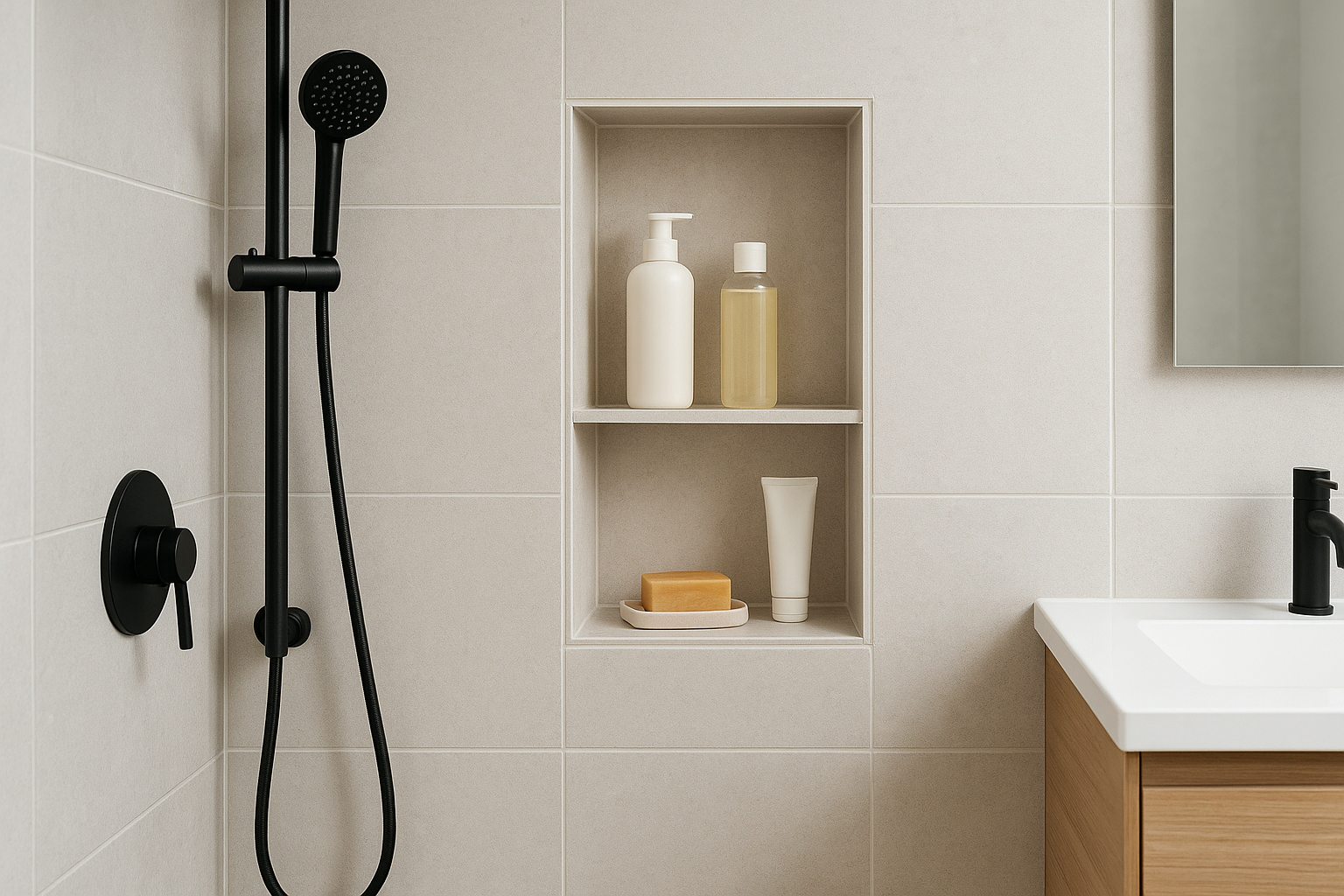
Surface clutter is one of the quickest ways to make a renovated bathroom feel messy again within weeks of completion. Recessed niches and built-in storage solve this by giving every product a dedicated home inside your walls rather than sitting on ledges or shower shelves that collect soap residue and water. For main bathroom renovation ideas that genuinely improve daily function, this one earns its place every time.
What this idea changes in a main bathroom
A recessed niche cuts into the wall cavity between studs and creates a flush-mounted shelf that holds your shampoo, soap, and toiletries without protruding into your shower or vanity space. This keeps your surfaces clear and makes the bathroom feel larger and more intentional than one that relies on freestanding accessories.
Niches built during the rough-in stage cost far less than ones added after waterproofing is complete, so plan them early.
Design choices that suit modern Melbourne homes
For Melbourne bathrooms with brick or concrete outer walls, niches work best on internal partition walls where there is a timber-framed cavity to work with. A tiled niche in the shower, sized to hold two to three rows of products, blends cleanly into large-format tile layouts and avoids the visual noise of a contrasting insert.
Budget and timeframe expectations
A standard built-in niche typically costs $300 to $800 per opening, including framing, waterproofing, and tiling. Your builder completes the rough-in work before waterproofing begins, so there is no meaningful addition to your overall renovation timeline.
Mistakes to avoid before you start
Do not position a niche on an external or wet-area wall without confirming the cavity is suitable for waterproofing. Always tile the niche interior to the same standard as your shower walls to prevent moisture getting behind the surface.
12. Use durable benchtops and low-fuss wall finishes
Your choice of benchtop and wall finish determines how much time you spend cleaning your bathroom long after the renovation is done. Among the main bathroom renovation ideas on this list, this one has the most direct impact on long-term maintenance, because surfaces that look great on day one but scratch, stain, or absorb moisture become a problem you live with for years.
What this idea changes in a main bathroom
Replacing a laminate or tiled benchtop with a stone or engineered stone surface changes both the look and the durability of your vanity area. On the walls, swapping out dated ceramic tiles for larger, low-grout-line alternatives reduces the cleaning effort significantly and creates a more cohesive finish across the room.
The surfaces you choose at renovation time set the maintenance standard you’re committed to for the next decade or more.
Design choices that suit modern Melbourne homes
Honed Carrara marble and engineered stone in white or warm grey tones suit the understated palettes common in Melbourne’s Northern and Western suburbs. For wall finishes, large-format porcelain panels with minimal grout lines perform well in wet areas and resist moisture better than painted or textured surfaces in a high-use bathroom.
Budget and timeframe expectations
A quality engineered stone benchtop typically costs $600 to $1,800 supplied and templated, depending on the size and material selected. Wall tiling is usually completed within the broader tiling programme of three to five days.
Mistakes to avoid before you start
Do not select natural stone without sealing it properly before use. Unsealed marble and limestone absorb water and stain quickly in a wet environment, and restoring them adds cost you could have avoided at the start.
13. Future-proof with safer, easier access
Planning for safer access during a renovation costs far less than retrofitting it years later. Whether you’re thinking about ageing in place, accommodating a family member with mobility needs, or simply building a bathroom that works long-term, access-focused design is one of the most forward-thinking main bathroom renovation ideas you can act on right now.
What this idea changes in a main bathroom
Accessible design removes the physical barriers that make bathrooms hazardous over time. Grab rails beside your toilet and shower, a curbless wet zone entry, and a wider doorway all reduce fall risk without making your bathroom look clinical or institutional. These features integrate cleanly into a modern renovation when they are planned from the start rather than bolted on afterward.
Features designed for accessibility often improve everyday comfort for every member of your household, not just those with mobility concerns.
Design choices that suit modern Melbourne homes
Slip-resistant matte tiles on your floor and a lever-style tapware set rather than knobs are practical choices that suit the clean palettes common across Melbourne’s Northern and Western suburbs. Stainless or matte black grab rails now come in styles that complement modern vanity hardware without looking out of place.
Budget and timeframe expectations
Access upgrades are among the most cost-effective additions in any renovation. Grab rails, lever tapware, and a wider door frame typically add $500 to $2,000 to your project total, depending on scope.
Mistakes to avoid before you start
Do not select grab rails rated only for decorative use rather than structural load-bearing installation. Always confirm your builder fixes them into wall studs or blocking that can support a person’s full weight.
Putting it into action
These 13 main bathroom renovation ideas give you a solid foundation, but the difference between a good list and a great result comes down to who executes it. Each idea on this list works best when it is planned properly, sequenced correctly, and built by trades who understand how Melbourne homes are actually put together. Rushing any stage, from waterproofing to lighting to fixture selection, creates problems you’ll be managing for years.
Your bathroom is one of the most used rooms in your home, and a well-built renovation adds real long-term value to your property. Whether you’re refreshing a tired ensuite or undertaking a full gut-and-rebuild, the planning stage is where the outcome is won or lost. If you’re ready to move from ideas to a real project, speak with the team at Transformer Homes and find out what your renovation could look like.
