
Every home built or renovated in Australia must comply with a single, unified set of technical standards. The Australian Building Codes Board National Construction Code (NCC) is that standard, a document that governs everything from structural integrity and fire safety to energy efficiency and accessibility. Whether you’re planning a new custom build, a dual occupancy project, or a kitchen renovation in Melbourne’s northern suburbs, the NCC directly shapes what can and can’t be done on your site.
At Transformer Homes, we work with the NCC every day. It informs our design decisions, our material selections, and our construction methods across every project we deliver. Understanding this code isn’t just our job, it’s something every homeowner benefits from knowing, especially before signing a building contract. When you understand the rules your builder operates under, you’re in a stronger position to ask the right questions and make informed choices.
This article breaks down what the NCC is, who publishes it, what it covers, and how it applies to residential construction in Victoria. We’ll walk you through its structure, recent updates that affect home builds, and what compliance actually looks like in practice, so you’re not left guessing when your project gets underway.
What the ABCB and the NCC are
The Australian Building Codes Board (ABCB) is an intergovernmental body jointly funded by the Australian Government and each state and territory government. Its core responsibility is to develop and maintain the National Construction Code, which sets the minimum performance requirements for the design and construction of buildings across Australia. The ABCB doesn’t conduct inspections or enforce the code on building sites. That responsibility sits with local councils and state-based building authorities. The ABCB focuses specifically on writing, updating, and publishing the standards that every licensed builder, private building surveyor, and designer must follow.
The role of the ABCB
The ABCB operates under an Intergovernmental Agreement, which means its work is backed by every level of government in Australia. This structure gives the code genuine weight: when the ABCB updates a requirement, that change flows through to building regulations in Victoria, New South Wales, Queensland, and every other state and territory. The board draws on technical experts, industry stakeholders, and public consultation rounds before finalising any changes, which means updates reflect current construction practices and emerging priorities like sustainability and accessibility.
Beyond writing the code, the ABCB also publishes a wide range of supporting materials, including handbooks, compliance guides, and advisory notes. These resources help builders, certifiers, and designers interpret and apply requirements correctly in real situations, particularly when a performance-based solution is being used instead of a prescriptive one.
The National Construction Code (NCC)
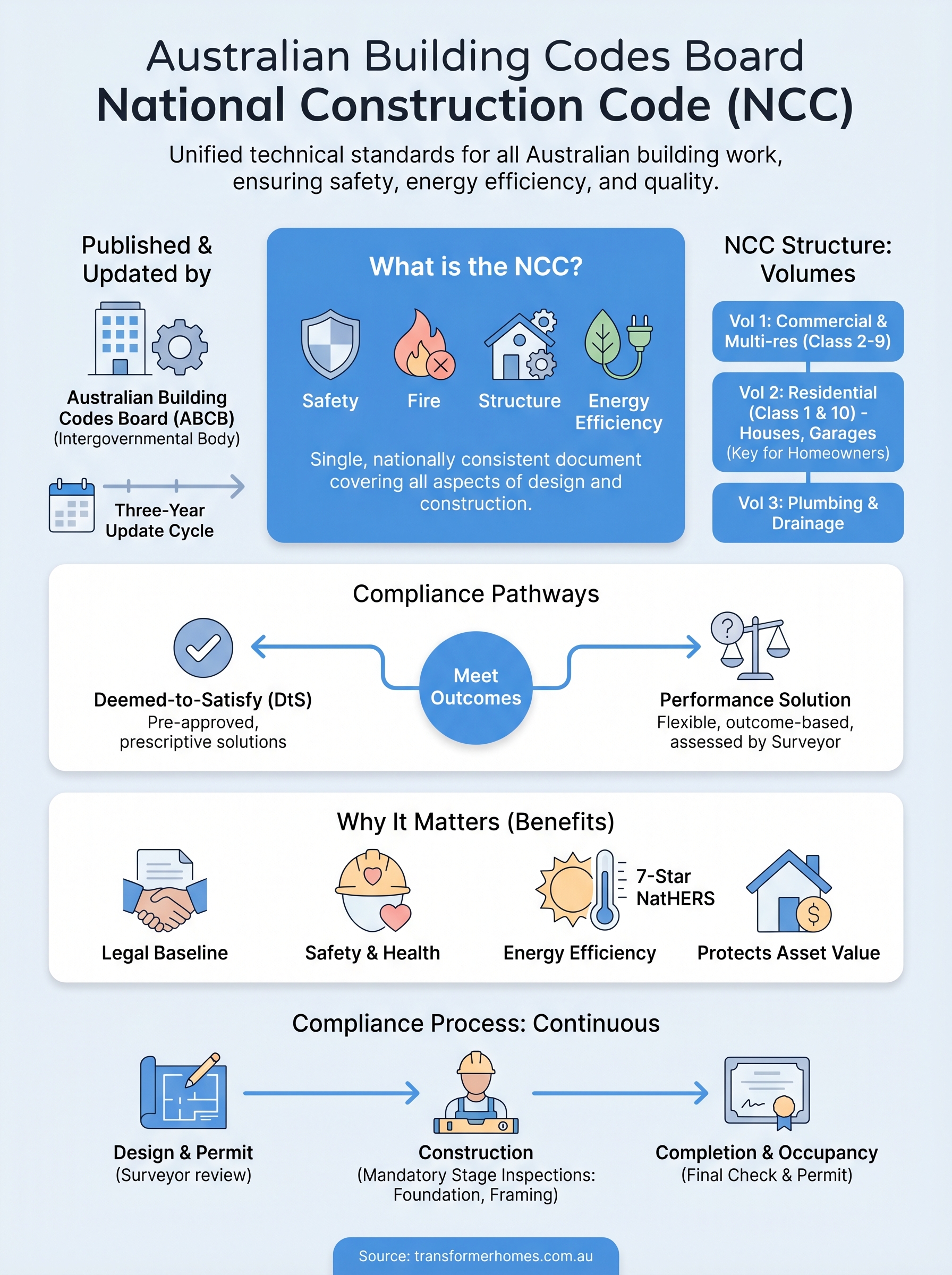
The australian building codes board national construction code is a single, nationally consistent document that covers all building work in Australia. It’s divided into three volumes: Volume One addresses Class 2 to 9 buildings (commercial, multi-residential, and public buildings), Volume Two covers Class 1 and 10 buildings (houses, garages, sheds, and similar structures), and Volume Three deals specifically with plumbing and drainage systems.
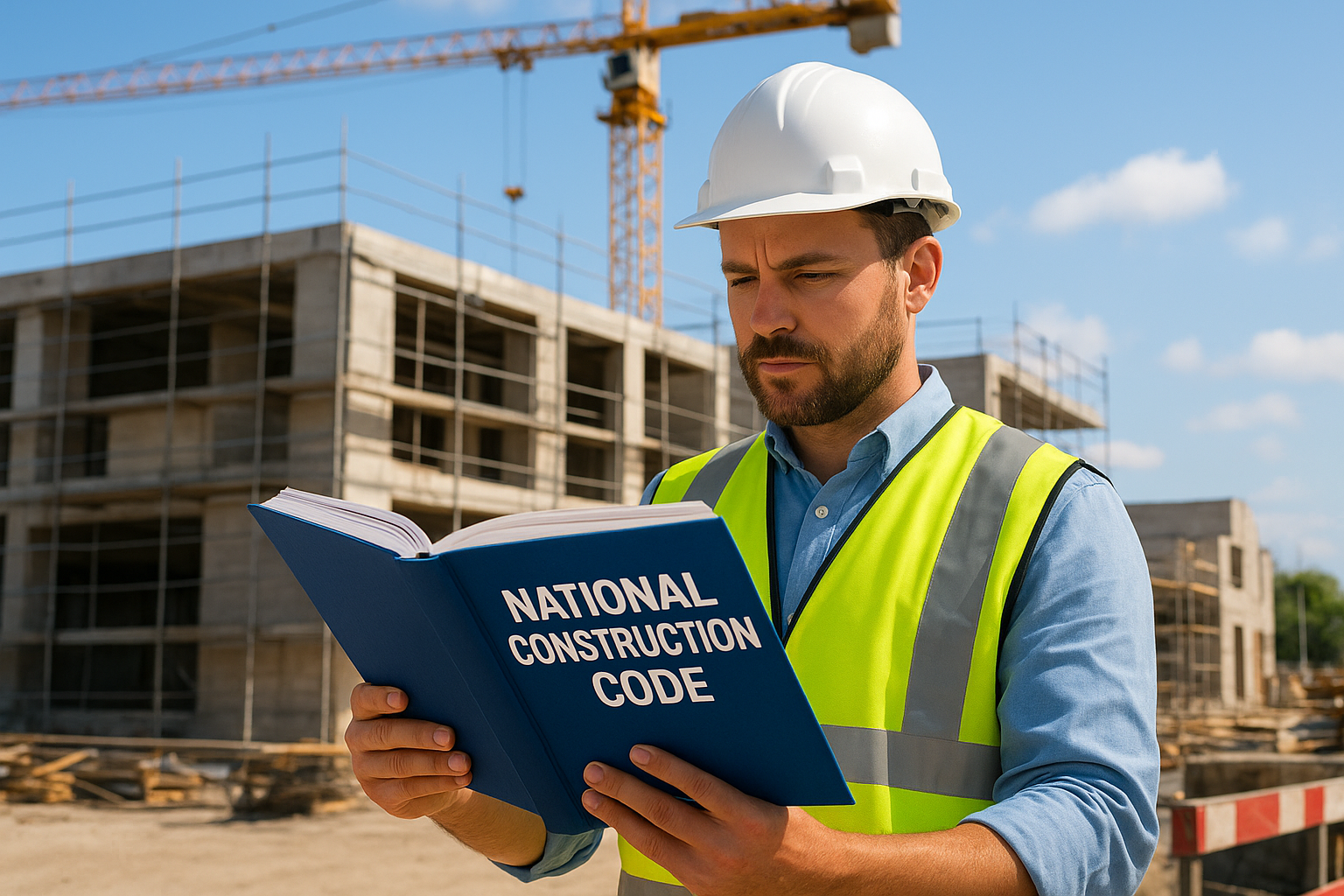
For residential construction in Victoria, Volume Two is the key reference point, covering minimum standards for everything from structural framing and foundations through to waterproofing, glazing, and energy performance.
For most homeowners, the NCC operates in the background throughout a project. Your builder and building surveyor reference it constantly to ensure every system and element in your home meets the minimum performance requirements. The code doesn’t always prescribe a specific product or method. Instead, it defines outcomes: your home must withstand certain structural loads, achieve a minimum energy rating, and protect occupants from specific hazards. How you meet those outcomes can vary, which is why qualified builders and designers have genuine flexibility in how they choose to comply on any given project.
Why the NCC matters for Australian homes
The NCC sets the minimum acceptable standard for any building work completed in Australia. For homeowners, this matters because it establishes a legal baseline that every licensed builder must meet, whether they’re constructing a new home in Thomastown or adding a second storey to a property in Preston. Without this baseline, there would be no consistent way to assess whether a building is safe, energy efficient, or structurally sound across different states and territories.
Protecting your investment and your safety
When a building surveyor issues an occupancy permit at the end of your project, they’re confirming that your home meets or exceeds every applicable NCC requirement. This matters far beyond the construction phase. If you ever sell, refinance, or insure your property, compliance documentation directly affects your asset’s value. A home built or renovated without proper NCC compliance can face costly rectification orders and complications at the point of sale.
A building that meets NCC requirements is not just legally sound, it’s built to protect the people living in it from structural failure, fire, and health hazards.
Your safety is the code’s core purpose. Requirements around structural loads, fire separation, waterproofing, and ventilation all exist to reduce the risk of harm to occupants. These aren’t bureaucratic formalities. They reflect decades of research and incident data that shaped the current form of the australian building codes board national construction code.
Energy efficiency requirements
Since NCC 2022, residential buildings in Victoria must achieve a minimum 7-star NatHERS energy rating, a significant step up from the previous 6-star standard. This change directly affects the design decisions your builder and designer make early in the project, including:

- Insulation levels in walls, ceilings, and underfloor
- Glazing specifications such as double glazing or low-e coatings
- Building orientation to maximise passive solar gain
Understanding this requirement before your design is finalised gives you the best chance of meeting the code without unnecessary cost increases later in the process.
How the NCC is structured and updated
The australian building codes board national construction code is divided into three volumes, each covering a distinct category of building work. Volume One applies to Class 2 through 9 buildings, including apartments, commercial premises, and public buildings. Volume Two covers Class 1 and Class 10 buildings, the category that includes houses, garages, carports, and outbuildings. Volume Three addresses plumbing and drainage standards for all building classes. For a residential project in Melbourne’s northern or western suburbs, Volume Two is your primary reference point, covering everything from structural framing and damp-proofing through to glazing and thermal performance.
How volumes and sections are organised
Each volume in the NCC is broken into Performance Requirements and Deemed-to-Satisfy (DtS) provisions. The Performance Requirements define the outcome a building element must achieve. The DtS provisions offer pre-approved pathways to meeting those outcomes, so if your builder follows a DtS solution, no additional proof of compliance is required beyond the documented work itself. Alternatively, a designer can propose a performance solution, which requires assessment by a qualified building surveyor to confirm it achieves the required outcome.
The distinction between performance solutions and DtS pathways gives builders and designers genuine flexibility, but it also means your building surveyor plays a critical role in assessing any non-standard approach.
How the NCC is updated
The ABCB updates the NCC on a three-year development cycle, with each new edition replacing the previous one. The NCC 2022 edition introduced major changes for residential buildings, including the step up to a 7-star NatHERS energy rating and new condensation management requirements. States and territories adopt each new edition at slightly different times, so the version enforced in Victoria may differ from other states. Your builder and certifier will confirm which edition applies to your project at the time your building permit is issued.
How to access and navigate the NCC online
The ABCB publishes the full text of the NCC through its official website at abcb.gov.au. Access is free, and the online portal lets you read, search, and cross-reference each volume directly in your browser without needing to download a separate document. This makes it straightforward to look up specific requirements during a design consultation or to verify what your builder is referencing.
Registering for free access
Creating an account on the ABCB website is a simple process that takes only a few minutes. You’ll need to provide basic contact details and confirm your role, whether that’s homeowner, builder, or designer. Once registered, you gain full access to the current edition of the australian building codes board national construction code, along with previous editions and all supporting guidance materials such as handbooks and advisory notes published by the ABCB.
Keeping your account active also means you’ll receive notifications when the ABCB releases updates, consultation drafts, or new compliance guides relevant to your project type.
Finding the right volume for your project
Once you’re logged in, the portal organises the code clearly by volume and section. For a residential house, garage, or outbuilding, navigate directly to Volume Two. The content within each volume is divided by topic, covering structural, fire, energy, damp, and other performance areas in separate parts. Each section clearly distinguishes Deemed-to-Satisfy provisions from performance requirements, so you can quickly identify which compliance pathway applies to your situation.
If you’re working with a builder or designer, your building surveyor will already reference these sections routinely. Reading the relevant parts yourself, however, gives you useful context before your design meetings, particularly around the energy efficiency and glazing requirements that shape decisions made early in the process.
How compliance works on real projects
Compliance with the australian building codes board national construction code isn’t a single event at the end of a build. It’s a continuous process that runs from the permit application stage through to the final occupancy permit. Every decision your builder makes, from the framing system to the waterproofing in a wet area, is either documented against a specific code provision or assessed by your building surveyor as meeting the required outcome.
The building surveyor’s role
Your private building surveyor is responsible for verifying compliance throughout construction, not just at the end. They review your permit documentation before work begins, confirming that the design meets the relevant NCC provisions. From that point, they carry out mandatory stage inspections at foundations, framing, and final completion, each tied to specific requirements your builder must satisfy before work progresses.
Selecting a building surveyor early in your project, rather than treating their appointment as a formality, gives you a clear compliance pathway before construction starts. Your surveyor can flag potential issues in your design documentation before they become costly problems on site.
Getting your building surveyor involved at the design review stage can save you significant time and money compared to identifying compliance issues mid-construction.
What happens at inspections
At each stage inspection, your building surveyor checks specific elements of the construction against either Deemed-to-Satisfy provisions or an approved performance solution. If the work doesn’t meet the required standard, a direction to rectify is issued and the stage cannot be signed off until the fix is complete. This protects you directly, because non-compliant work gets caught during construction rather than after your home is finished and far more costly to address.
Ask your builder how they track and document compliance at each stage, and confirm that your building surveyor receives copies of relevant product specifications and engineering documentation before inspections are scheduled.
Next steps for your build or renovation
The australian building codes board national construction code sets the minimum standard your project must meet, but navigating its requirements is easier when you work with a builder who treats compliance as part of the process from day one. Understanding the NCC before your first design meeting puts you in a stronger position to ask your builder the right questions, review documentation with confidence, and avoid surprises once work gets underway.
Your next step is straightforward. Start a conversation with a builder who can explain exactly how the NCC applies to your specific project, whether that’s a new custom home, a dual occupancy development, or a home renovation in Melbourne’s northern or western suburbs. At Transformer Homes, we guide you through every compliance requirement from the permit stage through to your final occupancy permit. Get in touch with our team to talk through your project today.
