
If you’re planning a bathroom renovation in Coburg, you’re probably juggling a dozen questions at once. How much will it actually cost? How long will the whole process take? And how do you find a builder who won’t cut corners or disappear halfway through? These are fair concerns, and ones worth answering before a single tile gets pulled off the wall.
Coburg’s mix of older weatherboard homes, post-war brick builds, and newer townhouses means no two bathroom renovations look the same. Plumbing configurations, structural limitations, and council requirements can vary from one street to the next. That’s where working with a builder who knows Melbourne’s inner north makes a real difference. At Transformer Homes, we’ve built our reputation across the northern suburbs by delivering renovations that hold up, in quality, budget, and timeline.
This guide breaks down the real costs, realistic timeframes, and practical tips for getting your Coburg bathroom renovation right. Whether you’re refreshing a compact ensuite or gutting a full family bathroom, you’ll walk away with a clear picture of what’s involved and what to expect from your builder at every stage.
What a Coburg bathroom renovation involves
A bathroom renovation in Coburg covers far more than swapping fixtures and repainting walls. From the moment you strip out the old bathroom to the final inspection, you’re coordinating trades, materials, approvals, and timelines across several weeks. Understanding what the process actually involves helps you plan properly and avoid the surprises that blow out budgets and stress levels.
The typical scope of work
Most bathroom renovations break down into a predictable sequence of work, even if the details shift by property. A full renovation typically includes demolition, waterproofing, tiling, plumbing, electrical, cabinetry, and fixture installation. Partial renovations, like a cosmetic refresh, might skip structural changes but still require a licensed plumber and electrician for any fixture work under Victorian building regulations.
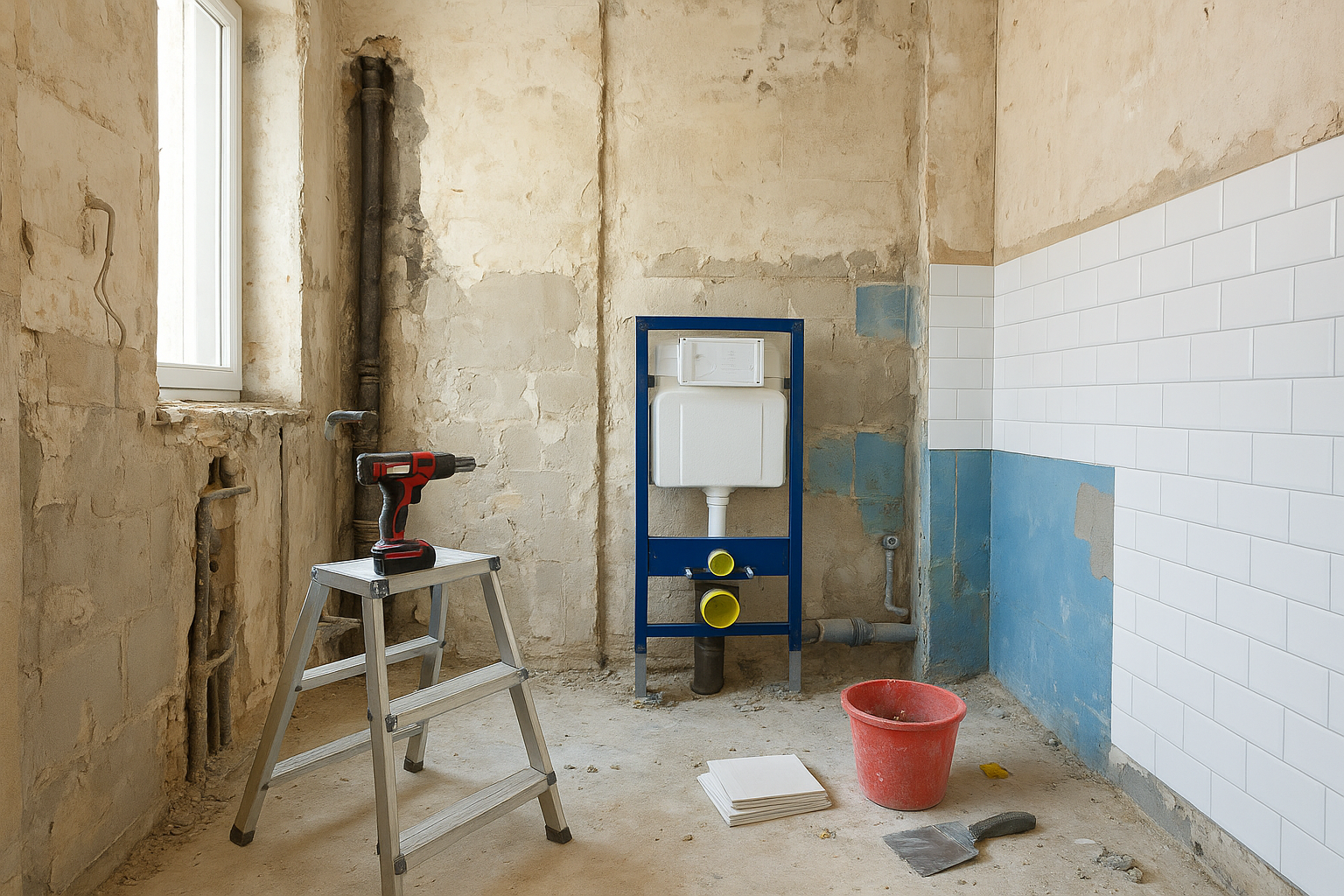
Here’s what a standard full renovation covers:
- Demolition and waste removal
- Waterproofing (mandatory under Australian Standards AS 3740)
- Rough-in plumbing and electrical
- Wall and floor tiling
- Installation of vanity, toilet, shower, and bath
- Cabinetry, mirrors, and accessories
- Final fit-off and building inspection
Waterproofing is not optional in Australia. All wet areas must be waterproofed by a licensed tradesperson before any tiling begins, and this work is subject to inspection.
What makes Coburg homes different
Many Coburg properties were built before modern plumbing layouts became standard, which means your existing pipes may run in unexpected locations inside walls or under concrete slabs. Older homes often have cast-iron or galvanised steel pipes that need full replacement before new fixtures can go in. A bathroom renovation Coburg builder who knows the local housing stock will identify these issues at the quoting stage rather than after demolition begins, and that timing makes a significant difference to your final cost.
Step 1. Set your scope, budget and cost drivers
Before you call a builder, you need a clear picture of what you want done and how much you’re willing to spend. Defining your scope early stops you from making costly decisions under pressure and gives builders enough detail to quote accurately rather than build in padding for unknowns.
Define your renovation scope
Write down every element you want to change, from the shower screen to the exhaust fan. Split your list into must-haves and nice-to-haves so builders can quote against a clear baseline and you know exactly where to cut if costs come in high.
A basic scope template:
- Must-have: new shower, floor tiles, vanity, toilet suite
- Nice-to-have: heated towel rail, underfloor heating, custom cabinetry
Understand your cost drivers
For a bathroom renovation Coburg project, the biggest cost variables are layout changes and waterproofing extent. Moving a drain or toilet means relocating pipes, which adds significant labour costs. Keeping fixtures in their current positions is the fastest way to control spend.
A cosmetic refresh in Melbourne’s inner north typically costs $10,000-$20,000, while a full structural renovation runs $25,000-$45,000 or more.
Your material choices also push costs up quickly. Large-format tiles and custom vanities cost considerably more than standard ranges, so set a firm materials budget before you start browsing.
Step 2. Lock in layout, finishes and approvals
Once your budget is set, finalise your layout and choose your finishes before work starts. Mid-renovation changes add delays and cost, so locking in every decision upfront keeps your project on schedule.
Confirm your layout first
Keeping existing plumbing positions saves significant money on a bathroom renovation Coburg project. If your current layout functions well, leave it as-is. If you need to move a toilet or shower, confirm the change during quoting so the plumbing cost is included from the start, not discovered during demolition.
Common layout changes that add cost:
- Relocating the toilet pan or drain
- Moving the shower to a different wall
- Adding a bath where none previously existed
Choose finishes before work begins
Your tile selections, vanity, and tapware must be confirmed before your builder books trades or orders materials. Use a finishes schedule to track every product:
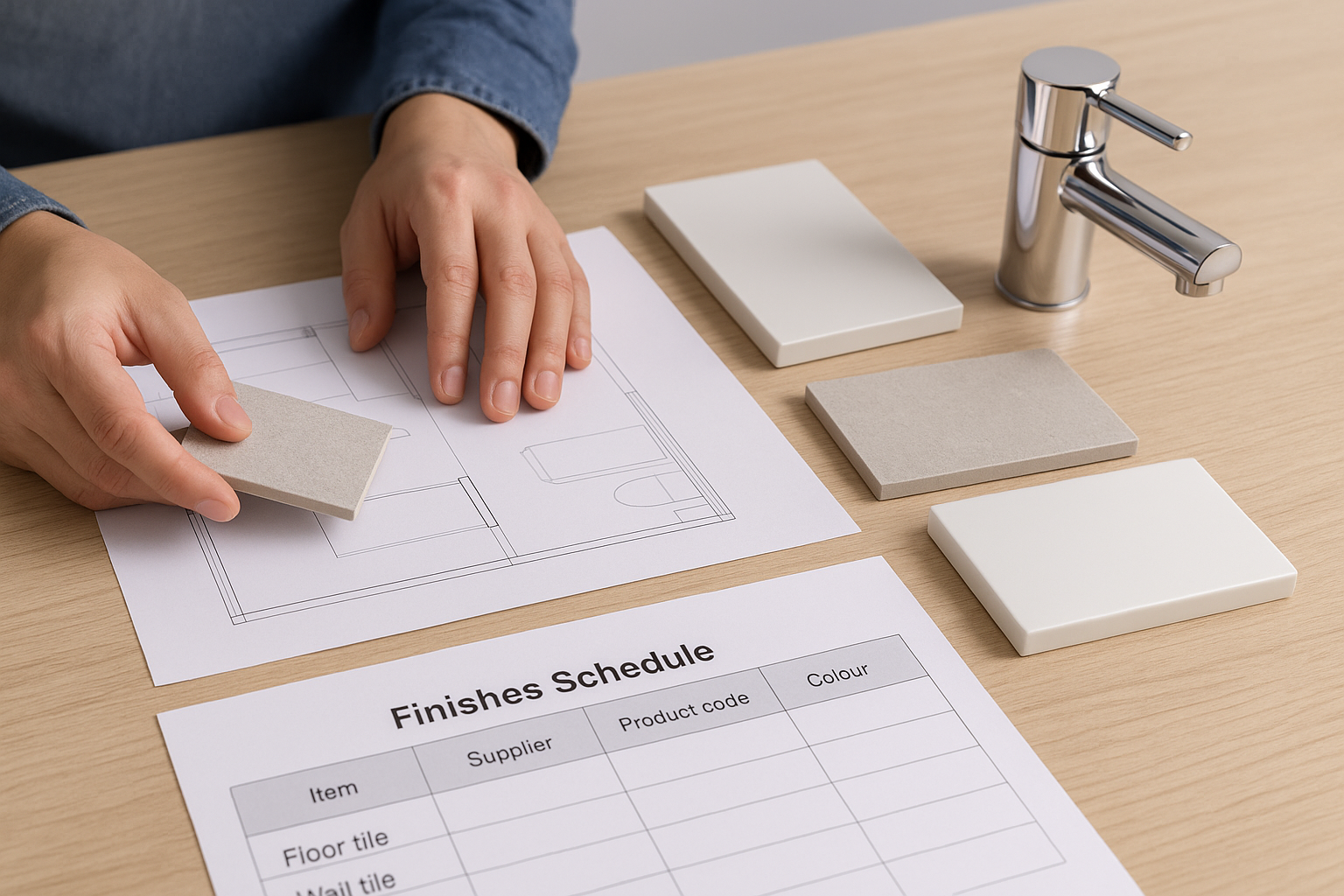
| Item | Supplier | Product code | Colour |
|---|---|---|---|
| Floor tile | |||
| Wall tile | |||
| Vanity | |||
| Tapware |
A finishes schedule protects you contractually by recording exactly what was agreed and priced.
Check if you need a building permit
Most cosmetic bathroom renovations don’t require a planning permit under Victorian building regulations. However, if you’re altering structural elements or drainage locations, your builder should confirm whether a building permit is required before work begins.
Skipping this check can result in failed inspections and costly rectification work, so clarify permit requirements at the quoting stage rather than after demolition.
Step 3. Choose a builder and sign a clear contract
Choosing the right builder for your bathroom renovation Coburg project protects your budget, your timeline, and your final result. You want a builder who is licensed, insured, and experienced with Melbourne’s inner-north housing stock, not someone quoting blind on a property type they have never worked on before.
How to vet a builder
Ask every builder you consider for their Victorian Building Authority (VBA) registration number and verify it before signing anything. Request at least two references from recent bathroom renovations and actually call those clients to ask about communication, timelines, and how variations were handled. A builder who hesitates to provide references is one worth crossing off your list.
Never pay a deposit greater than 10% before a contract is signed and a building permit (where required) is issued.
What your contract must include
Your written contract is your protection if something goes wrong mid-renovation. Make sure it covers every scope item and material agreed during quoting. A solid contract should include:
- Total fixed price or a detailed schedule of rates
- Start date and practical completion date
- Payment schedule tied to project milestones
- Variation clause explaining how change requests are priced
- Defects liability period and warranty terms
Step 4. Run the renovation smoothly from demo to handover
Once work begins, your role shifts from planning to monitoring progress and communicating clearly with your builder. A well-run bathroom renovation Coburg project moves through distinct phases, and knowing what to expect at each stage helps you spot delays early and keep everything on track.
Know what happens on site each week
Your renovation follows a set sequence that each trade depends on. Understanding the order helps you know when to expect each contractor on site and when to raise concerns with your builder.
- Week 1: Demolition, waste removal, waterproofing, and mandatory inspection
- Week 2: Rough-in plumbing and electrical work
- Week 3: Wall and floor tiling
- Week 4: Fixture installation, cabinetry, and final fit-off
Never allow tiling to begin before your waterproofing inspection has been passed and signed off.
Handle variations and handover correctly
Variations happen when the scope changes mid-project. Always get every variation confirmed in writing before your builder proceeds with any additional work, and agree on the revised cost and updated completion date at the same time. At handover, walk through the bathroom with your builder, test every fixture, and document any defects on a written list before releasing your final payment.
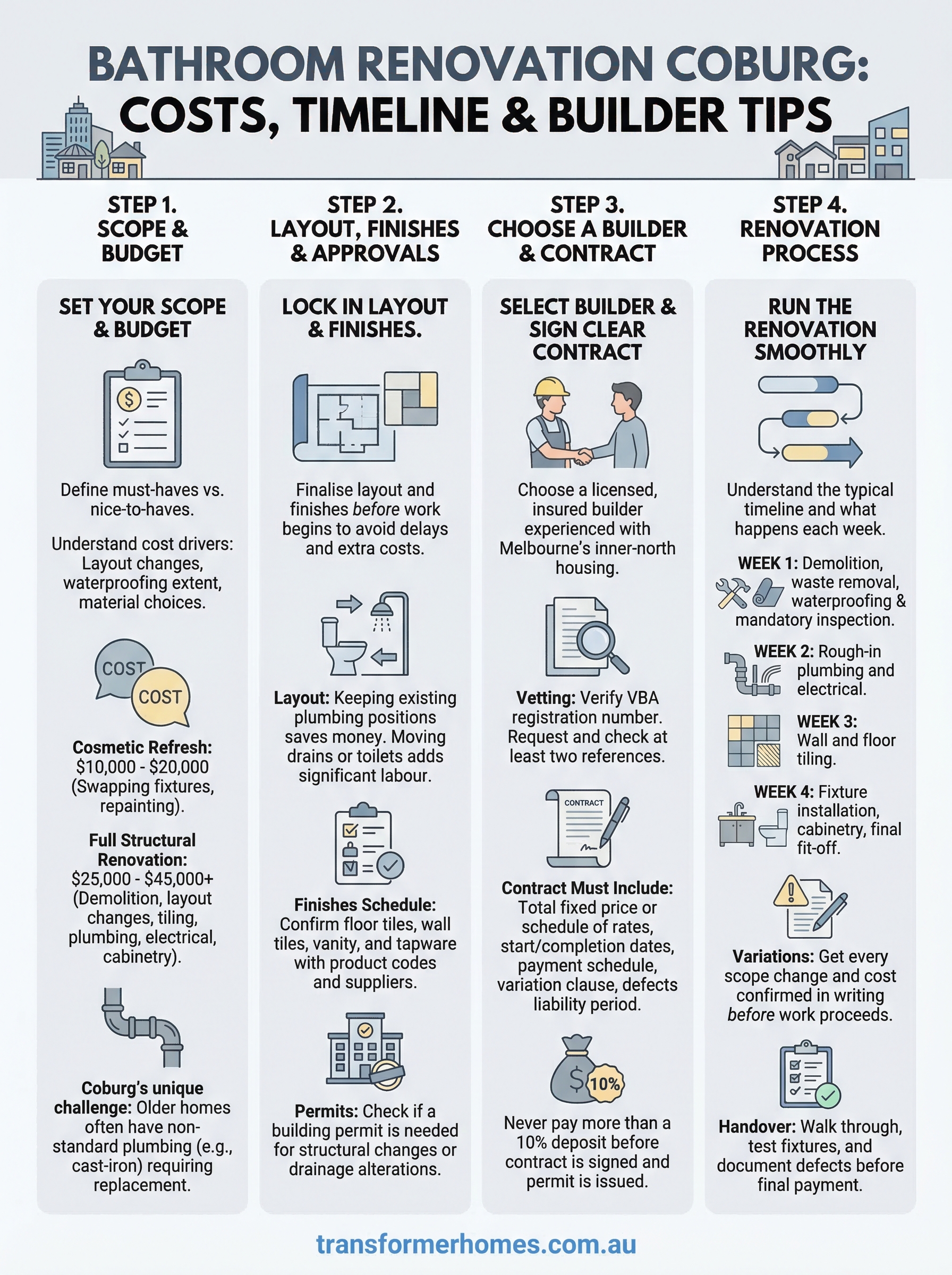
Get your Coburg bathroom renovation moving
A successful bathroom renovation Coburg project comes down to three things: a clear scope, a solid contract, and a builder who knows what they’re doing. Get those three right and everything else, budget, timeline, and finish quality, falls into place. Rush any one of them and you’ll spend the rest of the project managing the fallout.
Every step in this guide gives you a concrete action to take before moving to the next. Define your scope, lock in your finishes, check your permits, vet your builder, and stay on top of progress from demolition to handover. That sequence works because it catches problems before they become expensive.
If you’re ready to start planning your renovation, Transformer Homes works across Coburg and Melbourne’s northern suburbs with a focus on quality builds and clear communication from day one. Talk to the Transformer Homes team about your project today.
