
If you’re planning to add a deck to your home in Melbourne’s northern or western suburbs, one of the first questions you’ll likely ask is: do I need a building permit for a deck in Victoria? The short answer is, it depends. Factors like the deck’s height, size, and proximity to your property boundaries all determine whether you can build freely or need to go through the permit process. Getting this wrong can lead to fines, forced removal of the structure, or complications when you eventually sell your property.
At Transformer Homes, we handle deck builds and home additions across Melbourne, and permit questions come up in nearly every initial conversation we have with homeowners. The rules aren’t always straightforward, and there’s a common mix-up between building permits and planning permits, two separate approvals that serve different purposes and may both apply to your project.
This article breaks down exactly when a building permit is required for a deck in Victoria, what exemptions exist under current regulations, and how local council rules might add extra requirements on top of state-level legislation. We’ll also cover the practical steps to get your permit sorted so your project stays compliant from day one. Whether you’re considering a small ground-level entertaining area or a raised deck attached to your home, you’ll have a clear picture of what’s needed before any work begins.
Why deck permits matter in Victoria
Victoria’s building regulations exist to protect you, your family, and anyone who uses your property. Deck structures, particularly raised or attached ones, carry real structural and safety risks if designed or built without proper oversight. A permit isn’t just bureaucratic red tape; it’s a mechanism that ensures a registered building surveyor reviews your plans against the National Construction Code (NCC) and the Building Regulations 2018, which set minimum standards for structural integrity, materials, balustrade heights, and fall protection. Understanding why these rules exist makes it easier to navigate them without frustration.
The legal framework behind deck regulations
In Victoria, the Building Act 1993 and the Building Regulations 2018 govern most residential construction work, including decks. These laws operate at the state level, but your local council can layer additional requirements on top through its local planning scheme. When homeowners ask "do I need a building permit for a deck in Victoria?", the full answer comes from reading both layers together. State regulations set the baseline thresholds for when a permit is required, while local planning overlays can add further restrictions based on neighbourhood character, heritage overlays, or environmental sensitivity zones.
These regulations also connect to consumer protections under the Domestic Building Contracts Act 1995. For any residential building work valued over $10,000 in Victoria, your builder must hold domestic building insurance (DBI), which only applies to permitted and inspected work. Builds that skip the permit process fall outside this insurance framework entirely, leaving you without cover if defects appear or the builder becomes insolvent.
What happens if you skip the permit
Building without a required permit puts you in a position that is difficult and expensive to recover from. Your local council holds the authority to issue a building notice or order, which can require you to alter or demolish non-compliant work at your own cost. This is not a remote possibility; councils across Melbourne’s northern and western suburbs actively respond to neighbour complaints and carry out proactive site inspections, particularly in established residential areas with higher development activity.
Selling a property with an unpermitted structure is a serious problem. Conveyancers and buyers’ solicitors routinely check council records, and an undisclosed permit issue can stall or collapse a sale at the worst possible time.
Retrospective permits, sometimes called "as-built" approvals, are available but come with no guarantees. A building surveyor will assess the completed structure against current standards, and if it falls short, you may need to modify or pull down sections of the deck before any approval can be granted. The cost of fixing non-compliant work after the fact almost always outweighs the time and fees involved in getting the permit right from the start.
When you need a building permit for a deck
Under Victoria’s Building Regulations 2018, most decks attached to or built near your home will require a building permit. The regulations do allow for some exempt structures, but those exemptions come with strict size and height limits that many residential deck projects don’t meet. If you’re asking "do I need a building permit for a deck in Victoria?", the starting point is understanding the specific thresholds that trigger the permit requirement rather than assuming your project is small enough to qualify for an exemption.
If your deck connects directly to your home as a structural element, a building permit is almost always required regardless of its size.
The key thresholds under Victoria’s Building Regulations 2018
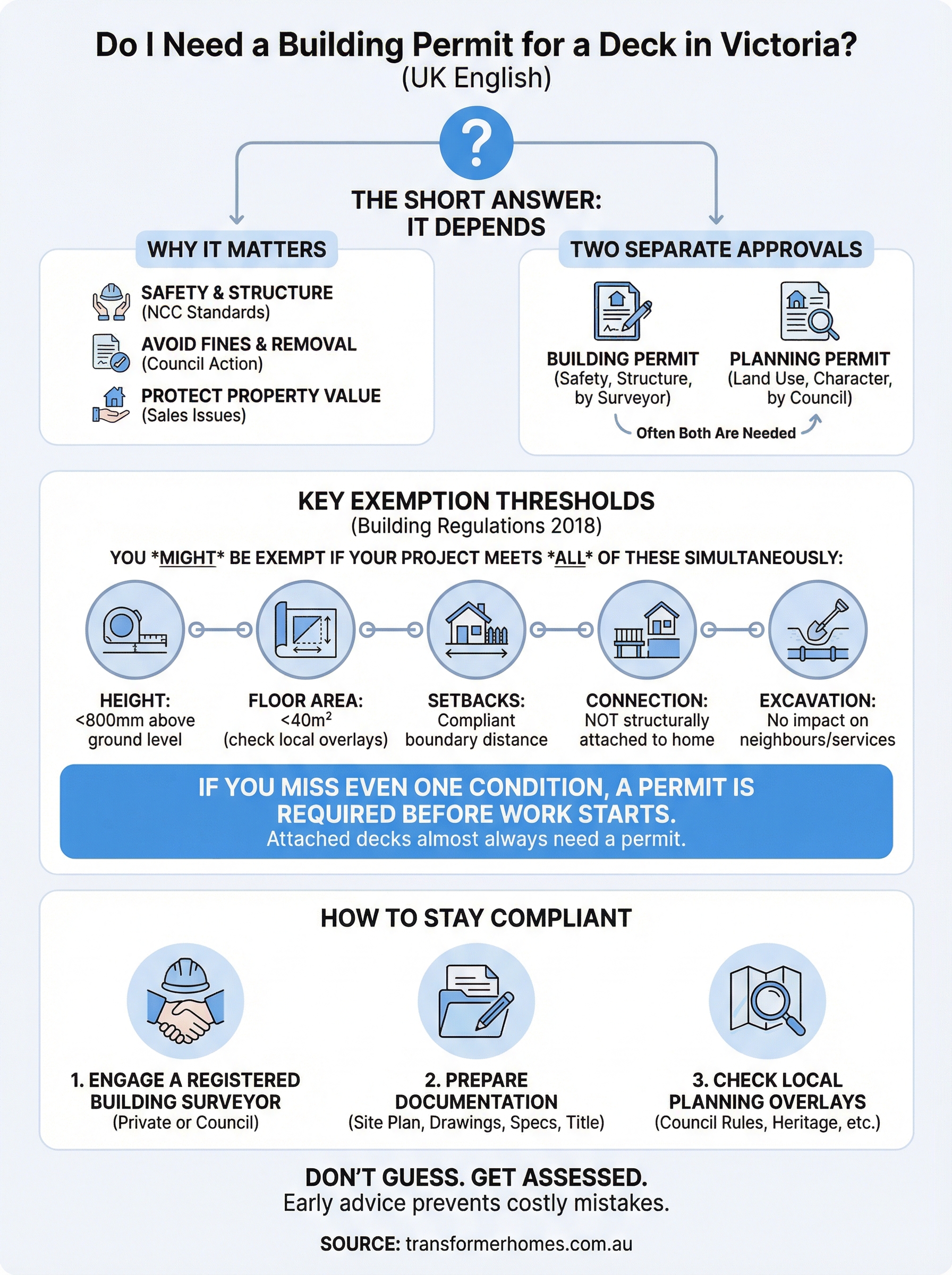
Schedule 3 of the Building Regulations 2018 sets out the conditions under which a deck or similar structure can be built without a permit. Your project needs to meet all of the following criteria simultaneously to qualify for an exemption. Missing even one condition means you need a permit before any work starts.
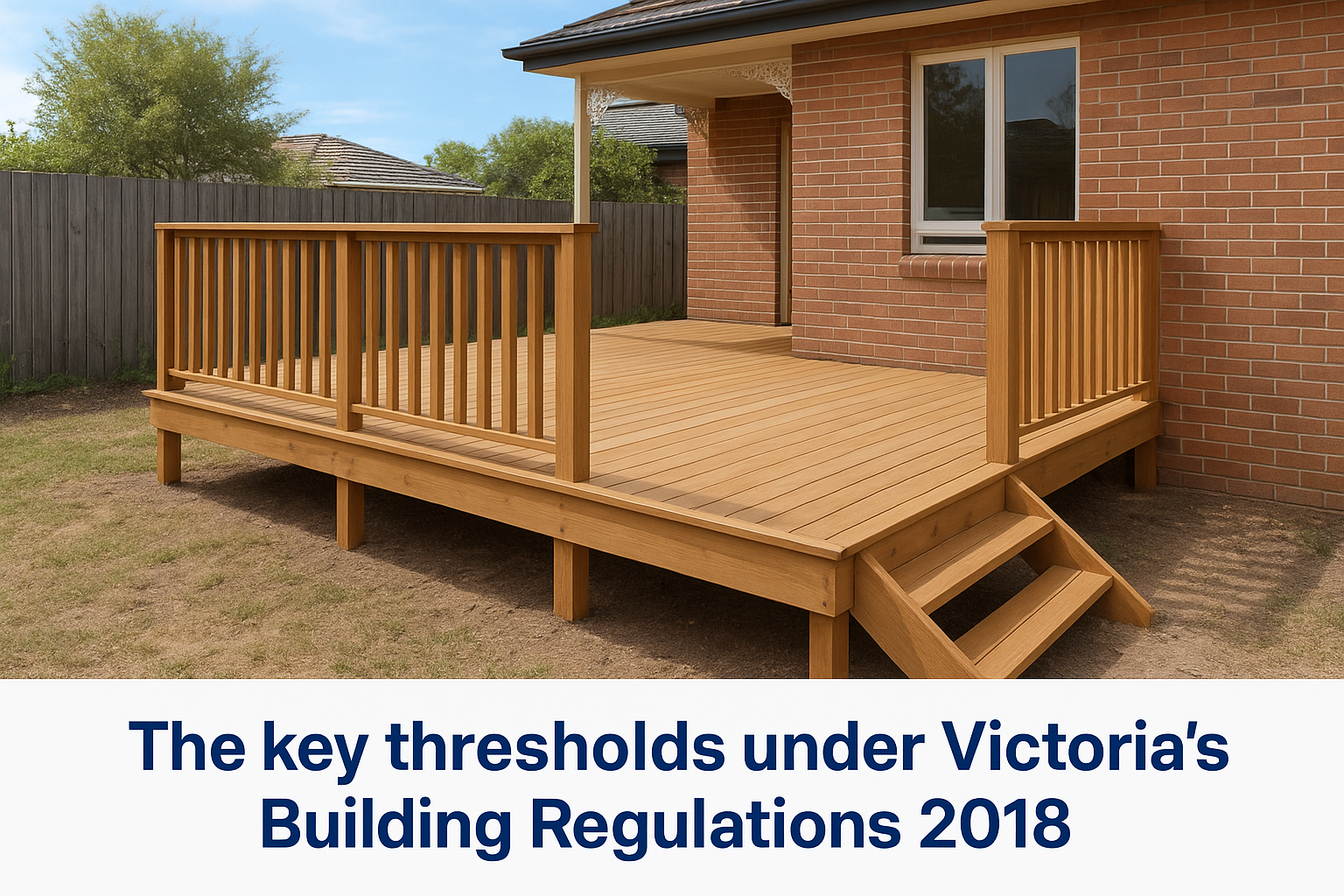
- Height above ground: The finished floor level must sit no more than 800mm above the existing ground level at any point along the structure.
- Floor area: The total floor area must not exceed 40m², though your local council’s planning overlay may impose tighter limits on top of this.
- Setbacks: The structure must maintain the required minimum distance from your property boundaries as set by both state regulations and your council’s local planning scheme.
- Structural connection: Any deck that attaches to your home as a structural element falls outside the standard exemption and requires a permit regardless of height or area.
Your project’s compliance also depends on whether footing excavation could affect neighbouring land or existing underground services. A registered building surveyor can assess your specific plans against these thresholds and confirm what approvals you need before any ground is broken.
Deck, pergola, verandah: key definitions
When you’re asking do I need a building permit for a deck in Victoria, the type of structure you’re building matters significantly. The Building Regulations 2018 use specific definitions to categorise outdoor structures, and the category your project falls into directly affects which permit thresholds apply. Using the wrong label for your structure can lead to incorrect assumptions about what approvals you actually need.
What counts as a deck in Victoria
A deck is a raised or ground-level platform typically constructed from timber, composite, or steel, either attached to or freestanding from your home. The critical distinction is that a deck is an open, floor-level structure without a roof. If your structure includes any overhead covering, it shifts into a different category under the regulations, which changes how permit requirements are assessed.
Even small design changes, like adding a shade sail or a pergola frame above your deck, can move your project out of one regulatory category and into another.
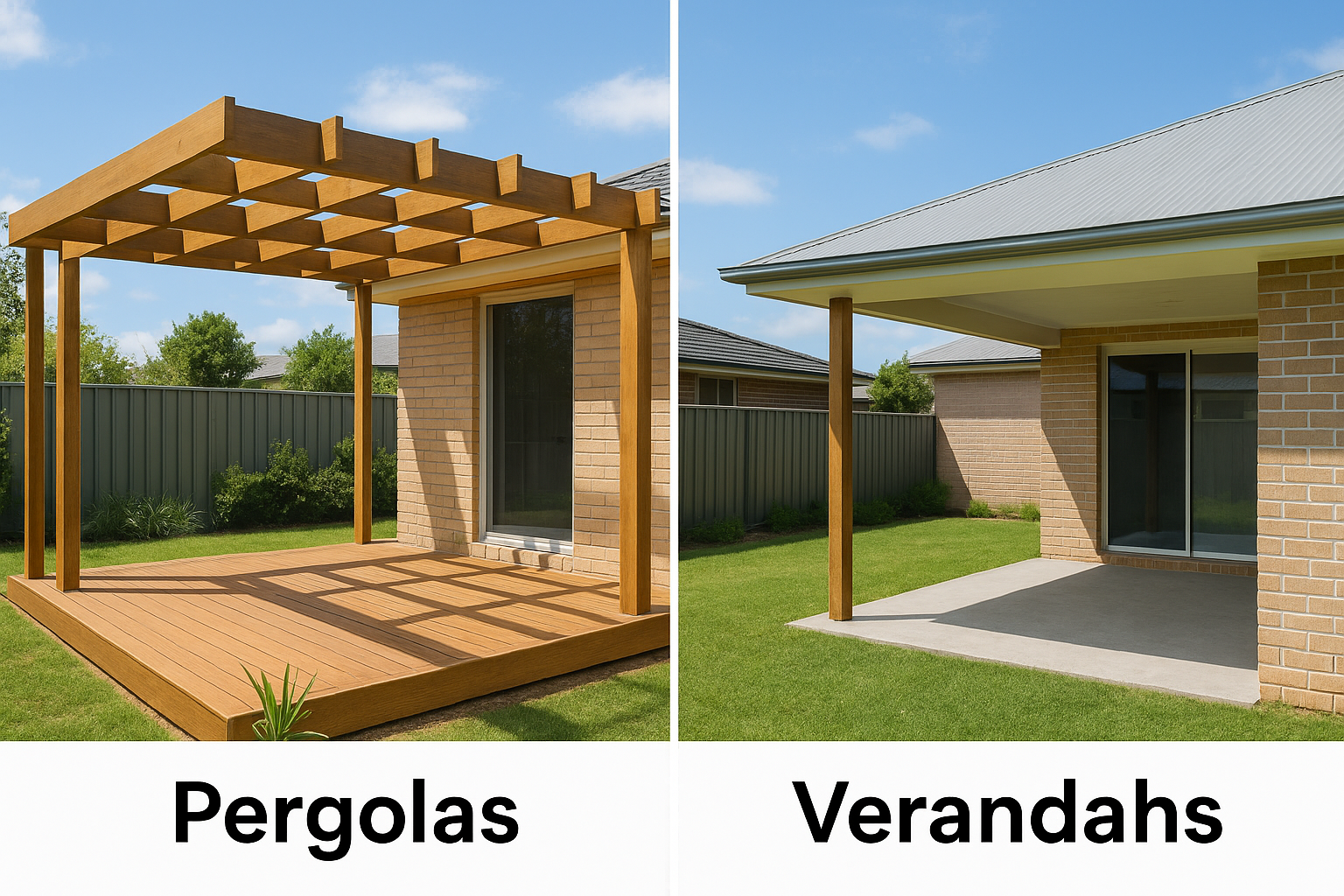
Pergolas and verandahs
A pergola is an open overhead structure, typically featuring a lattice or open-beam roof that provides no full weatherproofing. A verandah, by contrast, is a roofed, open-sided structure that attaches to the outside wall of your home and provides genuine shelter from rain. The table below summarises the core differences at a glance.
| Structure | Has a roof? | Attached to home? | Floor platform? |
|---|---|---|---|
| Deck | No | Optional | Yes |
| Pergola | Open or partial | Optional | Optional |
| Verandah | Yes (full) | Yes | Yes |
Both pergolas and verandahs carry their own permit thresholds under the Building Regulations 2018, and neither is automatically exempt simply because the structure looks lightweight or temporary. Your builder and building surveyor need to assess each element of a combined structure separately to confirm what approvals apply before construction starts.
Building permit vs planning permit in Victoria
One of the most common points of confusion when homeowners ask do I need a building permit for a deck in Victoria is the difference between a building permit and a planning permit. These are two separate approvals issued by different authorities, and in some cases your project may need both before construction can begin. Understanding the distinction upfront saves time and prevents the experience of completing one process only to discover you still need the other.
What a building permit covers
A building permit is issued by a registered building surveyor, who can be either private or council-appointed. It confirms that your proposed deck meets the structural and safety requirements set out in the National Construction Code and the Building Regulations 2018. The surveyor reviews your plans, approves the design, and then carries out mandatory inspections at key stages of construction to verify the work matches what was approved.
A building permit is about how you build, not whether you’re allowed to build in that location.
What a planning permit covers
A planning permit comes from your local council and focuses on land use, neighbourhood character, and the visual impact of your proposed structure. Councils in Melbourne’s northern and western suburbs often apply Design and Development Overlays or Neighbourhood Character Overlays that restrict the size, height, or materials of structures like decks, particularly in established residential areas. You can check whether a planning permit applies by reviewing your property’s zoning and any overlays through the Victoria Planning Provisions.
Some projects require both permits, while others need only a building permit, and some straightforward structures require neither. The order matters too: in most cases you need planning approval before a building permit is issued, so starting with your council’s planning department is the right first step for any project that sits near a boundary or involves a significant structure.
How to get a deck permit and avoid problems
Once you’ve confirmed you need a permit, the process is more straightforward than most homeowners expect. The permit pathway starts with engaging a registered building surveyor, who acts as the independent authority responsible for reviewing your plans, issuing the permit, and carrying out inspections at key stages of construction. You can appoint either a private building surveyor or your local council’s surveyor, and both are equally valid options under Victorian law.
Choose the right building surveyor
Selecting a private registered building surveyor rather than your council’s in-house service often speeds up the process, particularly in Melbourne’s northern and western suburbs where council workloads can be heavy during peak development periods. Your builder may already have an established relationship with a surveyor they trust, which streamlines communication and reduces delays. Either way, the surveyor you appoint becomes your primary contact for all permit-related decisions throughout the project.
Confirm that your surveyor holds current registration with the Victorian Building Authority (VBA) before any work begins.
What to prepare before you apply
Gathering the right documentation upfront saves significant time and prevents your application from stalling. Your surveyor needs a clear picture of your project before they can issue any approval, so putting these materials together early is worth the effort.
- Site plan showing property boundaries, setbacks, and the deck’s proposed location
- Construction drawings prepared by a draftsperson or structural engineer, including footing and framing details
- Specification documents outlining materials, fixing methods, and balustrade design
- Certificate of title to confirm land ownership and any registered restrictions
If you’re still working out whether you need to ask "do I need a building permit for a deck in Victoria" for your specific project, bring your preliminary plans to a surveyor early. Early engagement means problems get identified before any money is spent on materials or excavation, which is far less costly than discovering a compliance issue halfway through the build.
Final checks before you build
Before any concrete gets poured or timber gets cut, run through a quick compliance checklist. Confirm whether your project’s height, size, and boundary setbacks sit within the exemption thresholds under the Building Regulations 2018. If any single threshold isn’t met, you need a permit before work starts. Check your property’s planning overlays through your local council to confirm whether a planning permit is also required alongside your building permit.
The question "do I need a building permit for a deck in Victoria" has a clear answer once you know your project’s specific measurements and location on your block. Working with an experienced builder from the start keeps your project compliant and protected from costly corrections further down the track. If you’re planning a deck, home addition, or full renovation in Melbourne’s northern or western suburbs, talk to the team at Transformer Homes to get your project moving on solid footing from day one.
