
Choosing someone to build your home is one of the biggest financial decisions you’ll make, and one of the hardest to reverse. The right builder will turn your vision into something real. The wrong one will cost you time, money, and sleep. That’s why knowing the right questions to ask a custom home builder matters more than any glossy brochure or display home walkthrough. The answers you get (and sometimes the ones you don’t) will tell you everything about how that builder operates.
At Transformer Homes, we build custom homes across Melbourne’s Northern and Western suburbs, and we’ve seen firsthand what happens when homeowners sign contracts without doing their homework. Skipped questions lead to surprise costs, drawn-out timelines, and relationships that break down before the frame goes up. We’d rather you ask us tough questions upfront, and we’d rather you ask every other builder on your shortlist the same ones. A builder worth hiring will welcome the scrutiny.
Here are eight questions you should ask any custom home builder before you put pen to paper, and what to look for in their responses.
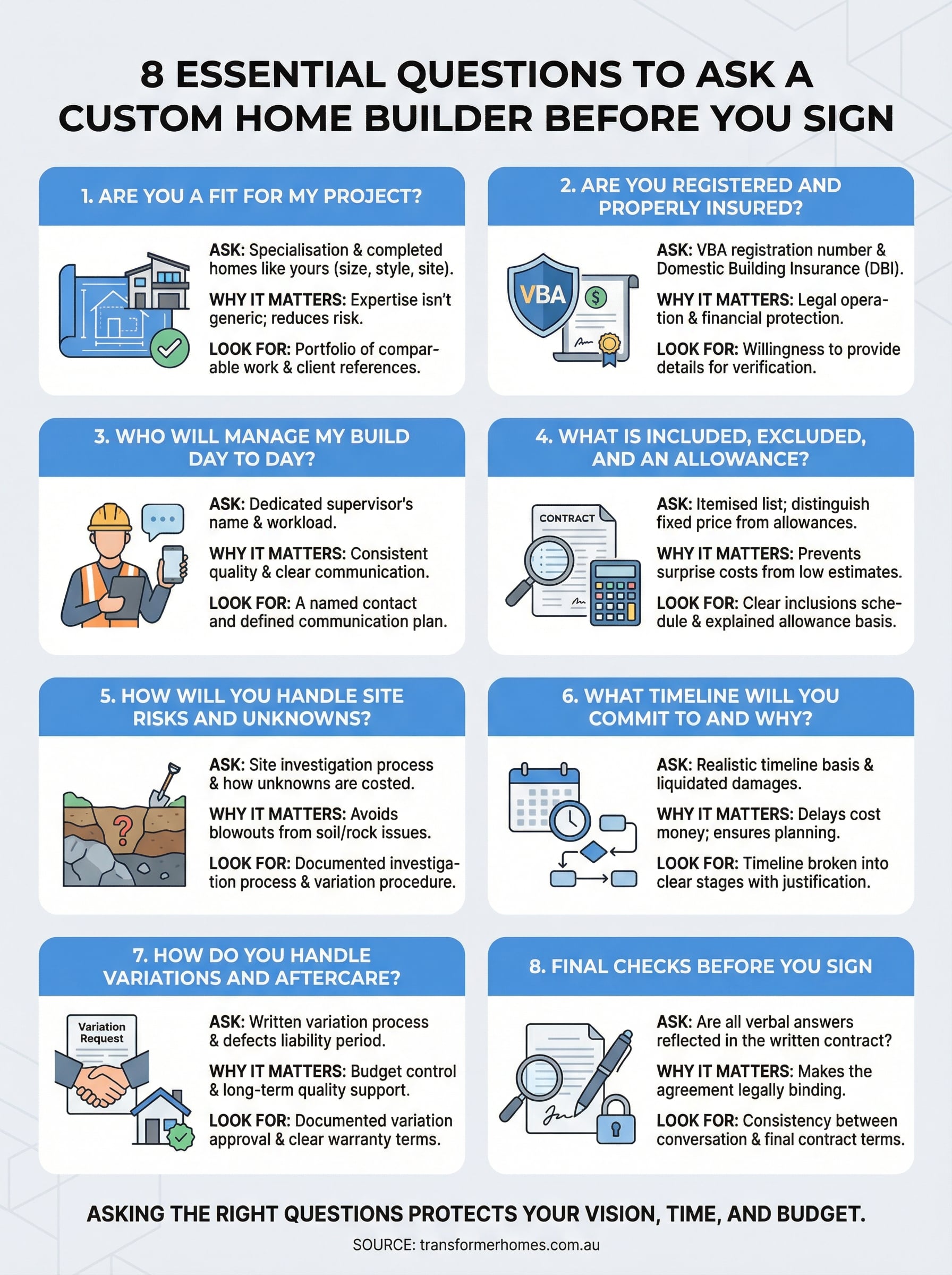
1. Are you a fit for my project?
Before you get into costs and timelines, you need to know whether the builder in front of you actually builds homes like yours. This question is one of the most important questions to ask a custom home builder, and it sets the tone for everything that follows. A specialist in high-end custom builds thinks differently to a volume builder who pumps out 200 homes a year.
What to ask the builder
Ask directly: "What types of projects do you specialise in, and have you completed homes similar to mine in terms of size, style, and site conditions?" Follow that with: "Can you show me recent examples, and can I speak to those clients?" You want specific answers, not general claims about versatility.
Why this question matters
Builders who work outside their expertise cut corners they don’t even recognise as corners. A builder experienced in dual occupancy townhouses in Melbourne’s inner north understands soil conditions, council requirements, and typical site challenges in ways a generalist simply does not. Matching the builder’s strengths to your project type reduces risk significantly.
Fit matters more than price. A builder who knows your project type will price it accurately, manage it efficiently, and flag problems before they become costly surprises.
What a strong answer sounds like
A confident builder will point you to a portfolio of comparable work and offer to connect you with past clients without hesitation. At Transformer Homes, for example, we build custom homes and dual occupancy projects across Melbourne’s Northern and Western suburbs, and we welcome those conversations because our completed work speaks for itself.
Red flags to watch for
Watch out for builders who pivot quickly away from your specific project type and start talking about all the different things they can do. Vague answers like "we build all kinds of homes" without any supporting examples suggest limited relevant experience. If they can’t name a comparable project, treat that as a warning.
What to confirm in writing
Before you sign, ask for a written list of comparable completed projects with addresses you can visit or verify. Confirm the builder’s licence covers the specific class of work your project falls under, and get the names and contact details of at least two recent clients with similar builds.
2. Are you registered and properly insured?
This question is non-negotiable for any residential build in Victoria. All domestic builders must hold a valid registration with the Victorian Building Authority (VBA), and any residential building work valued over $16,000 must be covered by Domestic Building Insurance (DBI). Skipping this verification puts your project, your home, and your money at serious risk.
What to ask the builder
Ask directly: "Can you provide your VBA registration number and confirm your Domestic Building Insurance is in place for my project?" Follow that up by asking whether their subcontractors carry their own public liability insurance, because uninsured work completed on your site becomes your legal and financial problem if something goes wrong.
Why this question matters
Unregistered builders operate illegally in Victoria, and any contract you sign with one may be unenforceable. Without DBI, you have no financial protection if the builder becomes insolvent, abandons the job, or passes away mid-build.
Your registration and insurance checks take under 10 minutes and can save you hundreds of thousands of dollars.
What a strong answer sounds like
A legitimate builder will give you their VBA registration number without hesitation and encourage you to verify it directly on the VBA website. They will also confirm that DBI is arranged before work begins, as the law requires.
Red flags to watch for
Be cautious if a builder hesitates or deflects when asked for their registration number, or claims insurance details will get sorted later. Both are serious warning signs that should stop you from proceeding.
What to confirm in writing
Record the VBA registration number and a DBI certificate of currency in your contract before you sign anything.
3. Who will manage my build day to day?
The person who sells you the build is rarely the person who runs it. On large-volume operations, a single supervisor may juggle ten or more active sites simultaneously. Knowing exactly who is accountable for your project on the ground, before you sign, is one of the most practical questions to ask a custom home builder.
What to ask the builder
Ask directly: "Who will be my dedicated site supervisor, and how many other projects will they be managing at the same time?" Then ask how frequently they will be on your site in person, and who you contact if an issue comes up outside business hours.
Why this question matters
Day-to-day site management determines your build quality as much as any specification in the contract. A stretched supervisor misses problems, delays subcontractors, and passes those costs on to you. Clear lines of communication and a consistent point of contact protect your timeline and your budget.
The builder who answers your calls on a Tuesday afternoon is usually the builder who finishes on time.
What a strong answer sounds like
A confident builder names a specific supervisor, explains their role clearly, and describes how they communicate progress updates to you. At Transformer Homes, professional project management is central to how we work, which means clients always know who is responsible and how to reach them.
Red flags to watch for
Be cautious if no specific supervisor is named, or if the answer suggests your site will rotate through different managers. Inconsistent oversight produces inconsistent results.
What to confirm in writing
Record the supervisor’s name and contact details in the contract, along with a stated communication schedule and the escalation process for urgent site issues.
4. What is included, excluded, and an allowance?
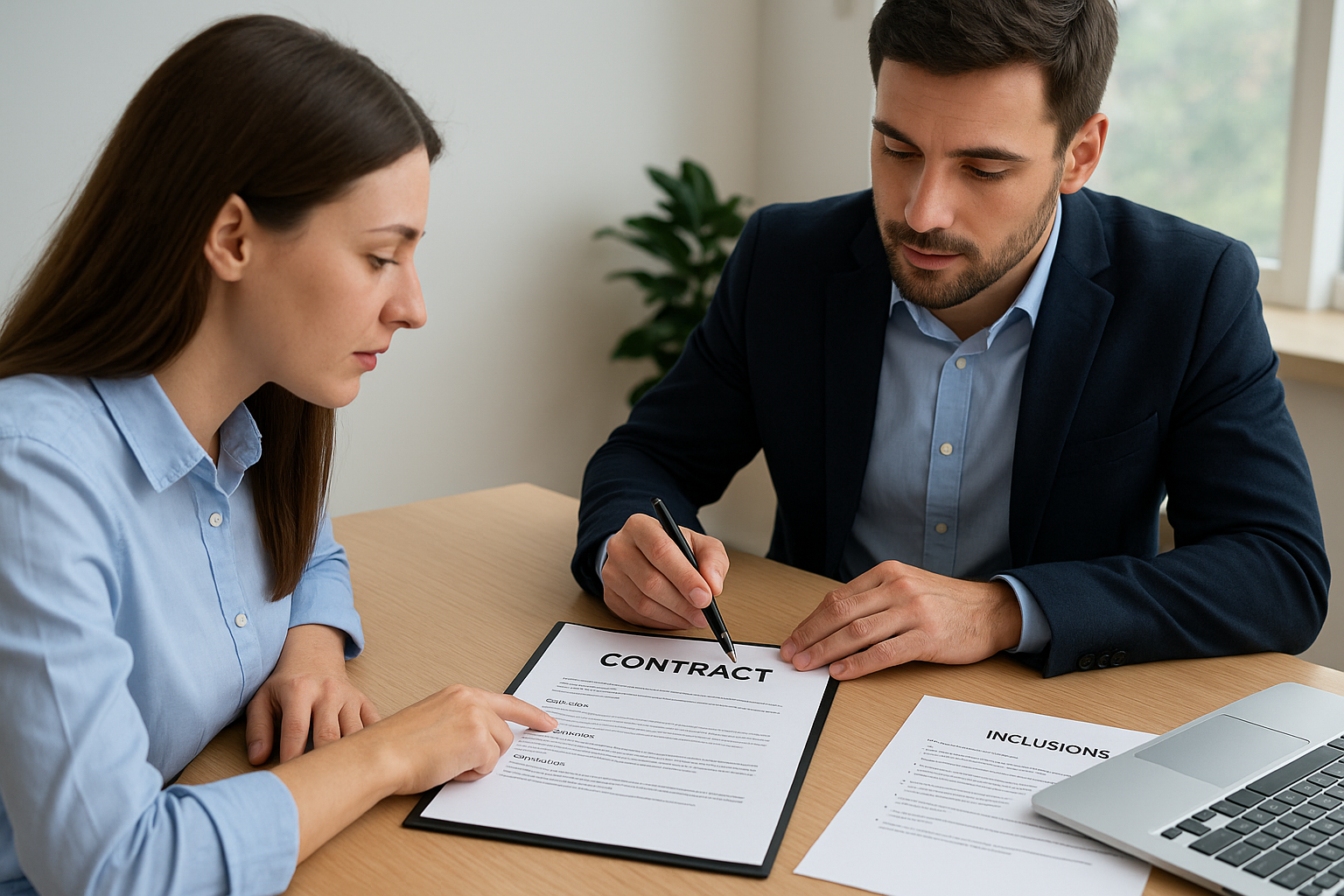
Contract pricing in residential construction can look very different from what you actually pay at the end. Provisional sums and prime cost allowances are placeholders builders use when exact costs are not yet known, and they rarely favour the client when the final invoice arrives. Understanding how to read these items is one of the most practical questions to ask a custom home builder before you commit to anything.
What to ask the builder
Ask directly: "Can you walk me through every line item and tell me whether it is a fixed price, a provisional sum, or a prime cost allowance?" Then ask for the builder’s basis for each allowance figure so you can assess whether it reflects actual current market rates.
Why this question matters
Allowances set too low look attractive on paper but leave you exposed to large cost variations once real trades and materials are engaged. A provisional sum for siteworks, for example, can blow out by tens of thousands of dollars if the builder has underestimated excavation or soil conditions.
A fixed-price contract is only fixed if the inclusions list is complete, specific, and agreed upon before you sign.
What a strong answer sounds like
A transparent builder will itemise every inclusion clearly and explain their allowance figures with reference to current supplier quotes or recent project data. They will not rush you through the specification sheet or dismiss your questions about individual line items.
Red flags to watch for
Watch for vague inclusions lists or allowances that sit well below comparable builder quotes. Both signal that the true cost is being deferred to variation notices later in the build, once you are locked in.
What to confirm in writing
Insist on a complete inclusions schedule attached to the contract, with every allowance stated clearly. Get a written process for how variations to those allowances will be priced and approved before any additional work proceeds.
5. How will you handle site risks and unknowns?
Every block of land holds surprises. Unexpected rock, unstable fill, or contaminated soil can stop a build in its tracks and send costs climbing before a single wall goes up. This is one of the questions to ask a custom home builder that separates builders who plan well from those who simply hope for the best.
What to ask the builder
Ask directly: "What site investigation have you done, or do you plan to do, before finalising my contract price?" Follow that with: "How do you price and communicate unforeseen site conditions when they come up during the build?" You want a process, not a reassurance.
Why this question matters
Site unknowns are one of the most common sources of cost blowouts in residential construction. In Melbourne’s Northern and Western suburbs, soil conditions vary significantly across even short distances, and builders who skip proper investigation pass that risk directly onto you through variation notices mid-build.
A builder who investigates the site before pricing gives you a far more reliable number than one who buries a vague allowance in the contract and moves on.
What a strong answer sounds like
A prepared builder will describe a clear site investigation process that happens before the contract is finalised. They will also explain how variation costs for genuine unknowns are calculated and approved transparently, so you are never blindsided by a number you had no input on.
Red flags to watch for
Be cautious if the builder cannot explain their site investigation steps or dismisses the question with "we’ll deal with it if it comes up." That attitude transfers significant financial risk directly onto you.
What to confirm in writing
Record the site investigation findings and any associated risk allowances in the contract, along with a written process for how unforeseen conditions will be costed and approved before any additional work proceeds.
6. What timeline will you commit to and why?
A builder who gives you a vague or unqualified timeline is really telling you they have not planned your build properly. One of the most revealing questions to ask a custom home builder is not just when they expect to finish, but how they arrived at that number and what happens if they do not hit it.

What to ask the builder
Ask directly: "What is your realistic build timeline for a project like mine, and can you walk me through how you calculated it?" Then ask whether the contract includes liquidated damages clauses, which penalise the builder financially for delays that are clearly their fault.
Why this question matters
Delays compound quickly in residential construction. A late frame means a late lock-up, which pushes back electrical and plumbing, which delays your practical completion date. If you are paying rent or bridging finance while the build drags on, every week of delay has a direct cost to you.
A builder who cannot explain their timeline in specific stages has not thought it through carefully enough to be trusted with your project.
What a strong answer sounds like
A prepared builder will break the timeline into clear stages, reference council and permit lead times, and explain how they schedule subcontractors to avoid gaps between trades.
Red flags to watch for
Be cautious if a builder quotes an unusually short timeline without justification, or cannot tell you what causes most delays on their projects.
What to confirm in writing
Record the agreed completion date and each milestone in the contract, along with the liquidated damages rate and the process for granting extensions of time.
7. How do you handle variations and aftercare?
Two things break down almost every builder-client relationship: uncontrolled variation costs and weak warranty support after practical completion. These are among the most important questions to ask a custom home builder, and the answers reveal exactly how the builder treats you once you are locked into a contract.
Variation question to ask before signing
Ask directly: "What is your process for pricing and approving variations, and will I receive a written quote before any additional work proceeds?" You need a documented process, not a verbal assurance that extras will be handled fairly.
Warranty question to ask before signing
Ask: "What warranty do you provide on your workmanship, and how do you handle defect claims after practical completion?" A builder confident in their quality will answer this without hesitation.
Why these questions matter
Variations are the most common source of budget blowouts in residential construction. A builder who disappears after handover leaves you carrying repair costs that should never have been yours. Both questions protect you at different stages of the same project.
A builder who controls variations tightly and backs their work with a clear warranty has genuine confidence in what they deliver.
What strong answers sound like
A reliable builder will describe a written variation approval process and confirm a minimum 12-month defects liability period, as required under Victorian domestic building law. They will name a specific contact for post-handover defect claims.
Red flags to watch for
Walk away if a builder cannot explain their variation process clearly, or dismisses your questions about warranty entitlements after handover.
What to confirm in writing
Record the variation approval process and defects liability period in the contract, along with the nominated contact for post-completion defect claims, before you sign anything.
Final checks before you sign
Working through these questions to ask a custom home builder gives you something most people do not have when they sign: a clear picture of who you are dealing with before money changes hands. Registration, insurance, site management, contract clarity, and warranty terms are not boxes to tick for the sake of it. Each one protects you from a specific risk that trips up homeowners every year across Melbourne’s Northern and Western suburbs.
Before you sign anything, read the full contract against your notes from these conversations. If the answers you received verbally are not reflected in the written terms, ask for the contract to be updated before you proceed. A builder who resists that request is telling you something important.
If you want to work with a builder who welcomes these questions and answers them clearly, get in touch with the team at Transformer Homes to talk through your project.
