
Most homes across Melbourne’s northern and western suburbs share a common trait, the backyard feels like a separate space rather than an extension of the house. A wall, a sliding door, maybe a small patio. That’s it. If you’ve been searching for rear home extension ideas, chances are you already sense that your home’s back end isn’t pulling its weight. You want more space, sure, but you also want that seamless connection between inside and out that makes a home feel twice its size.
The good news? A well-designed rear extension can deliver exactly that. Whether you’re working with a compact block in Preston or a wider lot in Thomastown, extending off the back of your house opens up options that side or front extensions simply can’t match, direct garden access, northern light, and living areas that spill naturally into outdoor entertaining spaces.
At Transformer Homes, we’ve designed and built rear extensions across Melbourne that do more than add square metres. They fundamentally change how families use their homes. Below, we’ve put together seven practical extension concepts that prioritise indoor-outdoor flow, each drawn from real design approaches we use on our projects. Whether you’re after a full open-plan kitchen-living area or a modest bump-out that reframes your backyard, you’ll find something here worth exploring.
1. Custom open-plan rear extension
A custom open-plan rear extension is the most popular format when Melbourne homeowners start exploring rear home extension ideas in earnest. It removes the wall separating your kitchen, dining, and living areas and pushes the footprint of the house out toward the backyard, creating one large, connected space that feels open from the moment you walk through the door.
What it is
This type of extension replaces a cluttered sequence of small rooms at the rear of your home with a single, flowing space that typically combines kitchen, dining, and a living zone. The new structure attaches directly to the back of the existing house, with the rear wall replaced by full-height glazing or stacking doors that open directly to the garden or alfresco area.
Design details that improve indoor-outdoor flow
The key to making this work is the transition between inside and out. Flush floor levels between the internal slab and the external patio eliminate the visual break that separates the two spaces. Combine that with large sliding or bi-fold doors across the full rear wall and the boundary between inside and outside effectively disappears when the doors are open.
Matching your internal and external floor materials, such as using the same tile indoors and on the patio, reinforces the sense of one continuous space rather than two separate areas.
Best suited to
Open-plan rear extensions suit homes with a reasonable rear setback and a backyard that receives decent northern or western afternoon sun. They work particularly well on older Melbourne homes in suburbs like Preston or Northcote, where the original rear rooms are dark and disconnected from the garden.
Budget and build notes in Melbourne
A custom open-plan rear extension in Melbourne typically starts around $180,000 to $220,000 for a mid-range build, depending on size and finishes. You’ll also need to factor in planning permits, which most residential zones require if the extension exceeds certain height or setback limits. A registered builder can assess your site and flag what approvals apply before you commit to anything.
2. L-shaped rear extension that creates a courtyard
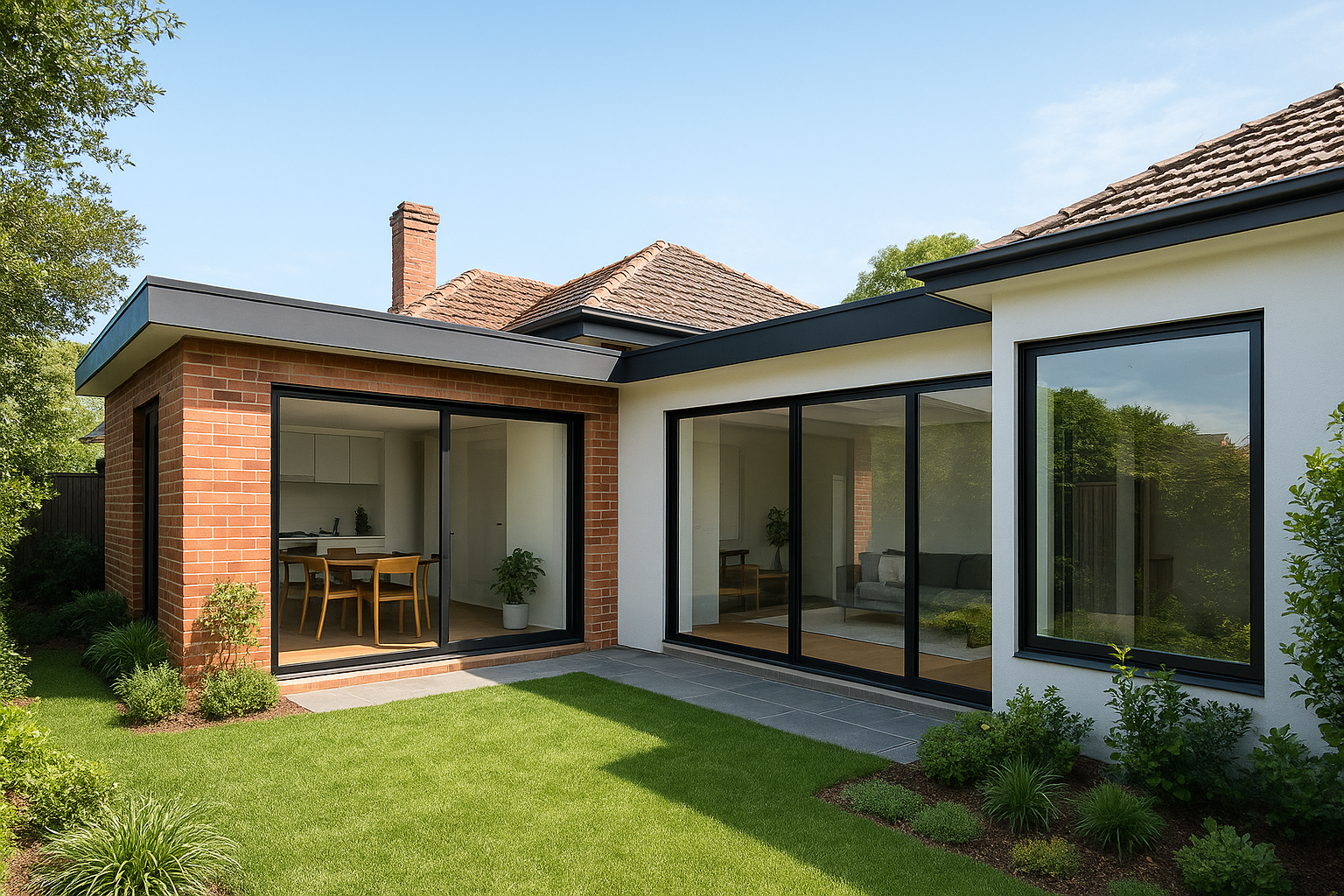
An L-shaped rear extension takes the standard bump-out concept and adds a wing that runs along one side of the backyard, forming a natural courtyard between the new structure and the garden. This layout gives you significantly more floor space than a straight extension while doing something the single-run format can’t: it defines an outdoor room without fencing it in.
What it is
This extension style wraps around two sides of your outdoor space, creating a sheltered courtyard that sits at the junction of the two wings. One leg typically houses kitchen and dining, while the other holds a lounge, study, or extra bedroom depending on your needs.
Design details that improve indoor-outdoor flow
The courtyard itself becomes the focal point. Glazed doors or large windows on both internal faces of the L mean you look out into the courtyard from multiple rooms simultaneously, pulling the outside in from two directions at once.
Position the courtyard on the northern side of the L wherever possible to capture maximum sun throughout the day.
Best suited to
This layout suits wider blocks where a straight extension would feel like a tunnel. Suburbs like Glenroy or Pascoe Vale with generous rear setbacks are strong candidates for this particular rear home extension idea.
Budget and build notes in Melbourne
Expect to pay $230,000 to $290,000 for a well-built L-shaped extension in Melbourne, reflecting the additional footings, roofline complexity, and glazing involved.
3. Glazed rear extension with skylights
A glazed rear extension prioritises natural light above all else. Where other extension styles focus on expanding floor area, this approach transforms how light moves through your home by replacing solid walls with glass panels and overhead skylights that flood the interior throughout the day.
What it is
This extension attaches to the rear of your home and uses structural glazing on the rear wall and roof to create a light-filled addition. Skylights sit within the roofline itself, pulling daylight deep into the space even when the external doors are closed.
Design details that improve indoor-outdoor flow
The glazed rear wall works similarly to bi-fold or sliding doors, but it frames the garden view year-round regardless of the weather. Overhead skylights eliminate the shadowing that standard extensions create on adjacent rooms, keeping your existing living areas bright rather than cutting off their light source.
Specify thermally broken aluminium frames for your skylights to minimise heat loss in winter and reduce condensation.
Best suited to
This style suits homes on south-facing blocks where northern sun is limited at ground level, and properties where neighbouring structures cast shadows across the rear. It’s one of the more versatile rear home extension ideas for older Melbourne homes that already suffer from dark rear rooms.
Budget and build notes in Melbourne
Glazed extensions typically cost $200,000 to $260,000 in Melbourne depending on the extent of glazing and the skylight specification. High-performance glazing adds cost upfront but reduces your ongoing heating and cooling bills meaningfully over time.
4. Rear kitchen extension with an alfresco link
A rear kitchen extension with an alfresco link combines two of the most-requested upgrades into one cohesive project. This approach designs the kitchen and outdoor entertaining area together from the start, creating a genuine connection between where you cook and where you gather outdoors rather than treating them as separate renovations bolted together after the fact.
What it is
This extension pushes your kitchen footprint toward the backyard and connects it directly to a covered alfresco area through wide sliding or stacking doors. The alfresco sits immediately off the kitchen, not off a separate living room, which puts the cook at the centre of the action whether guests are inside or out.
Design details that improve indoor-outdoor flow
Continuity of materials and bench height carries the indoor space outward. An outdoor bench or bar ledge aligned with your internal island creates a natural serving zone that removes the need to carry food between rooms. Matching ceiling heights between the internal kitchen and the alfresco roof keeps the sightline clean and uninterrupted.
Specify a covered alfresco with a ceiling fan and downlights to make the outdoor zone genuinely usable across Melbourne’s unpredictable seasons.
Best suited to
This is one of the most practical rear home extension ideas for households that entertain regularly. It suits blocks with a reasonable rear setback and homes where the existing kitchen already sits toward the back of the house.
Budget and build notes in Melbourne
Budget $190,000 to $250,000 for a combined kitchen extension and alfresco structure in Melbourne, with the covered roofing and outdoor finishes adding meaningfully to the base construction cost.
5. Split-level rear extension for sloping blocks
A sloping block doesn’t have to limit what you can build at the rear of your home. Split-level rear extensions turn the site’s natural fall into a design asset, creating distinct zones at different heights that connect your interior to the garden in a way a flat-slab extension simply can’t replicate.
What it is
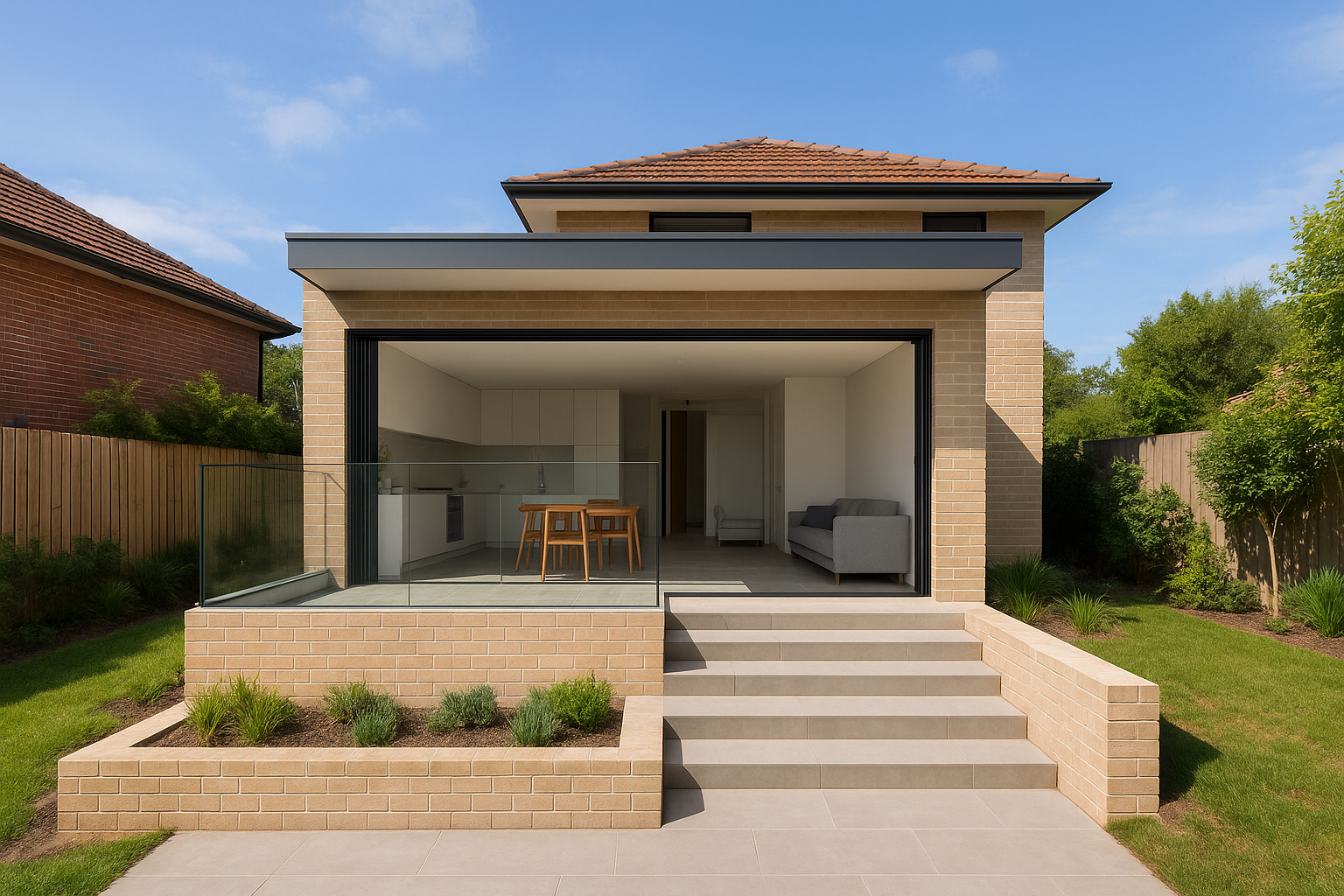
Split-level extensions follow the natural slope of your block by building the new structure across two or more floor levels. The design steps down with the land, with each level serving a different function, such as kitchen and dining up top and a lounge or alfresco below.
Design details that improve indoor-outdoor flow
The level change naturally defines the transition between inside and out. Glazed balustrades or open stairways keep sightlines clear between levels, while wide sliding doors at the lower level open directly onto your garden. This is one of the more striking rear home extension ideas for naturally sloping sites.
Use the lower level’s slab edge as a built-in seat wall or planter to integrate the structure into your landscaping.
Best suited to
Your block suits this style if it has a natural fall of 600mm or more toward the rear. Many homes in Melbourne’s hillier northern suburbs sit on exactly this kind of site, making this approach more cost-effective than levelling the block with extensive earthworks.
Budget and build notes in Melbourne
Expect to budget $240,000 to $310,000 in Melbourne for a split-level build. Stepped footings, retaining walls, and additional structural engineering to manage the level change safely all push costs above a standard flat-slab extension.
6. All-weather sunroom or enclosed patio extension
An all-weather sunroom or enclosed patio extension solves one of Melbourne’s most persistent problems: outdoor spaces that become unusable the moment the weather turns. This approach builds a fully enclosed structure off the rear of your home that functions as a year-round living zone, not just a seasonal one.
What it is
A sunroom or enclosed patio extension sits at the rear of your home and uses thermally glazed walls and a weatherproof roof to create a sheltered space that bridges indoors and out. Unlike a standard alfresco, it shields you from wind, rain, and cold without closing off the garden view entirely.
Design details that improve indoor-outdoor flow
Wide sliding panels or operable louvres along the rear wall let you open the space fully in warmer months, so the room shifts from enclosed to alfresco depending on the season. Consistent flooring between your main living area and the sunroom reinforces the sense of a continuous interior rather than a tacked-on addition.
Specify double-glazed panels and a ceiling fan to keep the space comfortable across Melbourne’s full range of seasons without leaning heavily on heating or cooling.
Best suited to
This is one of the more flexible rear home extension ideas for households with young children or those who entertain across all seasons. It suits homes of almost any block size.
Budget and build notes in Melbourne
Expect to budget $150,000 to $210,000 in Melbourne for a well-specified sunroom extension, with glazing quality and roof insulation driving the bulk of the cost variation.
7. Passive design rear extension for year-round comfort
A passive design rear extension uses building orientation, thermal mass, and controlled glazing to keep your home comfortable year-round without relying on mechanical heating or cooling systems to compensate for poor design choices.
What it is
This extension applies passive solar principles to your rear addition, using the sun’s path to heat the home in winter and shade it in summer. The design typically incorporates north-facing glazing, high-performance insulation, and thermally massive floors such as polished concrete to store and release warmth naturally throughout the day.
Design details that improve indoor-outdoor flow
Wide north-facing sliding doors connect your interior to the garden while allowing winter sun to penetrate deep into the living space. A correctly proportioned eave shades the same glass in summer when the sun sits higher, keeping the room cool without cutting off your view of the garden or outdoor entertaining area.
Size your eaves to Melbourne’s latitude of approximately 37.8°S to get the shading geometry right across both seasons.
Best suited to
This is one of the most considered rear home extension ideas for households focused on long-term running costs and thermal comfort. It suits north-facing blocks, or homes where the new addition can be positioned to capture consistent northern sun.
Budget and build notes in Melbourne
Expect to budget $200,000 to $260,000 for a passive design extension in Melbourne. Higher-grade insulation and glazing add cost upfront, but the reduction in energy bills pays back meaningfully over the life of the home.
Bringing it together
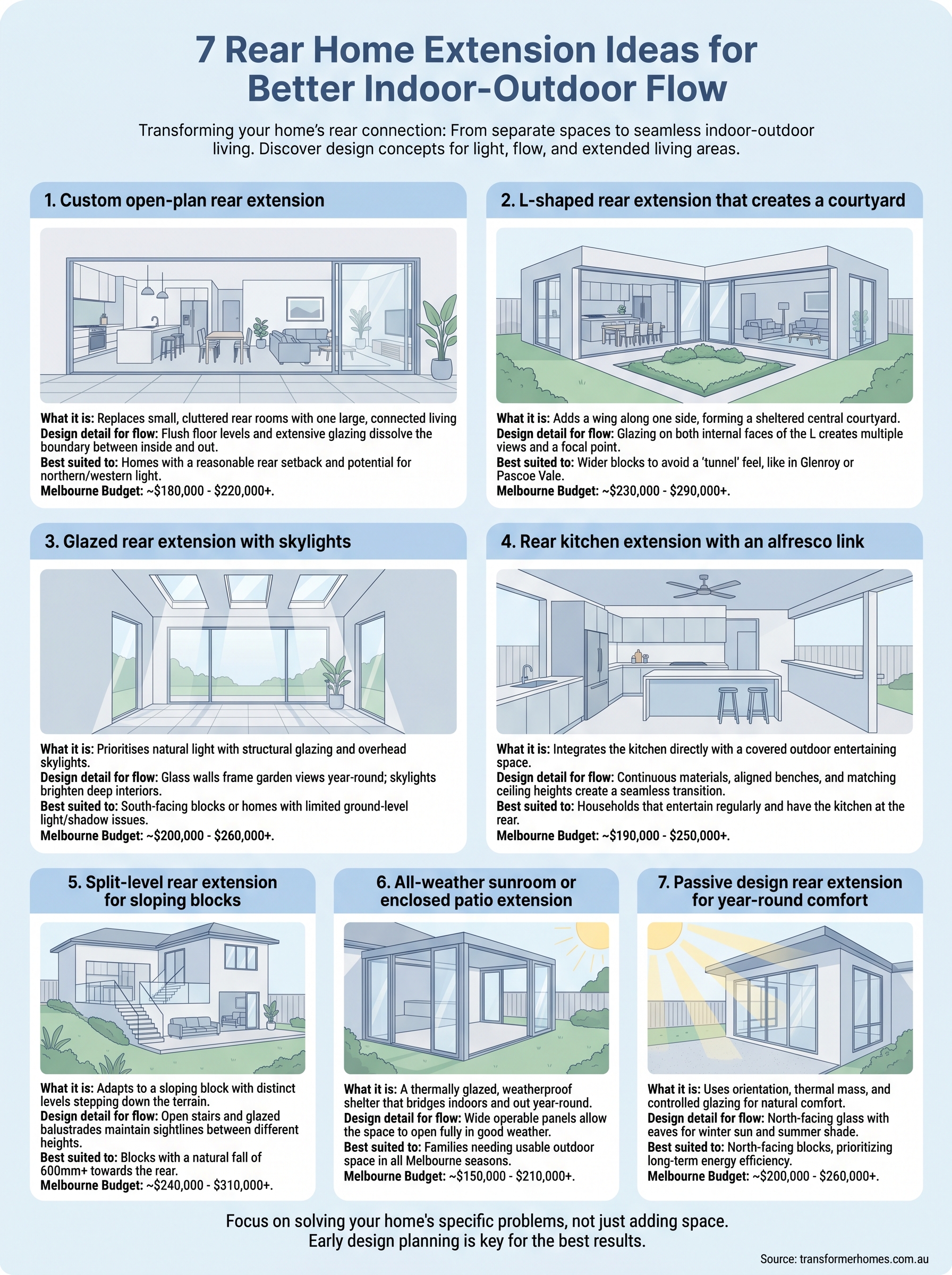
Each of these rear home extension ideas works best when the design responds directly to your block, your orientation, and how your household actually lives day to day. There’s no single right answer. The open-plan layout suits some families perfectly; the passive design extension suits others far better. What matters is that you choose a format that solves your specific problems rather than simply adding floor area for its own sake.
Your next step is to get a builder involved early. Design decisions made before a slab is poured shape every outcome that follows, from your planning permit through to how naturally light moves through your finished home. Transformer Homes works with homeowners across Melbourne’s northern and western suburbs to turn rear extensions into spaces that genuinely change how a home feels and functions. If you’re ready to talk through your options, get in touch with our team at Transformer Homes and we’ll take it from there.
