
If you’re renovating, building, or simply upgrading your Melbourne home, the Victorian Energy Upgrades program could save you a significant amount on energy-efficient improvements. Run by the Victorian Government, this scheme provides discounted products and services, from insulation and heating to hot water systems, designed to reduce both your energy bills and your environmental footprint.
But figuring out what you’re actually eligible for, what rebates are available, and how to access them isn’t always straightforward. There’s a fair bit of misinformation floating around, and the program details have evolved over the years. Getting clear, accurate answers matters, especially when you’re already investing in a renovation or new build and want to maximise every dollar.
At Transformer Homes, we work with homeowners across Melbourne’s northern and western suburbs on everything from full home renovations to new custom builds. Energy efficiency is a practical consideration in every project we take on, and programs like the VEU directly affect the decisions our clients make. This guide breaks down how the program works, who qualifies, and what rebates are currently on offer so you can make informed choices for your next project.
Why the Victorian Energy Upgrades program matters
Energy costs in Victoria have climbed steadily over the past decade, and most households absorb those costs without realising there’s a government-backed scheme designed to reduce them. The Victorian Energy Upgrades program has been running since 2009 and operates as a certificate-based system, where accredited providers earn certificates by delivering approved energy-efficient upgrades. Those certificates are sold to energy retailers, who are legally required to purchase them. That structure is what allows providers to pass the savings directly on to you, often at little or no upfront cost.
What it means for your household bills
Switching to an efficient reverse-cycle air conditioner, upgrading to LED lighting, or installing a high-performing hot water system can cut your annual energy bills noticeably. Depending on the upgrades you choose, eligible households can save hundreds of dollars per year on running costs.
The savings are not a one-off discount. Efficient appliances reduce what you spend on energy every single year they operate.
Your actual savings depend on your home’s size, your current equipment, and which upgrades you install. Even a single change, like replacing an old electric storage hot water system with a heat pump, can reduce your hot water energy use by up to 65%.
Why timing matters for renovations and new builds
If you’re already planning a home renovation or new build, the VEU program becomes especially relevant. Incorporating eligible upgrades during construction is almost always cheaper than retrofitting them later, and you can combine VEU discounts with your existing build budget rather than funding them separately.
Here are the project stages where VEU upgrades deliver the most value:
- During a kitchen or bathroom renovation, when appliances and hot water systems are already being replaced
- At the frame stage of a new build, when insulation is easiest to install
- During a home extension, when heating and cooling systems are being reassessed for the new floor plan
How eligibility works for homes and businesses
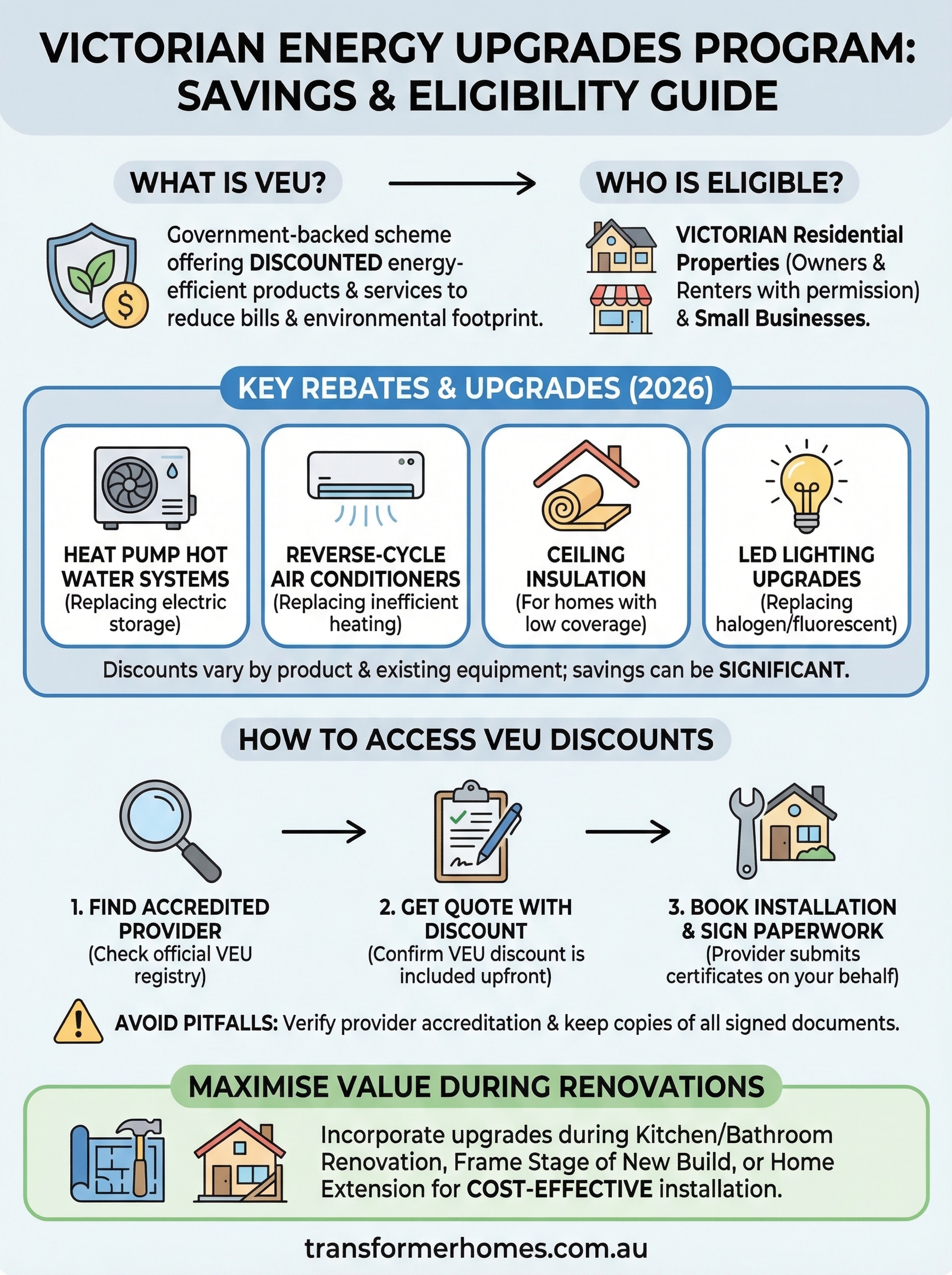
The Victorian Energy Upgrades program is open to both residential and commercial properties across Victoria. Eligibility doesn’t hinge on your income level – it’s primarily based on your property type, your location, and which equipment you’re replacing or upgrading.
Residential eligibility
For homeowners and renters, the core requirement is that the upgrade takes place at a Victorian residential property. You don’t need to own the home in every case – certain upgrades are available to renters, provided the landlord approves the installation. The property must generally be an existing dwelling, though some product categories also apply to new construction.
Renters should confirm with their landlord before contacting an accredited provider, as the property owner may need to sign off on the work.
Eligible residential property types include:
- Freestanding houses
- Townhouses and units
- Apartments (subject to strata approval for some upgrades)
Business eligibility
Small businesses based in Victoria can also access the scheme for approved commercial upgrades. Eligible improvements for businesses typically cover lighting systems and refrigeration equipment. The pathway mirrors the residential process – you engage an accredited provider who manages the certificate side of things on your behalf, keeping the administrative burden off your plate.
What rebates and discounts you can get in 2026
The Victorian Energy Upgrades program continues to offer meaningful discounts in 2026 across several approved product categories. Rather than a cash payment sent directly to you, the scheme works by allowing accredited providers to reduce the upfront price you pay for eligible products and installations, making energy-efficient choices more financially accessible.
Residential upgrade categories
For homes, the approved categories cover a broad range of common household equipment that has a direct impact on your energy bills.
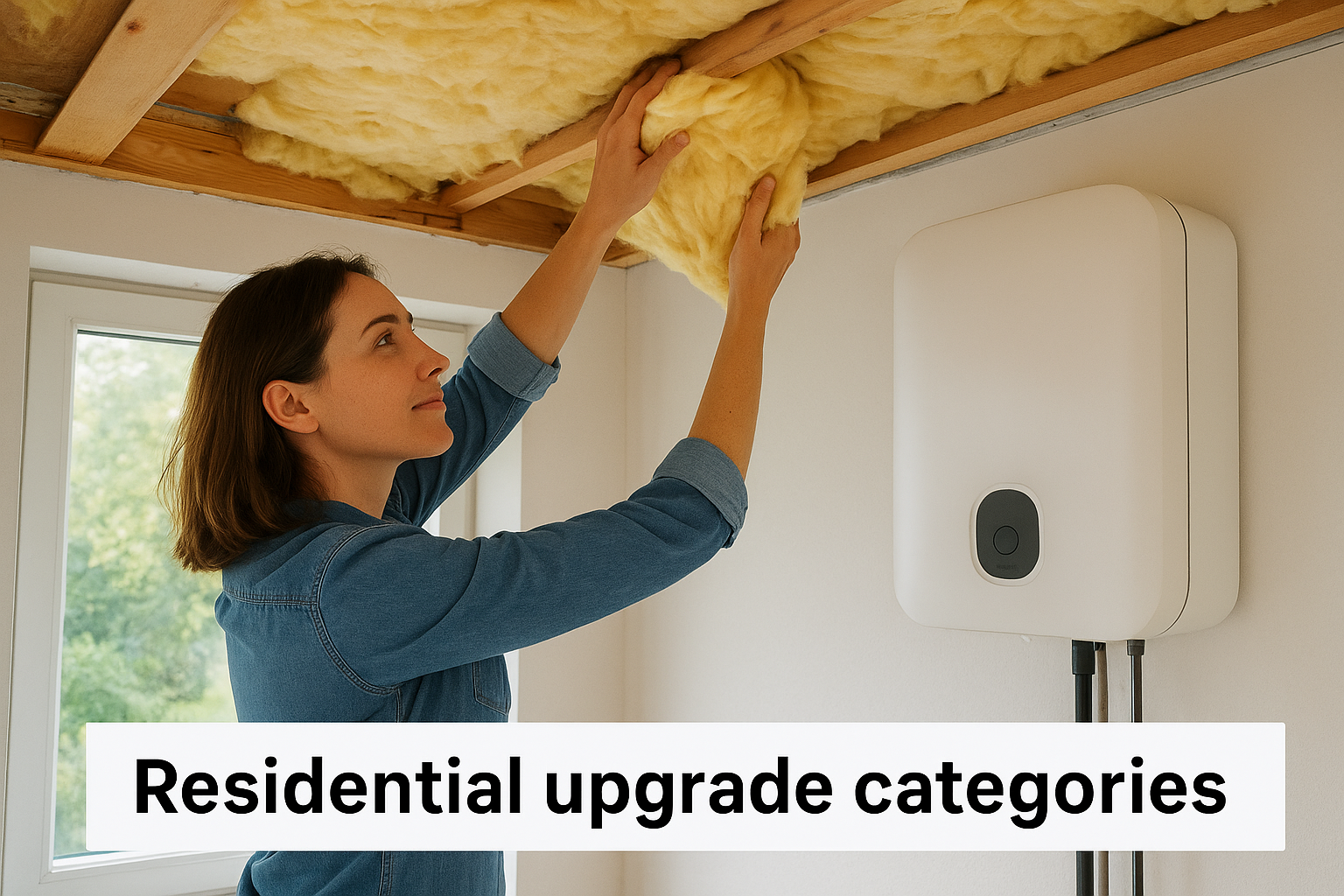
- Heat pump hot water systems – replacing electric storage units
- Reverse-cycle air conditioners – replacing gas heaters or older inefficient models
- Ceiling insulation – for homes with little or no existing coverage
- LED lighting upgrades – replacing halogen or fluorescent fittings
The discount size varies depending on your existing equipment and the specific upgrade being installed, so always confirm final pricing with your accredited provider before committing.
How much you can save
The actual savings you receive depend on the type and size of the upgrade you choose. Installing a heat pump hot water system, for example, can attract a discount of several hundred dollars off the retail price, making it one of the highest-value upgrades currently available.
Ceiling insulation and LED lighting tend to offer smaller but still worthwhile discounts, particularly when combined with other upgrades during a single renovation project.
How to access VEU discounts step by step
The process for accessing the Victorian Energy Upgrades program is more straightforward than most people expect. You don’t deal with the government directly. Instead, accredited providers handle the certificate process on your behalf, which keeps your side of the transaction simple.
Find an accredited provider
Your first step is locating a provider accredited under the VEU scheme. The Victorian Government maintains an official list at the VEU registry, so you can confirm a provider’s credentials before committing to anything. Once you’ve found a few options, contact them to confirm they offer the specific upgrade you need and request a quote with the discount already reflected.

Always confirm the VEU discount is included in the quoted price before you agree to proceed, not after.
Here’s what the typical process looks like from there:
- Book the installation once you’re satisfied with the quote
- Sign the required paperwork on the day of the visit
- The provider submits the VEU certificates on your behalf after completion
What to have ready before the visit
When the provider arrives, have proof of your Victorian address available along with clear access to the equipment being replaced. Keep copies of anything you sign, as this confirms the upgrade was completed correctly under the scheme and protects you if any issues arise.
Common pitfalls and compliance checks
The most frequent mistake people make when accessing the victorian energy upgrades program is engaging a provider who isn’t accredited under the scheme. If the provider isn’t listed on the VEU registry, the discount they offer won’t qualify as a legitimate rebate, and you won’t receive the documentation you may need later.
Using unaccredited providers
Some installers advertise discounts that sound similar to VEU benefits but operate entirely outside the scheme. Always verify accreditation before signing anything, and cross-check the provider’s details against the official VEU registry directly.
If a provider pressures you to sign paperwork before confirming their credentials, treat that as a warning sign.
Common red flags to watch for:
- No clear reference to the VEU program in their quote
- Reluctance to provide accreditation details upfront
- Pressure to proceed same-day without documentation
Paperwork and compliance
Signing the upgrade agreement correctly on the day of installation matters for compliance. Incomplete or incorrect forms can delay certificate submission and affect your recorded upgrade history, which can become relevant if you sell or refinance your property later.
Keep copies of all signed documents in a safe place. Your upgrade records may be reviewed during a property sale or council inspection, so treat them as part of your permanent home documentation.
Quick recap and next steps
The Victorian Energy Upgrades program gives Victorian homeowners and businesses access to discounted energy-efficient upgrades without complex applications or income thresholds. Accredited providers handle the certificate process on your behalf, you sign the paperwork on installation day, and the savings come directly off your upfront cost. The key steps are choosing an accredited provider from the official registry, confirming the VEU discount is reflected in your quote, and keeping copies of every document you sign for your records.
Timing your upgrades around a renovation or new build amplifies the value considerably. Replacing old heating, hot water, or lighting systems while walls and ceilings are already open costs far less than organising separate work later. If you’re planning a renovation or custom build in Melbourne’s northern or western suburbs, the team at Transformer Homes can help you identify which upgrades fit your project and budget before construction gets underway.
