
If you’re planning to build, renovate, or develop property in Melbourne’s north, the Whittlesea council planning scheme is the document that determines what you can and can’t do with your land. It sets out the zoning, overlays, and permit requirements that apply to every property within the City of Whittlesea, from Epping and South Morang through to Mernda, Doreen, and beyond.
At Transformer Homes, we work with homeowners and developers across Melbourne’s northern suburbs on everything from custom builds to dual occupancy projects. Understanding the local planning scheme is something we deal with on every job, and it’s one of the first things we help our clients get across before a project moves forward. Getting this right early saves time, money, and a lot of frustration down the track.
This article breaks down the key zones, planning maps, and permit triggers you need to know about under the Whittlesea Planning Scheme, written in plain language so you can make informed decisions about your property.
Why the Whittlesea Planning Scheme matters
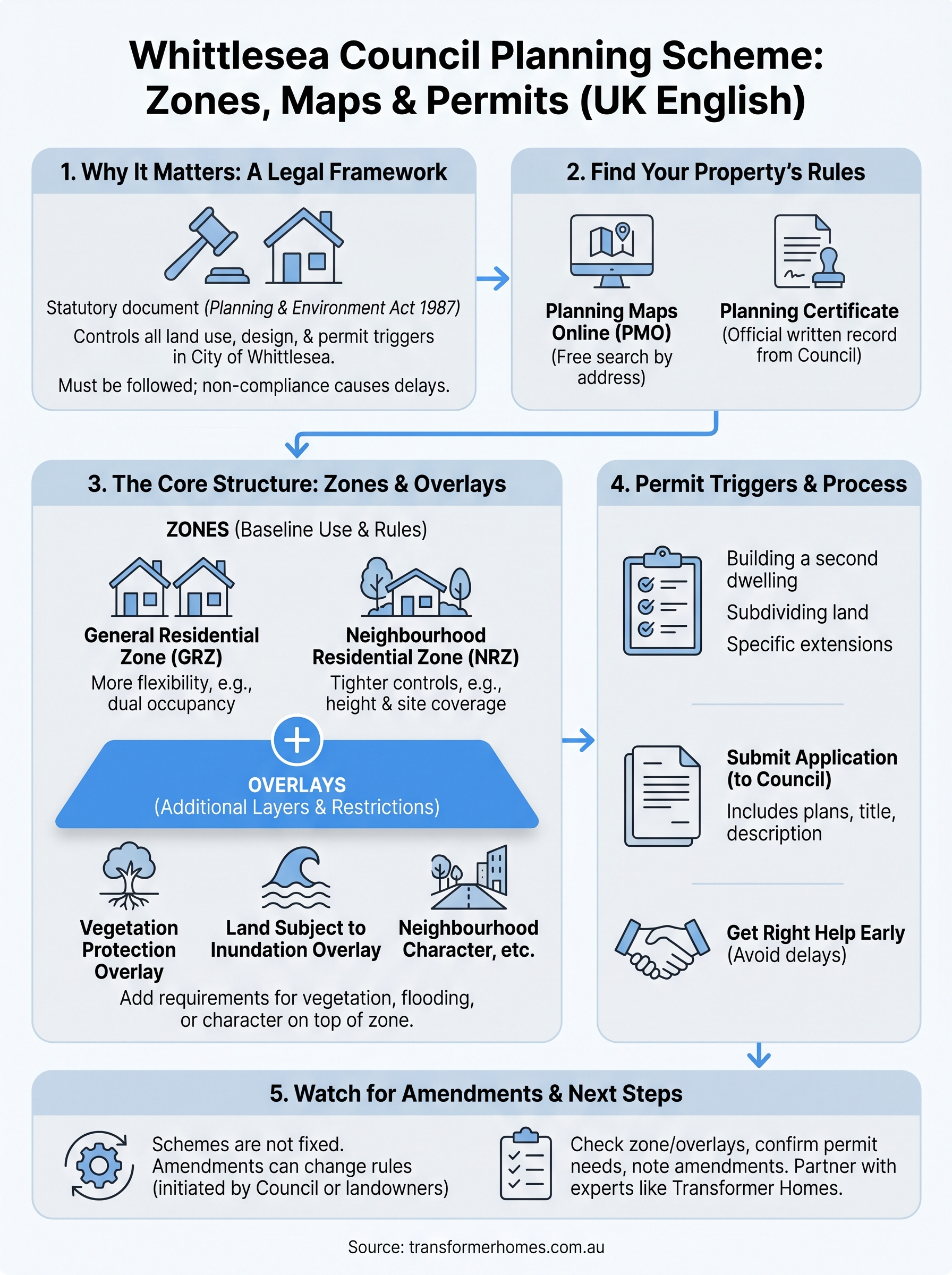
The Whittlesea council planning scheme is a statutory document prepared under the Planning and Environment Act 1987. That means it carries legal weight. Every decision about what gets built, demolished, subdivided, or used within the City of Whittlesea is measured against it. Getting it wrong can hold up your project for months or cost you in redesign fees you didn’t budget for.
A legal framework, not a suggestion
Every parcel of land within the municipality falls under the scheme, from large rural lots in Yan Yean to residential blocks in Mernda and Doreen. It controls what land can be used for, how buildings must be designed and sited, and which activities require a planning permit before they can proceed. Council planners use it to assess applications, and VCAT uses it to resolve disputes when applicants and council disagree on an outcome.
If your project doesn’t align with what the scheme allows, you’ll need either a planning permit or a scheme amendment before anything can proceed on site.
What it controls on your block
For most homeowners and developers, the practical impact comes down to two core questions: what zone applies to your land, and do any overlays sit over it? Your zone determines the primary uses permitted on your property, whether that’s a single dwelling, a dual occupancy, or a townhouse development. Overlays then add a second layer of requirements around vegetation protection, flooding, or neighbourhood character that apply on top of your zone.
Understanding both before you engage an architect or builder puts you in a much stronger position to plan your budget, timeline, and design. You can make informed decisions based on what the planning framework actually allows rather than discovering mid-project that the approvals process will take longer than expected.
How to find your property on maps and reports
The Whittlesea council planning scheme is publicly accessible through the Victorian Government’s Planning Maps Online (PMO) tool at planning.vic.gov.au. This free resource lets you search any property by address and immediately see which zones and overlays apply to your land, before you speak to a planner or engage a builder.
Using Planning Maps Online
Type your property address into the PMO search bar and the map will load your parcel with all current zones and overlays displayed in colour-coded layers. You can click on each layer to pull up the associated scheme provisions directly. This gives you a clear starting point for understanding exactly what rules govern your block.
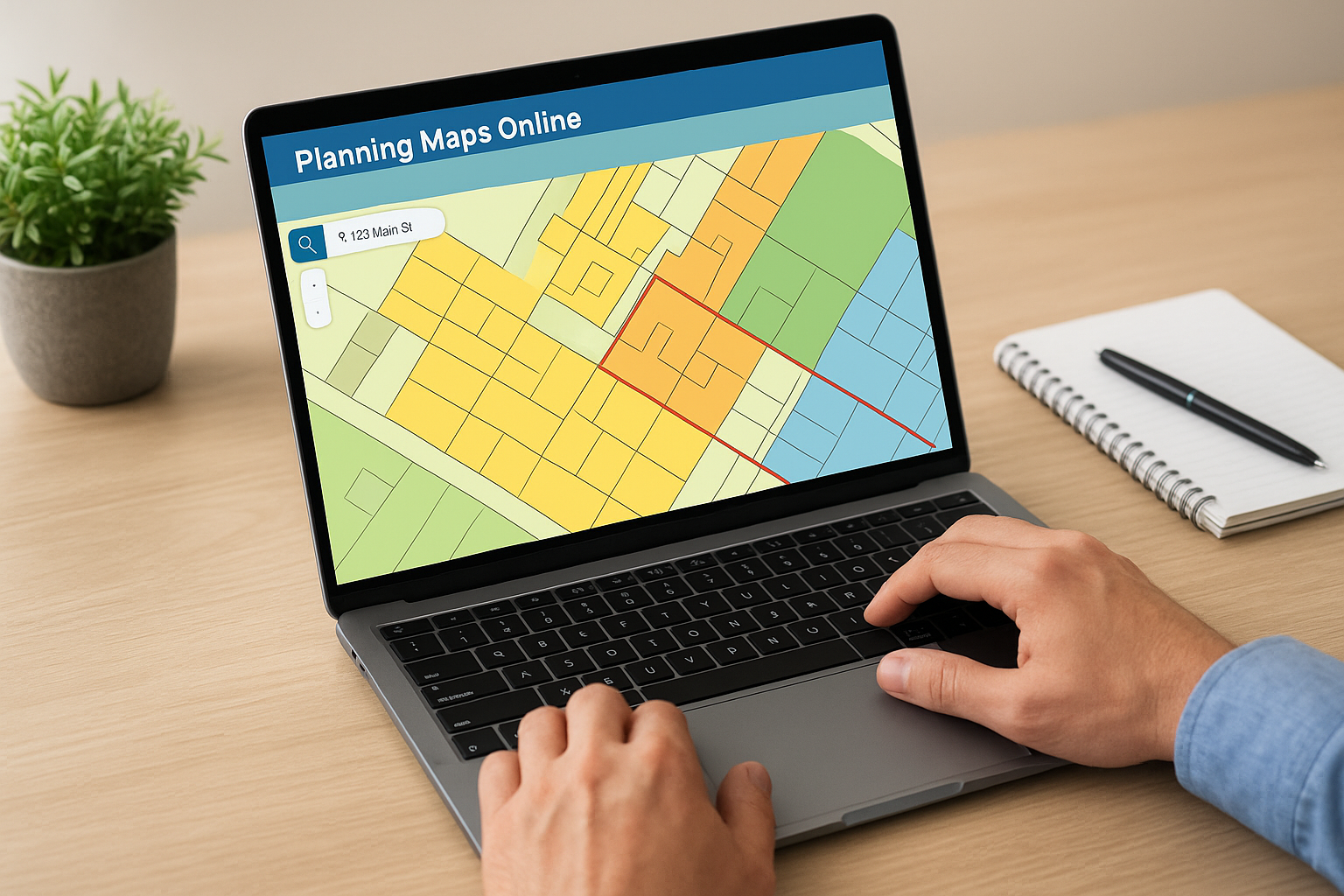
Write down every zone and overlay that appears on your property before you book any consultation, because this information will directly shape the advice you receive.
Reading your planning certificate
You can also request a planning certificate through the City of Whittlesea. A planning certificate provides an official written record of the zones, overlays, and any registered planning agreements that apply to your land. This document carries more legal weight than a map search alone and is worth obtaining early for any dual occupancy, townhouse, or major renovation project.
How zones, overlays and clauses affect what you can do
The whittlesea council planning scheme organises land into zones that determine the primary use and development permitted on each parcel. Your zone sets the baseline rules, whether that means a single dwelling is allowed by right or whether a planning permit is required before you can build a second dwelling or subdivide.
Zones set the baseline
Whittlesea’s most common residential zones are the General Residential Zone (GRZ) and the Neighbourhood Residential Zone (NRZ). The GRZ allows more flexibility for dual occupancy and medium-density development, while the NRZ places tighter controls on building height and site coverage, which directly affects what a designer can achieve on your block.
If your land sits in the NRZ, a dual occupancy project will almost certainly require a planning permit and careful design to meet the zone’s stated objectives.
Overlays add another layer
Overlays apply on top of your zone and introduce additional requirements or restrictions. In Whittlesea, common overlays include the Vegetation Protection Overlay and the Land Subject to Inundation Overlay. These can limit where you build on your block, how you manage existing vegetation, and whether flood-related engineering is required before any construction can begin.
When you need a planning permit and what to do next
Under the whittlesea council planning scheme, a planning permit is required whenever your proposed use or development triggers a permit condition within your zone or overlay. Common triggers include building a second dwelling, subdividing land, or adding an extension in an area covered by a neighbourhood character overlay.
Checking your permit triggers before you engage a designer can save you weeks of back-and-forth with council.
Submitting your application
Once you confirm a permit is required, lodge your application directly with the City of Whittlesea through their online planning portal. Council assesses your submission against the scheme provisions and may request further information or external referrals before issuing a decision. Your application must include:
- Architectural plans drawn to scale
- A current certificate of title
- A written description of the proposed development
Getting the right help early
Working with a builder who understands local planning requirements before design begins puts your project in a much stronger position. At Transformer Homes, we help clients across Melbourne’s northern suburbs identify permit triggers early and coordinate with planning consultants to keep applications moving forward without unnecessary delays.
How planning scheme amendments can change the rules
The whittlesea council planning scheme is not a fixed document. Both Council and the Victorian Government can initiate amendments that change the zones, overlays, or provisions applying to your land, sometimes with significant consequences for a project you are already planning.
Who can request an amendment
Both Council and private landowners can initiate a planning scheme amendment. If you believe the current zoning on your property does not reflect its best use, you can apply to Council for a private amendment request. These requests go through a formal process that includes public notice and a panel hearing if objections are received.
Checking whether any amendments are in progress near your property before you commit to a design can save you from planning against rules that are about to change.
How amendments affect your project
A gazetted amendment takes effect immediately and overrides previous provisions. If an amendment changes your zone or introduces a new overlay, your permit application and design will be assessed against the updated rules, not the ones that applied when you first started planning. Staying across current and proposed amendments through Council’s public notices keeps your project on solid ground.
Next steps for your project
The whittlesea council planning scheme gives you a clear framework, but navigating it takes time and attention to detail. Before you brief an architect or commit to a design, check your zone and overlays through Planning Maps Online, confirm whether a permit is required, and note any active amendments in your area. Starting with this information in hand puts you well ahead of most applicants before a single drawing is produced.
Working with a builder who understands local planning requirements from the ground up makes this process much smoother. At Transformer Homes, we help homeowners and developers across Melbourne’s northern suburbs move from initial concept through to planning approval and construction without the delays that come from discovering permit triggers late in the design process. If you’re ready to start planning your next project, talk to the Transformer Homes team and we’ll help you work out exactly what’s possible on your block.
