
Before any construction project kicks off in Victoria, you need a building permit, and that means hiring a building surveyor. Whether you’re planning a new home build, a renovation, or a dual occupancy development, building surveyor fees Victoria are one of those early costs that catch people off guard. Understanding what you’re actually paying for helps you budget properly from day one.
At Transformer Homes, we guide our clients through every stage of the building process across Melbourne’s Northern and Western suburbs. That includes helping you understand the fees and levies that sit outside the construction contract itself, like building surveyor costs, DBDRV levies, and permit lodgement charges.
This article breaks down what building surveyors charge in Victoria, what’s included in those fees, the government levies that get added on top, and how costs vary depending on the size and complexity of your project. No guesswork, just clear numbers and practical context.
What a building surveyor does in Victoria
A building surveyor in Victoria is a licensed professional who makes sure your construction project complies with the Building Act 1993 and the National Construction Code. They work independently of your builder, which means their role is to protect both you and the broader community by ensuring the work is structurally sound, safe, and legally compliant. You can appoint either a private building surveyor or use the municipal building surveyor attached to your local council, though most residential projects in Victoria use a private surveyor because of the faster turnaround times and more direct communication they offer.
Issuing and managing your building permit
Before your builder breaks ground, your building surveyor reviews your plans and documentation to determine whether your project qualifies for a building permit. They check items like structural engineering reports, energy efficiency assessments, and compliance with any planning permit conditions. Once they are satisfied that everything stacks up, they issue the permit, which is the legal authority that allows construction to begin. Without this step, no work can legally start on site, and any work carried out without a valid permit can create serious complications when you go to sell or insure the property down the track.
When you understand what the building surveyor is actually authorising at each step, you start to see why building surveyor fees Victoria are a necessary line item in your project budget, not an optional extra.
Inspecting construction at mandatory stages
Your building surveyor does not disappear after they issue the permit. They carry out mandatory inspections at defined stages of construction to confirm the work on site matches the approved plans and meets code requirements. For a standard new home build in Victoria, these stages typically include the footings, frame, and final inspection. Each stage must be signed off before the next phase of construction legally proceeds.
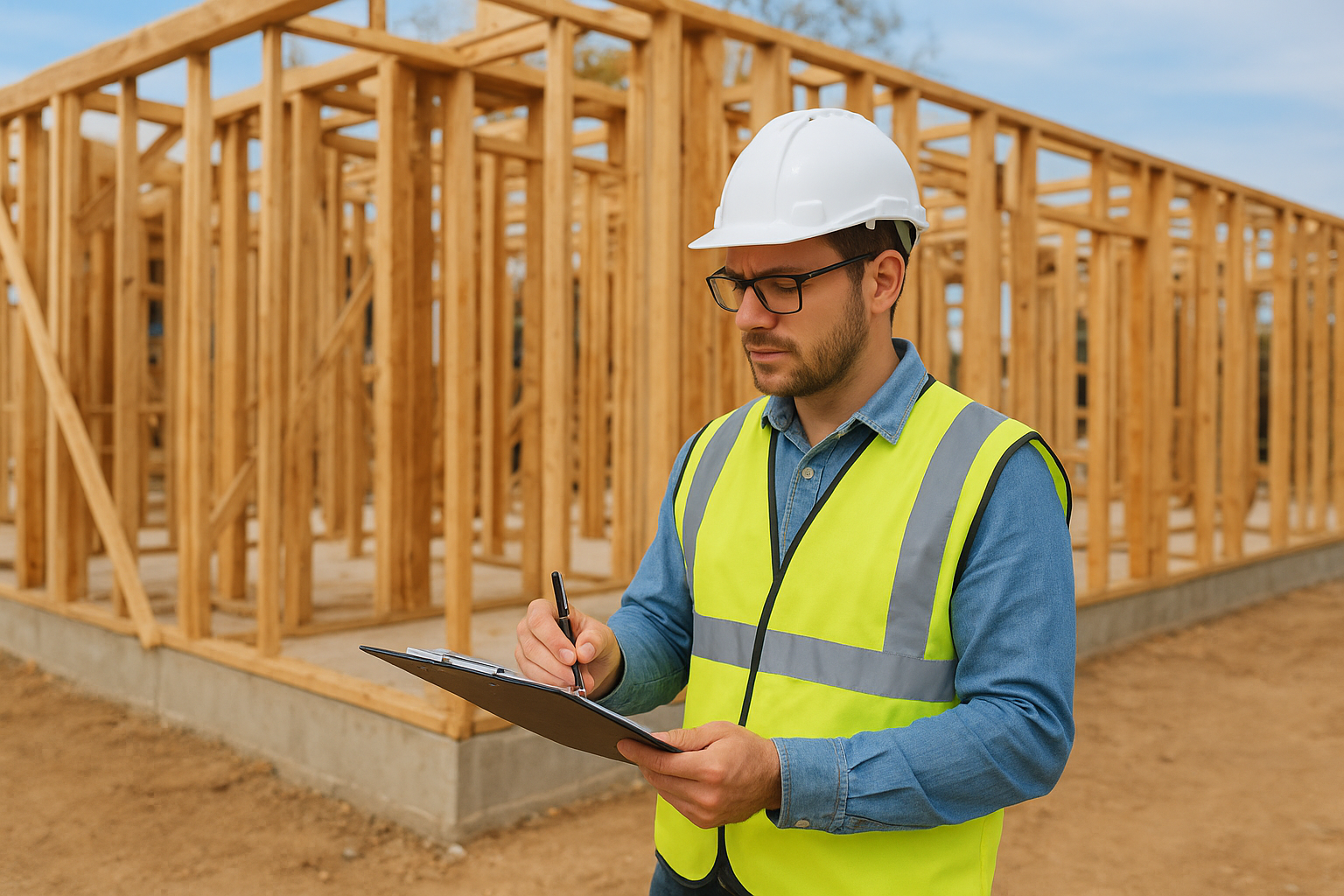
Failing an inspection means your builder must rectify the issue before work continues, which is exactly the kind of independent oversight that protects your investment. At the end of the project, your building surveyor issues either an occupancy permit or a certificate of final inspection, both of which you need before you can legally occupy the building or include it in any future property transaction.
Why fees vary across projects
No two projects attract the same building surveyor fees Victoria because no two projects carry the same level of risk, documentation, or inspection requirements. The fee a surveyor quotes reflects the actual work involved in assessing and overseeing your specific build, so understanding what drives that figure helps you compare quotes more accurately.
Project size and construction value
Construction value is one of the most significant factors in how a surveyor calculates their fee. A larger, more expensive project means more plans to review, more engineering documentation to assess, and typically more mandatory inspection stages to carry out. A single-storey extension on an existing home sits at a very different price point to a dual occupancy development on a single block, even if both are located in the same suburb.
Surveyors are not just charging for their time; they are pricing in the liability they take on by certifying that your project meets the required standards.
Complexity and site conditions
Structural complexity also pushes fees higher. Projects involving unusual soil conditions, steep or sloping sites, heritage overlays, or non-standard construction methods require more detailed review and often involve additional consultants whose reports the surveyor must assess. A straightforward slab-on-ground home in a flat suburban street is far simpler to process than a split-level build on a site with significant fall or flooding risk. Your surveyor needs to account for all of these variables when setting their fee, so always provide full site details when requesting quotes.
Typical building surveyor fee ranges in Victoria
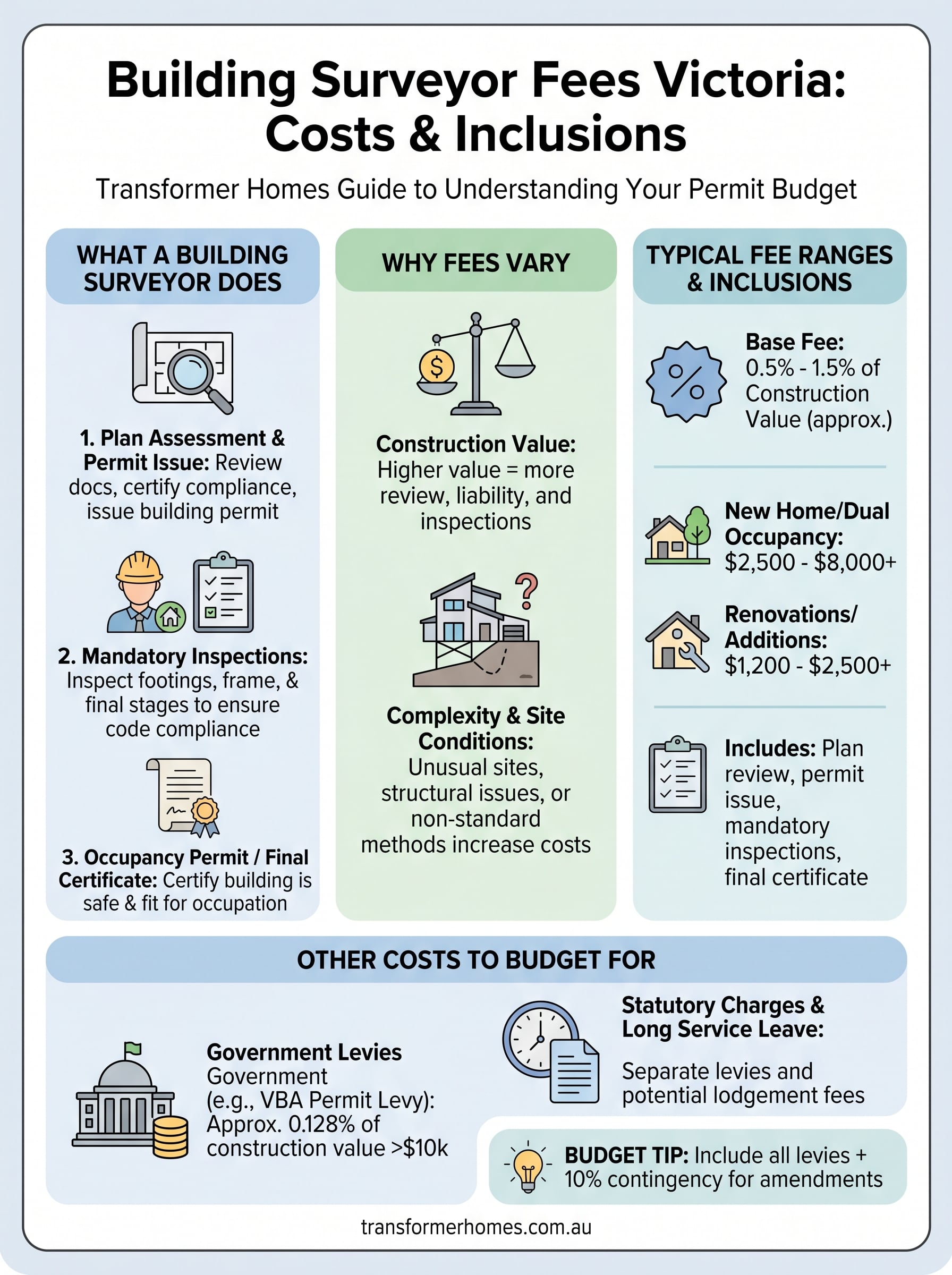
Building surveyor fees Victoria sit across a fairly wide band depending on the factors covered in the previous section, but having rough figures in mind helps you set a realistic budget before you request formal quotes. For most residential projects, surveyors calculate their base fee as a percentage of the total construction value, typically ranging from 0.5% to 1.5%, though some firms use fixed-fee structures for straightforward work.
Getting two or three quotes from private building surveyors is standard practice and often worth the effort, as fees for identical projects can differ by several hundred dollars.
New home builds and dual occupancy
For a new single-dwelling home with a construction value of around $500,000, you can generally expect a building surveyor fee in the range of $2,500 to $5,000. Dual occupancy and townhouse developments attract higher fees because of the added complexity involved in certifying two or more separate dwellings. A two-unit development on a single block in Melbourne’s Northern or Western suburbs might attract fees from $4,000 to $8,000 or more, depending on the surveyor and the site conditions.
Renovations and home additions
Smaller projects like kitchen extensions, bathroom additions, or single-storey rear extensions typically attract fees starting from around $1,200 to $2,500 for straightforward work. More involved renovations that require structural alterations, changes to the building footprint, or work near boundaries can push that figure higher. Always describe your project in full detail when requesting a quote so the surveyor can give you an accurate figure rather than a broad estimate that shifts later.
What the fee usually includes
When you receive a quote from a private building surveyor, it generally covers a defined scope of services rather than an open-ended arrangement. Knowing what sits inside that figure helps you assess whether you are comparing quotes on equal terms, because not every surveyor bundles the same items into their base fee.
Plan assessment and permit issue
Your surveyor’s fee covers the initial review of your plans and supporting documentation, including structural engineering reports, energy assessments, and any other material required to satisfy the relevant provisions of the Building Act 1993. Once the documentation meets the required standard, the surveyor issues your building permit, which forms the legal foundation for your entire project. Some surveyors include a set number of plan revision reviews within this stage; others charge separately if significant amendments come through after the initial submission.
Mandatory stage inspections
All mandatory inspection stages required under your permit are typically included in the base fee. For a new home build, that generally means the footings inspection, frame inspection, and final inspection at a minimum. Your surveyor visits the site at each stage, assesses the work against the approved plans, and either signs off or raises items for your builder to rectify.
Understanding what the building surveyor fees Victoria cover at each inspection stage helps you hold your builder accountable, because the surveyor’s sign-off is what keeps your project moving legally.
Occupancy permit or certificate of final inspection
Once construction is complete and the final inspection passes, your surveyor issues either an occupancy permit or a certificate of final inspection. This document confirms your building is legally fit for occupation and is essential for any future sale, insurance claim, or refinancing of the property.
Other costs to budget for
The building surveyor’s base fee is not the only charge attached to getting your permit issued. Several government levies and statutory charges sit on top of that fee, and they are non-negotiable because they are set by legislation rather than the surveyor. Building these into your early budget means you avoid any surprises once your surveyor sends through the full permit cost breakdown.
Government levies on construction value
Victoria charges a Building Permit Levy on all permitted construction work, calculated as a percentage of your project’s total construction value. As of the current levy schedule administered by the Victorian Building Authority, the rate sits at 0.128% of the construction value for projects above $10,000. On a $500,000 build, that adds roughly $640 to your total permit cost. Your surveyor collects this levy on behalf of the state government when they issue your permit, so it appears on their invoice but flows directly through to the relevant authority.
Factoring in the Building Permit Levy early prevents the common mistake of treating building surveyor fees Victoria as the only permit-related cost in your project budget.
Long Service Leave and other statutory charges
The Construction Industry Long Service Leave levy also applies to most residential building projects in Victoria and is calculated based on the value of labour involved. Your builder typically handles this payment, but it is worth confirming who is responsible during your contract review. Some surveyors also charge a separate plan lodgement or administration fee for processing amendments, reissuing documentation, or managing additional inspection requests that fall outside your original permit scope. Always ask your surveyor to itemise every charge upfront so your budget reflects the full picture from the start.
A simple way to plan your permit budget
The clearest approach is to build every permit-related cost into your project budget before you request your first quote. Start with the building surveyor fees Victoria, then add the Building Permit Levy based on your estimated construction value, and confirm with your builder who handles the Long Service Leave levy. Request itemised quotes from two or three private building surveyors so you can compare what each fee actually covers rather than just comparing totals. If your project involves a new home, dual occupancy, or a significant renovation, allow a contingency of around 10% on top of your surveyor quote to cover any amendments or additional inspection requests that arise during construction.
Knowing your full permit cost early keeps your overall budget honest and removes one of the most common surprises people encounter mid-project. If you want to understand how the permit process fits into a complete home build, talk to the team at Transformer Homes about your project.
