Melbourne’s Premier Custom Home Builders and Remodelers

visit our location by appointment:

Live Innovations 153 High Street,
Thomastown VIC. 3074

Opening Hours:

Mon-Fri 8am-5pm

Author name: adminbackup

What Is A Fixed Price Contract In Construction? Pros & Cons
Uncategorized

What Is A Fixed Price Contract In Construction? Pros & Cons

Signing a building contract is one of the biggest financial commitments most people will ever make, so understanding exactly what a fixed price contract in construction means before you sign is critical. Whether you’re planning a new custom home, a renovation, or a dual occupancy project, the type of contract you agree to determines how costs are managed, who carries the financial risk, and whether you’ll face unexpected bills halfway through your build. It’s not just legal paperwork; it’s the foundation of your entire budget. A fixed price contract locks in a total cost for a defined scope of work before construction begins. The builder agrees to deliver everything outlined in the contract for that agreed sum, regardless of whether material costs rise or the job takes longer than expected. Sounds straightforward, but there are important nuances that affect how well it protects you. There are also situations where a fixed price arrangement may not be the best fit, and understanding those trade-offs puts you in a much stronger negotiating position. At Transformer Homes, we build custom homes and complete major renovations across Melbourne’s Northern and Western suburbs. Our clients regularly ask us about contract types, particularly how fixed price agreements compare to cost-plus or provisional sum contracts. This article breaks down how fixed price contracts actually work in residential construction, covers the real pros and cons, and explains what to watch for so you can make a confident, informed decision about your next project. Why fixed-price contracts matter in construction Construction projects are rarely simple, and the gap between what you expect to pay and what you actually pay can be significant if your contract doesn’t protect you. Understanding what is a fixed price contract in construction matters because it directly determines who absorbs the financial impact of cost blowouts, delays, or material price increases. When you’re spending hundreds of thousands of dollars on a new home or major renovation, that distinction is not a minor detail. The financial risk question In any construction project, risk sits somewhere. With a fixed price contract, the builder carries the financial risk for most cost increases once the contract is signed. If concrete prices rise or a subcontractor charges more than anticipated, that’s generally the builder’s problem to absorb, not yours. This is fundamentally different from a cost-plus arrangement, where every price movement flows directly through to your final bill. The contract type you choose is essentially a decision about who carries financial uncertainty throughout your build. For homeowners, certainty around budget is often the deciding factor. You can arrange finance with confidence, plan your move-in timeline, and avoid the stress of watching costs climb week by week. For builders, fixed price contracts require accurate upfront estimating, because underquoting the scope means absorbing losses on the job. Why builders price the way they do Builders factor in a contingency margin when pricing a fixed price contract. This covers foreseeable risks like minor price fluctuations, weather delays, and variations in labour time. It is not padding for profit; it is responsible estimating that protects both parties. When a builder prices a job too tightly without any contingency, the risk of disputes, cost-cutting on finishes, or project failure increases sharply for everyone involved. How a fixed-price contract works in practice Understanding what is a fixed price contract in construction is clearer when you see it in action. The process starts well before any work begins on site. A builder reviews your detailed plans, specifications, and finishes schedule, then provides a fixed sum that covers all labour and materials required to complete that defined scope. The quoting and scope-setting process The accuracy of your contract depends almost entirely on the quality of documentation you provide at the quoting stage. Detailed architectural drawings, engineering reports, and a clear finishes schedule allow the builder to price the job with confidence. The more detail you provide upfront, the fewer gaps exist for disputes later. A well-scoped fixed price contract gives both you and your builder a shared reference point for every decision made during the build. Once both parties sign, the agreed price holds firm for the defined scope. If you request changes after signing, those become formal variations and are priced separately. Your signed contract becomes the financial and legal baseline for the entire project, protecting you from unplanned cost increases on everything already agreed. What a fixed price includes and excludes Knowing what is a fixed price contract in construction means understanding that "fixed" does not mean "everything." The agreed sum covers a defined scope, and anything outside that scope is treated separately. Your contract documents set the boundary between what’s locked in and what remains open, so reading them carefully before you sign is not optional. What’s typically included A fixed price contract covers all labour and materials required to complete the work described in your approved plans and specifications. This includes structural elements, trade work such as plumbing, electrical, and carpentry, and any finishes itemised in your finishes schedule. Your finishes schedule deserves the same scrutiny as the bottom-line figure; a vague finishes list creates gaps the contract cannot protect you from. If every element is documented and signed off, the builder is responsible for delivering it at the agreed price, regardless of cost movements. What’s commonly excluded Several cost items fall outside most fixed price contracts, and missing them can cause real budget surprises later. Common exclusions include: Provisional sums for unpredictable site conditions such as unexpected soil types Council and utility connection fees Planning permits and engineering reports Client-requested variations after signing Always ask your builder to walk you through every exclusion line by line before you commit. Pros and cons for homeowners and builders Understanding what is a fixed price contract in construction means weighing both sides honestly. No contract type is perfect, and fixed price agreements carry genuine advantages and real limitations depending on your situation and risk tolerance. Benefits you get from a fixed price contract Fixed price
Kitchen Renovation Planning Checklist: Budget & Timeline
Uncategorized

Kitchen Renovation Planning Checklist: Budget & Timeline

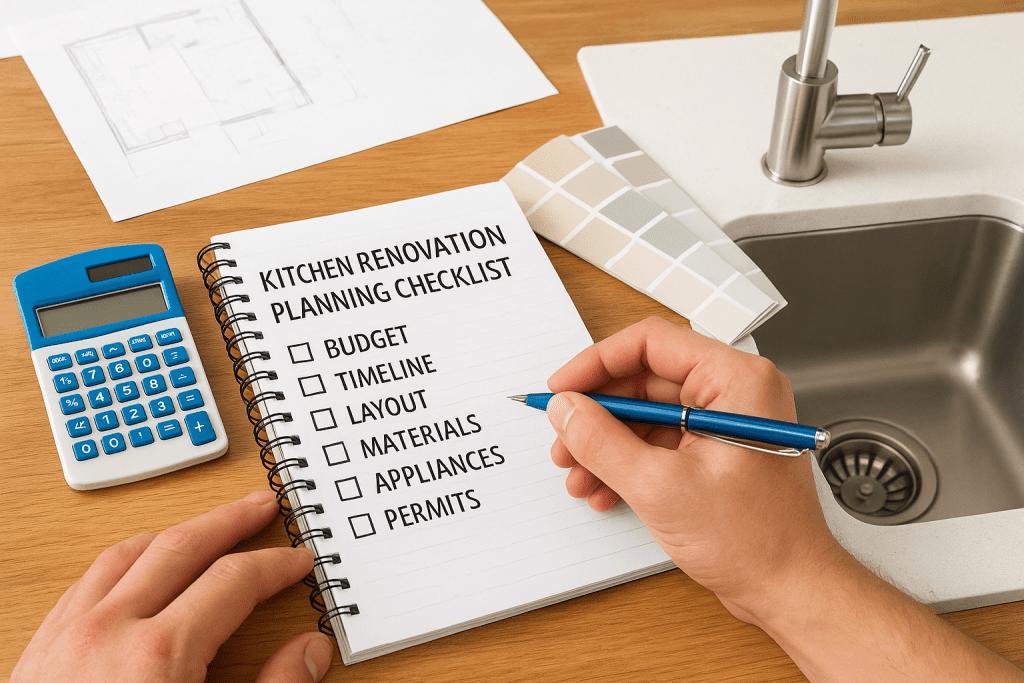
A kitchen renovation can feel overwhelming before you even pick up a tile sample. Between juggling budgets, choosing materials, coordinating trades, and keeping your household running, it’s easy to lose track of critical steps. That’s exactly why having a kitchen renovation planning checklist matters, it turns a complex project into a sequence of manageable, predictable decisions that keep you on track from day one. At Transformer Homes, we’ve guided homeowners across Melbourne’s Northern and Western suburbs through hundreds of kitchen remodels. One pattern we see repeatedly: the projects that run smoothly aren’t necessarily the ones with the biggest budgets, they’re the ones with the clearest plans. A solid checklist prevents costly backtracking, reduces stress, and gives you real control over your timeline and spend. This guide walks you through every stage of planning a kitchen renovation, from setting a realistic budget and locking in your design layout to selecting materials and understanding the order each task needs to happen. We’ve also included practical tips drawn from our own build process so you can approach your renovation with confidence. Whether you’re updating a tired galley kitchen in Preston or gutting a full space in Thornbury, this checklist will help you stay organised and avoid surprises. What to decide before you plan anything Before you touch your kitchen renovation planning checklist, you need to answer a handful of foundational questions. Skipping this step is the single biggest reason renovations stall or blow out midway through. Getting clarity upfront on a few key areas means every decision that follows has a solid basis, rather than being made on the run when the pressure is on. Know your non-negotiables Start by separating what you must have from what you’d simply like to have. These are your non-negotiables: the features, functions, or design outcomes you won’t compromise on. Writing these down before anything else stops them from getting lost once the excitement of picking finishes takes over. Your non-negotiables shape every downstream decision, from layout to budget allocation, so define them before you open a single product catalogue. Common non-negotiables include: Bench run length: the minimum continuous work surface your household needs Storage configuration: whether you prioritise drawers over cupboards or need a pantry Appliance placement: fixed by existing plumbing, gas, or electrical rough-in positions Natural light: whether you need to protect or add window openings Clarify who is doing what Decide early whether you’re hiring a builder to manage the full project, using a kitchen company for supply and install only, or project-managing the trades yourself. Each path carries a different level of involvement, cost structure, and risk. A builder like Transformer Homes handles coordination across cabinetmakers, electricians, plumbers, and tilers, which removes the pressure of scheduling from your plate entirely. If you plan to manage trades independently, you need to commit the time to do it properly, because delays caused by poor sequencing cost money and extend your timeline significantly. Consider these questions before you move on: Who has final sign-off on design and material decisions? What is your household’s tolerance for disruption during the build? Do you have a trusted builder, or do you still need to get quotes? Step 1. Define scope and set a realistic budget Scope and budget are inseparable decisions that shape every part of your kitchen renovation planning checklist. Define both clearly before you speak to a single tradesperson, and you’ll have a far stronger basis for getting accurate quotes and avoiding costly changes mid-build. Define your renovation scope Before you price anything, you need to specify exactly what the renovation covers. A full gut involves removing walls, relocating plumbing, and rewiring circuits, while a cosmetic refresh might only touch cabinet doors and benchtops. Writing your scope down in plain terms prevents misunderstandings with your builder and gives tradespeople a clear basis for quoting. Use this simple scope template to get started: Scope area Included? Notes Cabinet replacement Yes / No Full, partial, or doors only Benchtop replacement Yes / No Material preference Plumbing relocation Yes / No Sink, dishwasher Electrical upgrade Yes / No Circuits, rangehood Flooring Yes / No Area in m² Splashback Yes / No Tile, glass, or stone Set a realistic budget Once your scope is confirmed, allocate a budget with a built-in contingency. A figure that covers only best-case scenarios will fail the moment an unexpected issue surfaces, and that happens on the majority of renovations. Add 15 to 20 per cent on top of your base cost estimate as a financial buffer. Never treat your contingency as spending money; it exists specifically to absorb genuine surprises. Keeping contingency separate from your main allocation also makes it easier to monitor whether your project is tracking on cost as the work progresses. Step 2. Lock in your layout and key design choices Your kitchen layout determines how functional the finished space will be, so locking it in before you finalise anything else in your kitchen renovation planning checklist is essential. Changes to layout after cabinetry is ordered or plumbing is roughed in carry real costs, so treat this step as a firm decision point. Choose a layout that matches how you cook The most common layouts each suit different room shapes and household sizes. Picking the right layout for your space prevents a design that looks good on paper but frustrates you in daily use. Layout Best suited for Key trade-off Galley Narrow rooms, single cook Limited turning space L-shape Corner spaces, open-plan Wasted corner storage U-shape Larger kitchens, multiple cooks Needs adequate floor area Island Open-plan, social cooking Requires 900mm clearance Nail your key design decisions Once your layout is confirmed, write down every major design decision before briefing a cabinetmaker or any trades. A single written brief reduces confusion and keeps your project moving without costly revisions. Include these key decisions in your brief: Ceiling height and cornice detail Rangehood type and flue position Overhead cabinet depth and height Island or peninsula dimensions and overhang Locking in your design brief

5 Bathroom Renovation Thomastown Builders To Compare In 2026
Uncategorized

5 Bathroom Renovation Thomastown Builders To Compare In 2026

If you’re planning a bathroom renovation in Thomastown, you already know the options can feel overwhelming. Between volume builders cutting corners and sole traders juggling too many jobs, finding a contractor who actually delivers on their promises takes real homework. Getting it wrong means blown budgets, drawn-out timelines, and a finish that doesn’t hold up. That’s why we put this comparison together. At Transformer Homes, we’re based right here in Thomastown, and we’ve spent years building and renovating homes across Melbourne’s northern suburbs. We know the local market, and we know what separates a quality bathroom renovation from a rushed one. So rather than just telling you to pick us, we think it’s more useful to lay out your options clearly. Below, you’ll find five Thomastown-area builders worth comparing in 2026, including what each brings to the table, where they stand out, and what to watch for before you sign anything. 1. Transformer Homes Transformer Homes is a Thomastown-based residential builder with deep roots in Melbourne’s northern suburbs. The team handles everything from complete custom builds to bathroom renovations, which means you deal with one point of contact across design, trades coordination, and project delivery rather than chasing multiple contractors yourself. What they do best for Thomastown bathroom renovations Transformer Homes stands out for full-project management, which matters most when a bathroom renovation involves waterproofing, tiling, plumbing, and electrical work happening in a tight sequence. Their Titanium Difference framework sets a quality standard above what most volume builders include by default, showing up in things like fixture selections, wet area sealing, and the trade partners they bring in. When a single builder coordinates every trade on your renovation, accountability stays clear and delays are far easier to resolve. Best for This builder suits homeowners in Thomastown and the northern suburbs who want a bathroom renovation completed to a high finish without managing subcontractors themselves. If you value clear communication and a structured build process, this is a strong fit. Homeowners renovating an existing bathroom in an established Melbourne suburb Property owners combining a bathroom upgrade with a broader home addition or remodel Clients who want fixed-price confidence and regular project updates throughout Services and trade licensing to confirm Before you engage any builder, verify the following directly with Transformer Homes to protect yourself under Victorian building law: Domestic Builder Unlimited licence registered with the Victorian Building Authority (VBA) Public liability insurance and domestic building insurance coverage Licensed waterproofer and licensed electrician allocated to your bathroom job Warranty documentation covering both structural and non-structural defects Typical pricing and timeline range A standard full bathroom renovation in Thomastown typically runs between $15,000 and $35,000, depending on the size of the space, your fixture selections, and whether any layout changes are involved. Construction timelines generally sit in the four to eight week range once design and approvals are finalised. Always request a detailed scope of works so you can compare quotes from other builders on an equal footing. Questions to ask before you sign Take these questions into your first meeting with Transformer Homes to clarify contract terms and project accountability before anything is formalised: What does your fixed-price contract include, and what triggers a variation charge? Who is the site supervisor on my job, and how regularly will they be on site? How do you manage waterproofing inspections and sign-off from the VBA? What happens if a trade runs late and causes a delay to the overall schedule? 2. NOW Bathroom Renovations NOW Bathroom Renovations is a Melbourne-based specialist focused exclusively on bathroom and laundry fit-outs. Because bathrooms are their only service, the team brings focused trade knowledge that generalist builders sometimes lack, making them a practical option to add to your comparison shortlist. What they do best for Thomastown bathroom renovations Their business concentrates on dedicated bathroom fit-out work, which means their quoting process, trade scheduling, and product selections all centre on wet areas specifically. For a straightforward bathroom renovation in Thomastown where no broader structural changes are needed, this narrow focus can translate into tighter timelines and a smoother trade sequence. Specialists who operate exclusively in one trade category often carry more refined supplier relationships and faster fixture lead times than generalist builders. Best for This option suits homeowners who need a standalone bathroom replacement without linking it to a broader renovation or extension. Clients replacing an existing bathroom layout with minimal structural changes Homeowners who want a dedicated bathroom contractor rather than a full-service builder Services and trade licensing to confirm Before you sign anything, verify these credentials directly with NOW Bathroom Renovations to protect yourself under Victorian building law. Domestic Builder (Limited) licence registered with the Victorian Building Authority Licensed waterproofer and plumber allocated to your job Public liability and domestic building insurance confirmed in writing Typical pricing and timeline range Standard jobs typically fall between $12,000 and $28,000 depending on size and fixture selections, with timelines running three to six weeks for most projects. Always request an itemised quote so you can compare it against other builders on equal terms. Questions to ask before you sign Bring these to your first conversation to clarify scope and accountability before you commit. Who manages waterproofing inspection and sign-off on site? Does your quote include fixture supply, or is that a separate cost? How do you handle variations that come up mid-project? 3. Sway Bathrooms Sway Bathrooms is a Melbourne-based renovation company focused on bathroom design and installation across the northern suburbs. Their scope covers both full bathroom overhauls and targeted upgrades, giving you flexibility depending on how much of the space you want to change. What they do best for Thomastown bathroom renovations Sway Bathrooms puts emphasis on the design consultation stage, working with clients to lock in finishes, fixtures, and layouts before any trade work begins. For a bathroom renovation in Thomastown, this upfront planning approach can reduce mid-project changes that push costs up and extend timelines. A clear design brief agreed before construction starts is one

7 Side Return Extension Ideas For Narrow Homes In Melbourne
Uncategorized

7 Side Return Extension Ideas For Narrow Homes In Melbourne

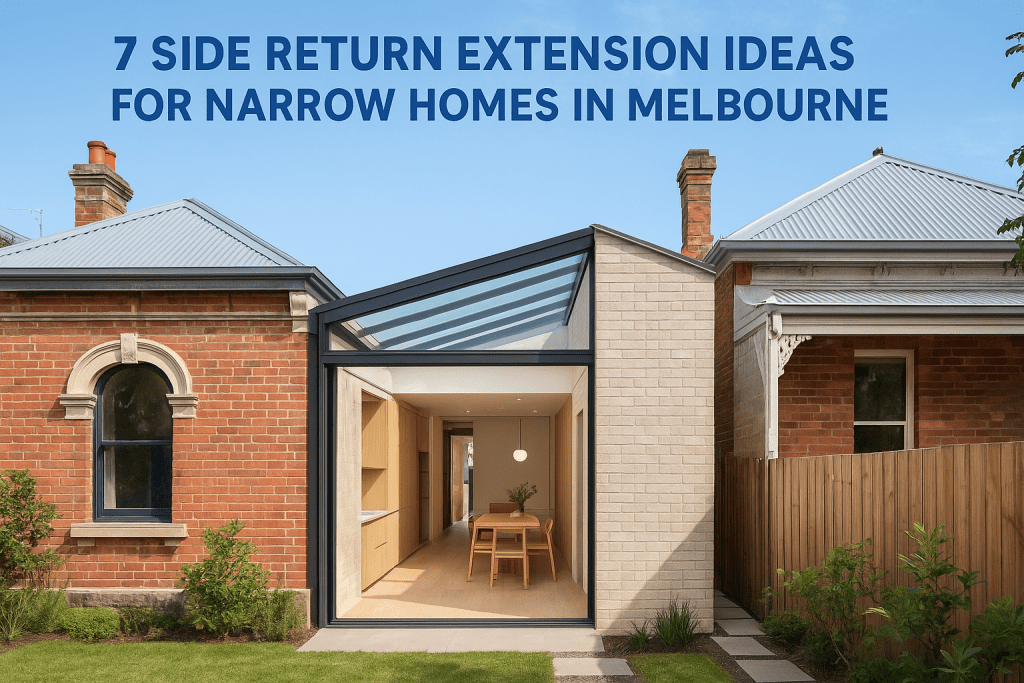
That narrow strip of space running along the side of your home, between the exterior wall and the boundary fence, is one of the most underused areas in Melbourne’s older housing stock. For owners of Victorian terraces, Edwardian cottages, and post-war homes on tight blocks, side return extension ideas can unlock serious square footage without eating into your backyard. It’s a move that adds both living space and natural light where homes need it most. But not every side return extension is created equal. The design you choose affects everything from your kitchen layout to how deep sunlight reaches into the middle of your home. Get it right and you transform a dark, cramped floor plan into something that actually works for how you live. Get it wrong and you’ve spent good money on a corridor. At Transformer Homes, we build and renovate across Melbourne’s northern and western suburbs, areas full of exactly these kinds of narrow-block homes. We’ve put together seven practical side return extension ideas to help you figure out what’s possible on your property, covering layouts, materials, and the design details that make the biggest difference. Whether you’re in the early planning stages or ready to brief a builder, this guide gives you a strong starting point. 1. Start with a feasibility-first design and build plan Before you spend anything on design or materials, the most useful first step is confirming whether your side return extension is actually buildable on your block. Melbourne’s narrow-block homes vary significantly in their setbacks, easements, and planning overlays, so checking constraints early prevents you from designing something that cannot be approved or built within your budget. What this idea is and why it suits Melbourne narrow blocks A feasibility-first approach means assessing your site conditions, planning controls, and structural constraints before briefing a designer on aesthetics. For homes in Melbourne’s northern and western suburbs, particularly Victorian and Edwardian terraces in Northcote, Preston, and Thornbury, the side return is often just 900mm to 1.5m wide. That gap alone will not create a liveable room, but combined with a rear extension or internal reconfiguration, it can transform your entire ground floor into a layout that actually works for daily life. Getting feasibility right at the start saves you from designing an extension your council will not approve. Key checks before you lock in a layout Several site-specific factors will shape what is possible on your block. Boundary setback requirements under Victoria’s ResCode provisions set minimum distances from side and rear boundaries, and these are non-negotiable. You also need to check for easements running along the side return, which are common in Melbourne’s older suburbs and can restrict how close you build to the boundary or whether you can build over that strip entirely. Run through these checks before finalising any layout: Confirm the width of your side return and total footprint available Check your property’s zoning and any overlays (Heritage, Neighbourhood Character, Vegetation) Identify any easements recorded on your title Review ResCode setback and overlooking requirements Assess the structural condition of the existing side wall Costs, timeframes, and approval notes in Melbourne Side return extensions in Melbourne typically cost between $3,500 and $5,000 per square metre, depending on structural complexity, finishes, and site access constraints. For a modest 15 to 20sqm project, expect a total build cost in the range of $80,000 to $150,000 including design fees, approvals, and construction. Planning permit timeframes vary by council but generally run six to twelve weeks for straightforward single-dwelling applications, with building permits issued separately after planning approval is granted. If your property falls within a Heritage Overlay, flag this with your builder before committing to any external materials or roofline changes. 2. Bring daylight in with a glazed strip roof and rooflights One of the most common problems with side return extensions is that the new space sits between two walls, cutting off the natural light that would otherwise enter from the side. A glazed strip roof, combined with strategically placed rooflights, solves this directly and is one of the most impactful side return extension ideas you can apply to a narrow Melbourne home. What this idea is and how it changes the feel of the home A glazed strip roof runs along the junction between the existing rear wall of your home and the new extension roof, creating a continuous band of overhead glazing that pulls light deep into the floor plan. Rooflights, positioned further along the extension roof, add secondary light sources above the main living or kitchen area. Together, they eliminate the tunnel effect that a fully solid roof would create in a side return. A well-placed rooflight can reach parts of your floor plan that no window on a side wall ever could. Design choices that avoid overheating and glare Glazing on a roof collects more solar heat than a vertical window, so specifying the right glass is critical. Low-emissivity double glazing with a solar control coating keeps heat gain manageable in Melbourne’s warmer months. Your designer should also consider roof pitch and orientation when sizing the glazed area, as a north-facing rooflight will perform very differently to a south-facing one. Costs, timeframes, and approval notes in Melbourne Glazed roof elements add roughly $800 to $1,500 per square metre to your extension cost compared to a standard insulated roof. Most side return projects incorporating rooflights sit within the same six to twelve week planning permit window, though heritage overlays may restrict the type and size of glazing visible from the street. 3. Rework the kitchen layout so it does not become a corridor Extending into the side return gives you extra floor area, but the shape of that space is inherently long and narrow. Without careful planning, your new kitchen ends up feeling like a passageway rather than a room worth spending time in. Rethinking the kitchen layout is one of the most practical side return extension ideas you can act on during the design phase. What this idea is

6 Dual Occupancy House Plans Melbourne Owners Love In 2026
Uncategorized

6 Dual Occupancy House Plans Melbourne Owners Love In 2026

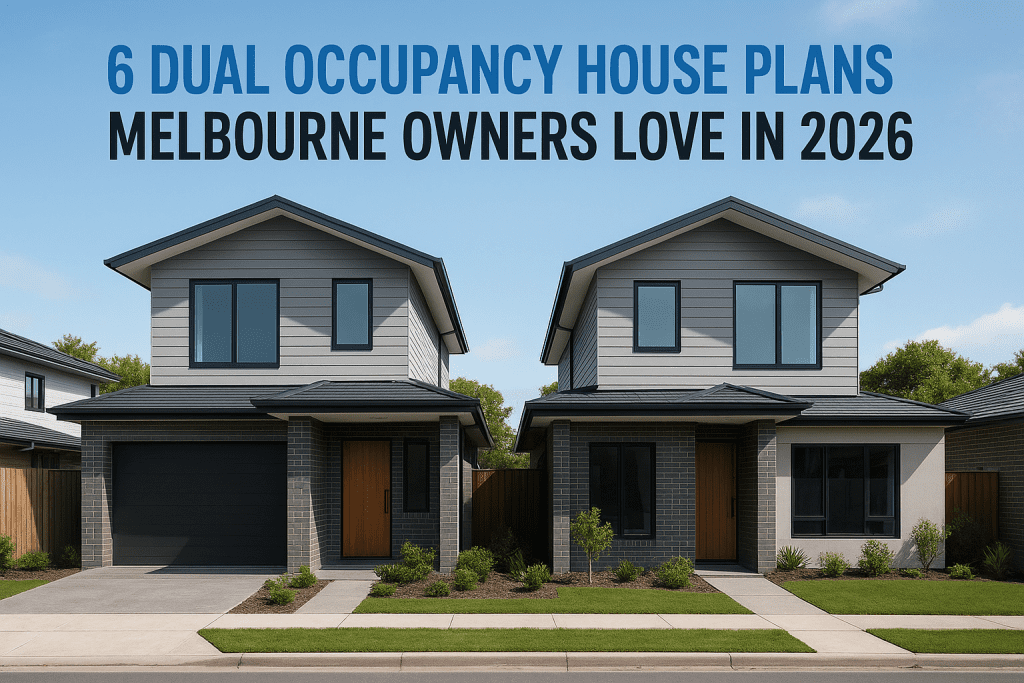
Melbourne’s property market keeps pushing homeowners and investors toward smarter ways to use their land. If you’ve been searching for dual occupancy house plans Melbourne builders actually deliver well, you’re not alone, it’s one of the most common enquiries we receive at Transformer Homes. The appeal is straightforward: two dwellings on one block, whether that means rental income, housing for extended family, or a solid return on investment. But not every floor plan suits every block. Orientation, council overlays, and neighbourhood character all shape what you can realistically build in Melbourne’s northern and western suburbs. Choosing the wrong design early on can cost you months in permit delays and thousands in redesign fees. That’s why we’ve pulled together six dual occupancy house plans that Melbourne owners are choosing right now in 2026. Each one reflects layouts and configurations we build regularly, so you’ll know exactly what’s achievable before you speak to a builder. Let’s get into them. 1. Transformer Homes side-by-side duplex plan The side-by-side duplex is the most requested layout in our dual occupancy house plans Melbourne range. Two dwellings sit next to each other on the same block, each with its own street frontage, private open space, and front entry. This structure makes subdivision and separate titling straightforward, which is why so many Melbourne owners choose it first. What this plan looks like Each dwelling in this layout typically carries two or three bedrooms, an open-plan kitchen and living zone, and a single or tandem garage at the front. The shared party wall runs down the centre of the block, keeping both floor plates roughly equal in size. You can mirror the two plans exactly or design them independently to suit different household sizes or target markets. Best block types for this layout in Melbourne Your block needs width more than depth for this plan to work well. Sites measuring at least 15 metres wide give each dwelling a comfortable frontage and room for a garage without forcing a tight, awkward entry sequence. Suburbs like Reservoir, Thomastown, and Preston regularly offer blocks in the 600 to 900 square metre range that suit this configuration. A 15-metre minimum frontage is a common trigger point for side-by-side duplex approval in Melbourne’s northern suburbs, but your local council zone may set a different threshold, so confirm this with a town planner before committing. Design choices that improve privacy and liveability Position bedroom windows away from the shared boundary to reduce overlooking issues with your immediate neighbours. A masonry party wall combined with acoustic insulation batts between the two dwellings gives each household real separation rather than just a nominal divide. Staggering the entry doors slightly also prevents the finished product from looking like a single institutional building. Key Melbourne planning checks to run early Check ResCode compliance before locking in any floor plan, particularly around side setbacks, rear setback, and private open space minimums. Your local council’s planning scheme will also flag any neighbourhood character overlay or heritage overlay that restricts wall heights, materials, or front setback distances. Build cost drivers and budget expectations The party wall and shared services connections are the two biggest cost levers in this design. Splitting a single sewer or stormwater connection internally costs less than running two separate connections to the street. For a standard two-by-three-bedroom side-by-side duplex in Melbourne’s northern suburbs, expect total build costs to sit between $550,000 and $750,000 in 2026, depending on finishes, site conditions, and council requirements. 2. Front and rear dual occupancy plan with shared driveway A front-and-rear layout places two dwellings on a single block, one behind the other, connected by a shared driveway running along one side. This is one of the most versatile dual occupancy house plans Melbourne owners choose when a side-by-side design simply won’t fit the site. What this plan looks like The front dwelling sits at street level with a conventional setback and garden, while the rear unit has its own private courtyard behind it. Both share a single driveway access point from the street, which keeps crossovers to one and simplifies council approval in most zones. When this layout beats a duplex Blocks narrower than 14 metres often rule out a side-by-side configuration altogether. A front-and-rear plan works well on longer, thinner sites of 400 to 600 square metres, which are common in suburbs like Coburg, Northcote, and Reservoir. Confirm with your council whether the rear dwelling needs a minimum private courtyard area, as requirements vary considerably across Melbourne’s northern and western planning schemes. Parking, driveway width, and turning design Your driveway needs a minimum clear width of 3 metres to satisfy most Melbourne councils, along with an adequate turning area near the rear garage. Poor turning design is one of the most frequent reasons permit applications stall, so get a traffic engineer’s input before your plans are finalised. Private open space and overlooking controls to watch The rear dwelling carries the greatest overlooking risk from upper-floor windows on the front building. Position first-floor bedroom and living windows carefully, or use screening and obscured glazing to satisfy ResCode requirements without sacrificing natural light. Build cost drivers and budget expectations Shared driveway construction and separate stormwater drainage for each dwelling are the main cost drivers in this configuration. Budget $500,000 to $700,000 for a typical front-and-rear dual occupancy in Melbourne’s northern suburbs, with site conditions and finish levels shifting the final number. 3. Corner block dual occupancy plan with separate street access Corner blocks give you something most Melbourne sites simply cannot: two separate street frontages from a single title. That extra frontage means each dwelling can have its own driveway, letterbox, and entry, making both homes feel genuinely independent rather than bolted together. What this plan looks like Each dwelling faces a different street, so residents never share an access point. One unit sits at the primary street frontage, while the second faces the side street. Both carry separate garages, private open space, and utility connections, which simplifies future subdivision into

Do I Need a Building Permit for a Deck in Victoria?
Uncategorized

Do I Need a Building Permit for a Deck in Victoria?

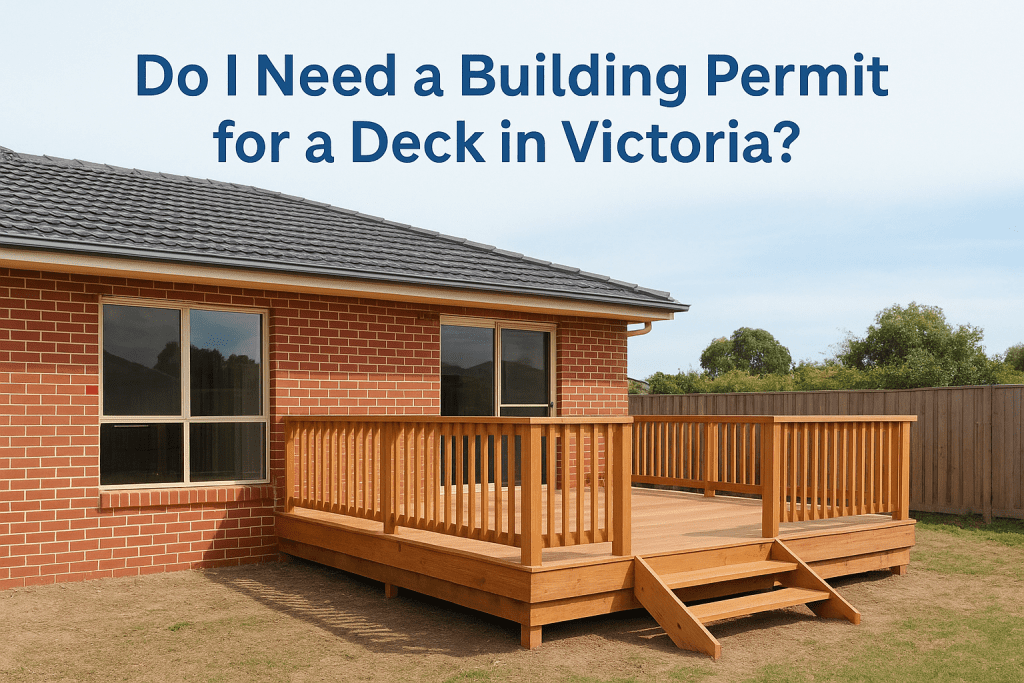
If you’re planning to add a deck to your home in Melbourne’s northern or western suburbs, one of the first questions you’ll likely ask is: do I need a building permit for a deck in Victoria? The short answer is, it depends. Factors like the deck’s height, size, and proximity to your property boundaries all determine whether you can build freely or need to go through the permit process. Getting this wrong can lead to fines, forced removal of the structure, or complications when you eventually sell your property. At Transformer Homes, we handle deck builds and home additions across Melbourne, and permit questions come up in nearly every initial conversation we have with homeowners. The rules aren’t always straightforward, and there’s a common mix-up between building permits and planning permits, two separate approvals that serve different purposes and may both apply to your project. This article breaks down exactly when a building permit is required for a deck in Victoria, what exemptions exist under current regulations, and how local council rules might add extra requirements on top of state-level legislation. We’ll also cover the practical steps to get your permit sorted so your project stays compliant from day one. Whether you’re considering a small ground-level entertaining area or a raised deck attached to your home, you’ll have a clear picture of what’s needed before any work begins. Why deck permits matter in Victoria Victoria’s building regulations exist to protect you, your family, and anyone who uses your property. Deck structures, particularly raised or attached ones, carry real structural and safety risks if designed or built without proper oversight. A permit isn’t just bureaucratic red tape; it’s a mechanism that ensures a registered building surveyor reviews your plans against the National Construction Code (NCC) and the Building Regulations 2018, which set minimum standards for structural integrity, materials, balustrade heights, and fall protection. Understanding why these rules exist makes it easier to navigate them without frustration. The legal framework behind deck regulations In Victoria, the Building Act 1993 and the Building Regulations 2018 govern most residential construction work, including decks. These laws operate at the state level, but your local council can layer additional requirements on top through its local planning scheme. When homeowners ask "do I need a building permit for a deck in Victoria?", the full answer comes from reading both layers together. State regulations set the baseline thresholds for when a permit is required, while local planning overlays can add further restrictions based on neighbourhood character, heritage overlays, or environmental sensitivity zones. These regulations also connect to consumer protections under the Domestic Building Contracts Act 1995. For any residential building work valued over $10,000 in Victoria, your builder must hold domestic building insurance (DBI), which only applies to permitted and inspected work. Builds that skip the permit process fall outside this insurance framework entirely, leaving you without cover if defects appear or the builder becomes insolvent. What happens if you skip the permit Building without a required permit puts you in a position that is difficult and expensive to recover from. Your local council holds the authority to issue a building notice or order, which can require you to alter or demolish non-compliant work at your own cost. This is not a remote possibility; councils across Melbourne’s northern and western suburbs actively respond to neighbour complaints and carry out proactive site inspections, particularly in established residential areas with higher development activity. Selling a property with an unpermitted structure is a serious problem. Conveyancers and buyers’ solicitors routinely check council records, and an undisclosed permit issue can stall or collapse a sale at the worst possible time. Retrospective permits, sometimes called "as-built" approvals, are available but come with no guarantees. A building surveyor will assess the completed structure against current standards, and if it falls short, you may need to modify or pull down sections of the deck before any approval can be granted. The cost of fixing non-compliant work after the fact almost always outweighs the time and fees involved in getting the permit right from the start. When you need a building permit for a deck Under Victoria’s Building Regulations 2018, most decks attached to or built near your home will require a building permit. The regulations do allow for some exempt structures, but those exemptions come with strict size and height limits that many residential deck projects don’t meet. If you’re asking "do I need a building permit for a deck in Victoria?", the starting point is understanding the specific thresholds that trigger the permit requirement rather than assuming your project is small enough to qualify for an exemption. If your deck connects directly to your home as a structural element, a building permit is almost always required regardless of its size. The key thresholds under Victoria’s Building Regulations 2018 Schedule 3 of the Building Regulations 2018 sets out the conditions under which a deck or similar structure can be built without a permit. Your project needs to meet all of the following criteria simultaneously to qualify for an exemption. Missing even one condition means you need a permit before any work starts. Height above ground: The finished floor level must sit no more than 800mm above the existing ground level at any point along the structure. Floor area: The total floor area must not exceed 40m², though your local council’s planning overlay may impose tighter limits on top of this. Setbacks: The structure must maintain the required minimum distance from your property boundaries as set by both state regulations and your council’s local planning scheme. Structural connection: Any deck that attaches to your home as a structural element falls outside the standard exemption and requires a permit regardless of height or area. Your project’s compliance also depends on whether footing excavation could affect neighbouring land or existing underground services. A registered building surveyor can assess your specific plans against these thresholds and confirm what approvals you need before any ground is broken. Deck, pergola,

What Is a Custom Home Builder? Costs, Process & Differences
Uncategorized

What Is a Custom Home Builder? Costs, Process & Differences

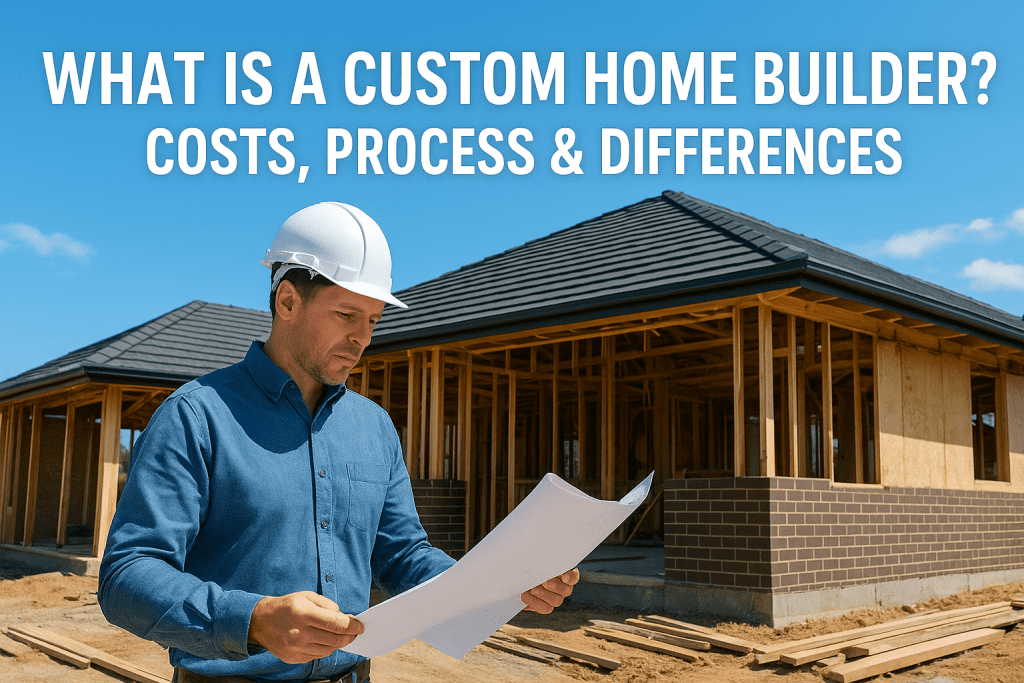
If you’ve started researching how to build a home that’s designed around your life, not a catalogue, you’ve probably asked yourself what is a custom home builder and whether it’s the right path for you. It’s a fair question, especially when the building industry throws around terms like "custom," "semi-custom," and "project home" as though they all mean the same thing. They don’t, and the differences matter more than most people realise before signing a contract. A custom home builder works with you to design and construct a home from scratch, tailored to your block, your brief, and your budget. That’s a fundamentally different process from choosing a pre-set floorplan and picking your tiles from a limited range. At Transformer Homes, we build custom-designed homes across Melbourne’s northern and western suburbs, so we see firsthand how often homeowners underestimate the gap between a volume builder and a true custom build, in cost, flexibility, and day-to-day experience. This article breaks down exactly what a custom home builder does, what the process looks like from first conversation to handover, how costs compare to volume and project builders, and where the real trade-offs sit. Whether you’re building on your own land or still weighing up your options, this guide gives you the clarity you need to make a confident decision. What a custom home builder does A custom home builder manages the entire process of designing and constructing a residential property specifically for you. When people ask what is a custom home builder, the clearest answer is this: someone who starts with a blank page and your brief, not a pre-drawn plan from a catalogue. Every decision, from the floorplan to the facade, reflects your block, your lifestyle, and your priorities. Design that starts with your block The land itself shapes everything. Orientation, slope, neighbouring structures, and council overlays all influence what’s possible before a single line is drawn. A custom builder works alongside architects and designers to develop a design that responds to your specific site, rather than forcing a generic plan onto land it was never drawn for. That site-specific approach is what separates a truly tailored home from a modified volume build. The design process isn’t about choosing from Column A or Column B. It’s about building something that wouldn’t exist without your input. Managing every part of the build Once the design is locked in, your builder coordinates the full construction process. That includes engaging and supervising subcontractors, managing the build schedule, handling council permits and inspections, and keeping you informed at each stage. A good custom builder acts as your single point of contact throughout, so you’re not chasing trades or decoding progress reports on your own. They also make decisions daily that affect quality and cost, which is why a builder’s experience and communication style matter as much as their portfolio. Selecting materials, resolving on-site issues, and maintaining build standards all sit with the builder. The depth of that responsibility is what makes choosing the right one so important. Custom vs project and volume builders Understanding what is a custom home builder becomes clearer when you place it alongside the alternatives. Project and volume builders work on a bulk model: pre-drawn plans, pre-negotiated materials, and a production-line process that keeps costs predictable. That approach suits some buyers, but it trades design flexibility for efficiency in ways you’ll feel throughout the entire build. How the two models compare The differences between custom and volume building show up across several areas that matter to your day-to-day experience: Design: Custom starts with your brief; volume starts with an existing plan Site response: Custom designs respond to your block; volume plans are adapted after the fact Variations: Custom accommodates change throughout; volume charges a premium for most modifications Communication: Custom gives you direct builder access; volume often routes you through a sales team With a project builder, the decisions are largely made before you sign, which limits your ability to respond to site conditions or shift your thinking mid-build. A custom builder keeps you involved in those decisions at every stage, which means the finished home reflects your priorities rather than a standardised brief. Choosing volume over custom isn’t always about budget. Sometimes it comes down to how much control you want over the result. Costs and what drives the price Custom homes typically cost more per square metre than volume builds, but understanding why helps you make sense of what you’re actually paying for. When people ask what is a custom home builder, cost is usually the follow-up question. The honest answer is that the price reflects the level of design work and direct involvement specific to your project. Unlike volume builders who spread design costs across hundreds of identical builds, your builder is pricing a one-off from the ground up. What pushes the price up Several factors move the final number on a custom build, and many of them sit outside the selections you make in a showroom: Site conditions: slope, rock, and poor soil all add to excavation and foundation costs Design complexity: open spans, non-standard rooflines, and high ceilings require more engineering Material selections: premium finishes, imported fixtures, and custom joinery add up quickly Council requirements: heritage overlays and planning permits carry their own costs The biggest budget surprises in custom builds usually come from the site itself, not the finishes. Getting a realistic budget Your builder should walk you through a detailed cost estimate before you commit to anything. Provisional sums and prime cost items need to be clearly identified early, so you know where the fixed costs end and the variables begin. The custom build process step by step Most people asking what is a custom home builder don’t realise how involved the process actually is. A custom build typically moves through several distinct stages, each requiring decisions from you before the next one begins. From brief to design Your builder works with you to establish a clear project brief before any drawings are

Bathroom Renovation Planning Guide: Budget, Steps & Timeline
Uncategorized

Bathroom Renovation Planning Guide: Budget, Steps & Timeline

A bathroom renovation can add real value to your home, but it can also drain your budget and patience if you go in without a plan. Whether you’re updating a tired ensuite or gutting a family bathroom in your Melbourne home, having a solid bathroom renovation planning guide makes the difference between a project that runs smoothly and one that spirals into costly surprises and delays. The truth is, most renovation headaches start before a single tile gets removed. They start with unclear budgets, skipped steps, and unrealistic timelines. Knowing what to expect, and in what order, gives you control over the process instead of the other way around. That’s something we see firsthand at Transformer Homes, where we help homeowners across Melbourne’s northern and western suburbs navigate renovations with clarity from day one. In this guide, we break down everything you need to know: how to set a realistic budget, the correct sequence of construction tasks, expected timelines, and a practical checklist to keep your project on track from design through to completion. Let’s get into it. What to decide before you start Before you contact a builder, pick tiles, or look up fixtures online, you need to make several foundational decisions that will shape every part of the project. Skipping this stage is one of the most common reasons renovations go over budget or stall mid-construction. Think of this section as your pre-renovation checklist: the decisions you lock in here will inform your budget, your timeline, and how smoothly the build runs from the first demolition day through to the final coat of paint. Know what you need versus what you want Most people start a bathroom renovation with a wish list, and there’s nothing wrong with that. The problem is when wants get treated as needs right from the start. A heated floor is a want. Fixing a leak behind the wall is a need. A freestanding bath is a want. Replacing cracked waterproofing is a need. Before you sit down with a designer or builder, write two separate lists: one for non-negotiable functional requirements and one for upgrades and aesthetic preferences. Getting clear on needs versus wants early on stops your budget from blowing out before the real work has even started. Here’s a simple template to get you started: Category Need (must fix or include) Want (would love but flexible) Waterproofing Yes, full resheet required N/A Shower Functional, code-compliant Frameless screen, rain head Vanity Replace damaged cabinet Specific brand or colour Toilet Retain existing if functional Wall-hung upgrade Flooring Non-slip compliant tiles Specific stone look Lighting Replace faulty fittings Backlit mirror, dimmers Fill this in before your first meeting with a builder, and you’ll have a much more productive conversation. Understand your bathroom’s physical constraints Your bathroom’s existing layout and condition will directly affect your renovation costs and options. Moving a toilet or relocating drainage requires a licensed plumber and often involves cutting into a concrete slab, which adds significant cost and time. If you want to keep costs down, working within the existing wet area footprint is almost always the more practical choice. Walk through your bathroom and note what you’re working with. Are the walls tiled or lined? Is there access to plumbing from a nearby cupboard or adjoining room? How old is the waterproofing membrane? In older Melbourne homes, particularly in suburbs like Preston or Northcote, it’s common to find outdated plumbing and degraded waterproofing that needs addressing before any cosmetic work begins. A pre-renovation inspection by a licensed plumber and tiler will flag these issues before they become mid-project surprises. Decide who manages the project One of the biggest decisions in any bathroom renovation planning guide is who takes the lead on coordination. You have three main options: manage the trades yourself, hire a dedicated project manager, or work with a builder who handles the full scope under one contract. Self-managing means you source and schedule your own plumber, tiler, electrician, and waterproofer independently. It can save money on paper, but trade scheduling and sequencing is genuinely complex. If one trade runs late, every trade after them gets pushed back. Gaps in scheduling can mean your bathroom sits half-demolished for weeks. Working with a builder like Transformer Homes means one point of contact handles the coordination, compliance checks, and quality control across all trades. For most homeowners renovating in Melbourne’s northern and western suburbs, this approach reduces stress and protects against the delays that come from trying to juggle multiple contractors at once. Decide early which model suits your capacity and experience, because it will shape how you approach budgeting and planning in the steps ahead. Step 1. Set your budget and scope Budget is where most bathroom renovations fall apart. People pick a number, often based on a rough figure they’ve seen online, then discover mid-project that their scope was far bigger than their budget allowed. Getting this step right means being honest about what you can spend and matching your scope to that number before you commit to anything. Work out what a bathroom renovation actually costs In Melbourne, bathroom renovation costs vary significantly depending on the size of the space, the condition of existing plumbing and waterproofing, and the quality of fixtures and finishes you choose. As a starting point, a basic bathroom update (new fixtures, tiling, and fittings within the existing layout) typically starts around $10,000 to $15,000. A mid-range renovation with quality products and some layout changes sits between $15,000 and $30,000. A full, high-end renovation with premium fixtures and structural changes can exceed $40,000. Your budget should always include a contingency of at least 10 to 15% for unexpected issues like deteriorated waterproofing, outdated plumbing, or structural surprises behind the walls. Renovation Level Typical Cost Range (AUD) What’s Included Basic update $10,000 – $15,000 Like-for-like fixtures, retiling, no layout changes Mid-range $15,000 – $30,000 Quality fittings, layout options, full resheet High-end $30,000 – $50,000+ Premium fixtures, structural changes, custom finishes Define your scope before

8 Questions To Ask A Custom Home Builder Before You Sign
Uncategorized

8 Questions To Ask A Custom Home Builder Before You Sign

Choosing someone to build your home is one of the biggest financial decisions you’ll make, and one of the hardest to reverse. The right builder will turn your vision into something real. The wrong one will cost you time, money, and sleep. That’s why knowing the right questions to ask a custom home builder matters more than any glossy brochure or display home walkthrough. The answers you get (and sometimes the ones you don’t) will tell you everything about how that builder operates. At Transformer Homes, we build custom homes across Melbourne’s Northern and Western suburbs, and we’ve seen firsthand what happens when homeowners sign contracts without doing their homework. Skipped questions lead to surprise costs, drawn-out timelines, and relationships that break down before the frame goes up. We’d rather you ask us tough questions upfront, and we’d rather you ask every other builder on your shortlist the same ones. A builder worth hiring will welcome the scrutiny. Here are eight questions you should ask any custom home builder before you put pen to paper, and what to look for in their responses. 1. Are you a fit for my project? Before you get into costs and timelines, you need to know whether the builder in front of you actually builds homes like yours. This question is one of the most important questions to ask a custom home builder, and it sets the tone for everything that follows. A specialist in high-end custom builds thinks differently to a volume builder who pumps out 200 homes a year. What to ask the builder Ask directly: "What types of projects do you specialise in, and have you completed homes similar to mine in terms of size, style, and site conditions?" Follow that with: "Can you show me recent examples, and can I speak to those clients?" You want specific answers, not general claims about versatility. Why this question matters Builders who work outside their expertise cut corners they don’t even recognise as corners. A builder experienced in dual occupancy townhouses in Melbourne’s inner north understands soil conditions, council requirements, and typical site challenges in ways a generalist simply does not. Matching the builder’s strengths to your project type reduces risk significantly. Fit matters more than price. A builder who knows your project type will price it accurately, manage it efficiently, and flag problems before they become costly surprises. What a strong answer sounds like A confident builder will point you to a portfolio of comparable work and offer to connect you with past clients without hesitation. At Transformer Homes, for example, we build custom homes and dual occupancy projects across Melbourne’s Northern and Western suburbs, and we welcome those conversations because our completed work speaks for itself. Red flags to watch for Watch out for builders who pivot quickly away from your specific project type and start talking about all the different things they can do. Vague answers like "we build all kinds of homes" without any supporting examples suggest limited relevant experience. If they can’t name a comparable project, treat that as a warning. What to confirm in writing Before you sign, ask for a written list of comparable completed projects with addresses you can visit or verify. Confirm the builder’s licence covers the specific class of work your project falls under, and get the names and contact details of at least two recent clients with similar builds. 2. Are you registered and properly insured? This question is non-negotiable for any residential build in Victoria. All domestic builders must hold a valid registration with the Victorian Building Authority (VBA), and any residential building work valued over $16,000 must be covered by Domestic Building Insurance (DBI). Skipping this verification puts your project, your home, and your money at serious risk. What to ask the builder Ask directly: "Can you provide your VBA registration number and confirm your Domestic Building Insurance is in place for my project?" Follow that up by asking whether their subcontractors carry their own public liability insurance, because uninsured work completed on your site becomes your legal and financial problem if something goes wrong. Why this question matters Unregistered builders operate illegally in Victoria, and any contract you sign with one may be unenforceable. Without DBI, you have no financial protection if the builder becomes insolvent, abandons the job, or passes away mid-build. Your registration and insurance checks take under 10 minutes and can save you hundreds of thousands of dollars. What a strong answer sounds like A legitimate builder will give you their VBA registration number without hesitation and encourage you to verify it directly on the VBA website. They will also confirm that DBI is arranged before work begins, as the law requires. Red flags to watch for Be cautious if a builder hesitates or deflects when asked for their registration number, or claims insurance details will get sorted later. Both are serious warning signs that should stop you from proceeding. What to confirm in writing Record the VBA registration number and a DBI certificate of currency in your contract before you sign anything. 3. Who will manage my build day to day? The person who sells you the build is rarely the person who runs it. On large-volume operations, a single supervisor may juggle ten or more active sites simultaneously. Knowing exactly who is accountable for your project on the ground, before you sign, is one of the most practical questions to ask a custom home builder. What to ask the builder Ask directly: "Who will be my dedicated site supervisor, and how many other projects will they be managing at the same time?" Then ask how frequently they will be on your site in person, and who you contact if an issue comes up outside business hours. Why this question matters Day-to-day site management determines your build quality as much as any specification in the contract. A stretched supervisor misses problems, delays subcontractors, and passes those costs on to you. Clear lines of communication

What Is an Energy Efficient Home? Design, Costs & Benefits
Uncategorized

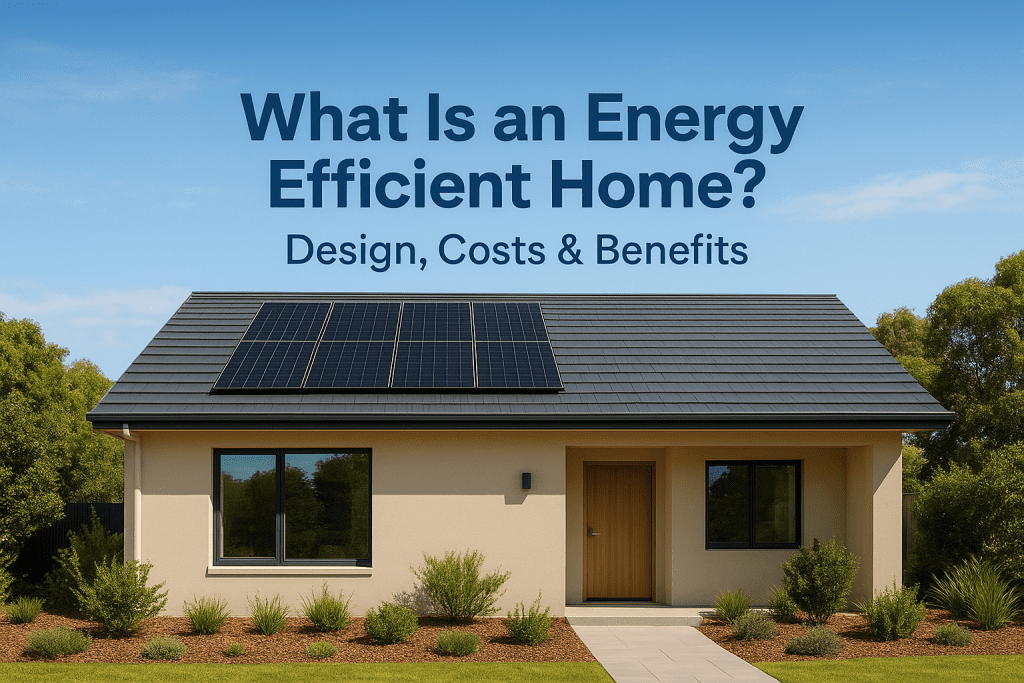
What Is an Energy Efficient Home? Design, Costs & Benefits

If you’ve searched what is an energy efficient home, chances are you’re already thinking about building or renovating smarter, not just for lower bills, but for a home that genuinely works better. An energy efficient home is a dwelling designed to use less energy for heating, cooling, lighting, and daily operation, without sacrificing comfort. It achieves this through a combination of passive design principles, quality insulation, airtight construction, and high-performance systems. For homeowners across Melbourne’s Northern and Western suburbs, energy efficiency isn’t a nice-to-have, it’s becoming essential. Rising energy costs and stricter building regulations (including NatHERS energy rating requirements) mean that every design decision, from window placement to wall insulation, directly affects how your home performs for decades. Whether you’re planning a custom new build, a dual occupancy project, or a full home renovation, these choices matter from day one. At Transformer Homes, we build energy efficiency into every project from the design stage, not as an afterthought or an upgrade package. This article breaks down exactly what makes a home energy efficient, the core design elements involved, realistic costs, and the long-term benefits you can expect when you get it right. What an energy efficient home means in Australia When you ask what is an energy efficient home in the Australian context, the answer goes beyond general principles. In Australia, energy efficiency in residential construction is measured and regulated through specific standards that apply directly to how homes are designed and built. The climate you build in, whether it’s Melbourne’s cool winters and warm summers or the tropical north, fundamentally shapes what an efficient home looks like in practice. The NatHERS rating system Australia uses the Nationwide House Energy Rating Scheme (NatHERS) to measure the thermal performance of new homes. NatHERS assigns a star rating from 1 to 10, with 10 representing a home that needs almost no artificial heating or cooling to stay comfortable. Since May 2024, the National Construction Code (NCC) requires new homes to achieve a minimum 7-star NatHERS rating, up from the previous 6-star requirement. For most Melbourne builds, hitting 7 stars means deliberately designing for the local climate, not just meeting minimum insulation specs. A higher NatHERS star rating directly reduces your reliance on heating and cooling systems, which typically account for over 40% of household energy use in Victoria. What counts as efficient under Australian standards Beyond thermal performance, Australian energy efficiency standards also cover the whole-home energy budget, which includes lighting, hot water systems, and fixed appliances. Under the NCC 2022 framework, builders must demonstrate that a home meets either a performance pathway or a deemed-to-satisfy solution. Practical elements like ceiling insulation R-values, glazing specifications, and draught sealing all contribute to the final rating and determine whether your home qualifies. For Melbourne homeowners specifically, this means your builder needs to account for the city’s temperate climate zone, which sits in Climate Zone 6 under the Australian climate classification. A well-designed home in this zone minimises heat loss in winter through proper insulation and orientation, while using shading and cross-ventilation to manage summer heat gain. Getting these fundamentals right at the design stage is far more cost-effective than trying to retrofit solutions after construction is complete. Why energy efficiency matters for your home Understanding what is an energy efficient home is useful, but knowing why it matters helps you make better design choices from the start. Energy efficiency directly affects your household budget, your daily comfort, and the long-term value of your property. For Melbourne homeowners, where energy prices have risen sharply over the past decade, a well-designed home delivers real, measurable savings every year. Lower bills and long-term savings Heating and cooling account for roughly 40% of energy use in the average Victorian home. When your home is properly insulated, sealed, and oriented, it holds warmth in winter and stays cooler in summer without overworking your systems. The result is significantly lower energy bills, often hundreds of dollars per year, that compound into genuine long-term savings over the life of the building. Homes achieving a 7-star NatHERS rating typically use 25-30% less energy for heating and cooling than a standard 6-star build. Comfort and liveability A thermally efficient home maintains stable internal temperatures throughout the day, which means fewer cold spots in winter and less reliance on air conditioning in summer. Your systems run less frequently, which extends their lifespan and reduces maintenance costs over time. Better air quality is another practical benefit you gain from a well-designed home. Controlled ventilation reduces draughts and condensation, which cuts the risk of mould forming on walls and ceilings. For families with young children or anyone with respiratory sensitivities, this makes a meaningful difference to everyday health and wellbeing. The core features of an energy efficient home Understanding what is an energy efficient home starts with knowing which physical elements actually drive performance. No single feature makes a home efficient on its own. The combination of passive design, a tight building envelope, and high-performance systems working together is what separates a genuinely efficient home from one that simply has a solar panel on the roof. Passive design and the building envelope Orientation, shading, and thermal mass are the foundations of passive design. In Melbourne’s Climate Zone 6, a north-facing living area captures winter sun for free warmth, while correctly sized eaves block summer sun when the angle is high. Double-glazed windows with low-emissivity coatings reduce heat transfer through the glass, keeping warmth in during winter and heat out during summer. The building envelope, your walls, roof, floor, and windows, determines up to 70% of how much heating and cooling your home will need over its lifetime. Ceiling insulation at R4.0 or above, combined with wall insulation and sealed penetrations around pipes and light fittings, stops conditioned air from escaping. Draught sealing around doors, windows, and exhaust fans is one of the cheapest and most effective steps a builder can take during construction. High-performance systems Your hot water system and space conditioning equipment contribute significantly

Scroll to Top