Melbourne’s Premier Custom Home Builders and Remodelers

visit our location by appointment:

Live Innovations 153 High Street,
Thomastown VIC. 3074

Opening Hours:

Mon-Fri 8am-5pm

Author name: adminbackup

Building Surveyor Fees Victoria: Costs, Levies & Inclusions
Uncategorized

Building Surveyor Fees Victoria: Costs, Levies & Inclusions

Before any construction project kicks off in Victoria, you need a building permit, and that means hiring a building surveyor. Whether you’re planning a new home build, a renovation, or a dual occupancy development, building surveyor fees Victoria are one of those early costs that catch people off guard. Understanding what you’re actually paying for helps you budget properly from day one. At Transformer Homes, we guide our clients through every stage of the building process across Melbourne’s Northern and Western suburbs. That includes helping you understand the fees and levies that sit outside the construction contract itself, like building surveyor costs, DBDRV levies, and permit lodgement charges. This article breaks down what building surveyors charge in Victoria, what’s included in those fees, the government levies that get added on top, and how costs vary depending on the size and complexity of your project. No guesswork, just clear numbers and practical context. What a building surveyor does in Victoria A building surveyor in Victoria is a licensed professional who makes sure your construction project complies with the Building Act 1993 and the National Construction Code. They work independently of your builder, which means their role is to protect both you and the broader community by ensuring the work is structurally sound, safe, and legally compliant. You can appoint either a private building surveyor or use the municipal building surveyor attached to your local council, though most residential projects in Victoria use a private surveyor because of the faster turnaround times and more direct communication they offer. Issuing and managing your building permit Before your builder breaks ground, your building surveyor reviews your plans and documentation to determine whether your project qualifies for a building permit. They check items like structural engineering reports, energy efficiency assessments, and compliance with any planning permit conditions. Once they are satisfied that everything stacks up, they issue the permit, which is the legal authority that allows construction to begin. Without this step, no work can legally start on site, and any work carried out without a valid permit can create serious complications when you go to sell or insure the property down the track. When you understand what the building surveyor is actually authorising at each step, you start to see why building surveyor fees Victoria are a necessary line item in your project budget, not an optional extra. Inspecting construction at mandatory stages Your building surveyor does not disappear after they issue the permit. They carry out mandatory inspections at defined stages of construction to confirm the work on site matches the approved plans and meets code requirements. For a standard new home build in Victoria, these stages typically include the footings, frame, and final inspection. Each stage must be signed off before the next phase of construction legally proceeds. Failing an inspection means your builder must rectify the issue before work continues, which is exactly the kind of independent oversight that protects your investment. At the end of the project, your building surveyor issues either an occupancy permit or a certificate of final inspection, both of which you need before you can legally occupy the building or include it in any future property transaction. Why fees vary across projects No two projects attract the same building surveyor fees Victoria because no two projects carry the same level of risk, documentation, or inspection requirements. The fee a surveyor quotes reflects the actual work involved in assessing and overseeing your specific build, so understanding what drives that figure helps you compare quotes more accurately. Project size and construction value Construction value is one of the most significant factors in how a surveyor calculates their fee. A larger, more expensive project means more plans to review, more engineering documentation to assess, and typically more mandatory inspection stages to carry out. A single-storey extension on an existing home sits at a very different price point to a dual occupancy development on a single block, even if both are located in the same suburb. Surveyors are not just charging for their time; they are pricing in the liability they take on by certifying that your project meets the required standards. Complexity and site conditions Structural complexity also pushes fees higher. Projects involving unusual soil conditions, steep or sloping sites, heritage overlays, or non-standard construction methods require more detailed review and often involve additional consultants whose reports the surveyor must assess. A straightforward slab-on-ground home in a flat suburban street is far simpler to process than a split-level build on a site with significant fall or flooding risk. Your surveyor needs to account for all of these variables when setting their fee, so always provide full site details when requesting quotes. Typical building surveyor fee ranges in Victoria Building surveyor fees Victoria sit across a fairly wide band depending on the factors covered in the previous section, but having rough figures in mind helps you set a realistic budget before you request formal quotes. For most residential projects, surveyors calculate their base fee as a percentage of the total construction value, typically ranging from 0.5% to 1.5%, though some firms use fixed-fee structures for straightforward work. Getting two or three quotes from private building surveyors is standard practice and often worth the effort, as fees for identical projects can differ by several hundred dollars. New home builds and dual occupancy For a new single-dwelling home with a construction value of around $500,000, you can generally expect a building surveyor fee in the range of $2,500 to $5,000. Dual occupancy and townhouse developments attract higher fees because of the added complexity involved in certifying two or more separate dwellings. A two-unit development on a single block in Melbourne’s Northern or Western suburbs might attract fees from $4,000 to $8,000 or more, depending on the surveyor and the site conditions. Renovations and home additions Smaller projects like kitchen extensions, bathroom additions, or single-storey rear extensions typically attract fees starting from around $1,200 to $2,500 for straightforward work. More involved renovations
7 Rear Home Extension Ideas For Better Indoor-Outdoor Flow
Uncategorized

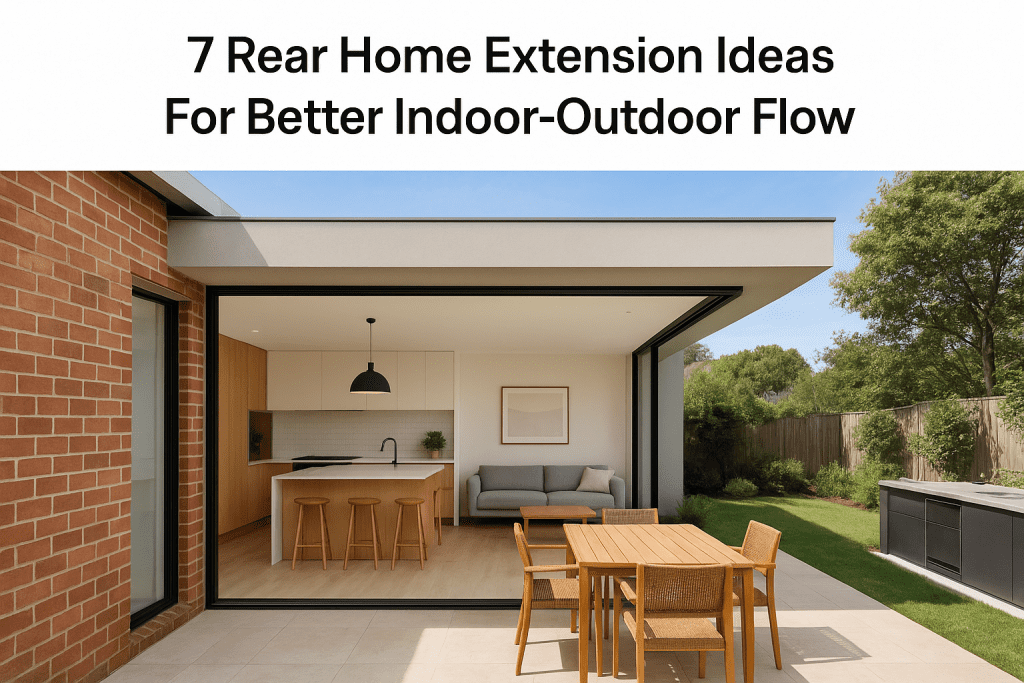
7 Rear Home Extension Ideas For Better Indoor-Outdoor Flow

Most homes across Melbourne’s northern and western suburbs share a common trait, the backyard feels like a separate space rather than an extension of the house. A wall, a sliding door, maybe a small patio. That’s it. If you’ve been searching for rear home extension ideas, chances are you already sense that your home’s back end isn’t pulling its weight. You want more space, sure, but you also want that seamless connection between inside and out that makes a home feel twice its size. The good news? A well-designed rear extension can deliver exactly that. Whether you’re working with a compact block in Preston or a wider lot in Thomastown, extending off the back of your house opens up options that side or front extensions simply can’t match, direct garden access, northern light, and living areas that spill naturally into outdoor entertaining spaces. At Transformer Homes, we’ve designed and built rear extensions across Melbourne that do more than add square metres. They fundamentally change how families use their homes. Below, we’ve put together seven practical extension concepts that prioritise indoor-outdoor flow, each drawn from real design approaches we use on our projects. Whether you’re after a full open-plan kitchen-living area or a modest bump-out that reframes your backyard, you’ll find something here worth exploring. 1. Custom open-plan rear extension A custom open-plan rear extension is the most popular format when Melbourne homeowners start exploring rear home extension ideas in earnest. It removes the wall separating your kitchen, dining, and living areas and pushes the footprint of the house out toward the backyard, creating one large, connected space that feels open from the moment you walk through the door. What it is This type of extension replaces a cluttered sequence of small rooms at the rear of your home with a single, flowing space that typically combines kitchen, dining, and a living zone. The new structure attaches directly to the back of the existing house, with the rear wall replaced by full-height glazing or stacking doors that open directly to the garden or alfresco area. Design details that improve indoor-outdoor flow The key to making this work is the transition between inside and out. Flush floor levels between the internal slab and the external patio eliminate the visual break that separates the two spaces. Combine that with large sliding or bi-fold doors across the full rear wall and the boundary between inside and outside effectively disappears when the doors are open. Matching your internal and external floor materials, such as using the same tile indoors and on the patio, reinforces the sense of one continuous space rather than two separate areas. Best suited to Open-plan rear extensions suit homes with a reasonable rear setback and a backyard that receives decent northern or western afternoon sun. They work particularly well on older Melbourne homes in suburbs like Preston or Northcote, where the original rear rooms are dark and disconnected from the garden. Budget and build notes in Melbourne A custom open-plan rear extension in Melbourne typically starts around $180,000 to $220,000 for a mid-range build, depending on size and finishes. You’ll also need to factor in planning permits, which most residential zones require if the extension exceeds certain height or setback limits. A registered builder can assess your site and flag what approvals apply before you commit to anything. 2. L-shaped rear extension that creates a courtyard An L-shaped rear extension takes the standard bump-out concept and adds a wing that runs along one side of the backyard, forming a natural courtyard between the new structure and the garden. This layout gives you significantly more floor space than a straight extension while doing something the single-run format can’t: it defines an outdoor room without fencing it in. What it is This extension style wraps around two sides of your outdoor space, creating a sheltered courtyard that sits at the junction of the two wings. One leg typically houses kitchen and dining, while the other holds a lounge, study, or extra bedroom depending on your needs. Design details that improve indoor-outdoor flow The courtyard itself becomes the focal point. Glazed doors or large windows on both internal faces of the L mean you look out into the courtyard from multiple rooms simultaneously, pulling the outside in from two directions at once. Position the courtyard on the northern side of the L wherever possible to capture maximum sun throughout the day. Best suited to This layout suits wider blocks where a straight extension would feel like a tunnel. Suburbs like Glenroy or Pascoe Vale with generous rear setbacks are strong candidates for this particular rear home extension idea. Budget and build notes in Melbourne Expect to pay $230,000 to $290,000 for a well-built L-shaped extension in Melbourne, reflecting the additional footings, roofline complexity, and glazing involved. 3. Glazed rear extension with skylights A glazed rear extension prioritises natural light above all else. Where other extension styles focus on expanding floor area, this approach transforms how light moves through your home by replacing solid walls with glass panels and overhead skylights that flood the interior throughout the day. What it is This extension attaches to the rear of your home and uses structural glazing on the rear wall and roof to create a light-filled addition. Skylights sit within the roofline itself, pulling daylight deep into the space even when the external doors are closed. Design details that improve indoor-outdoor flow The glazed rear wall works similarly to bi-fold or sliding doors, but it frames the garden view year-round regardless of the weather. Overhead skylights eliminate the shadowing that standard extensions create on adjacent rooms, keeping your existing living areas bright rather than cutting off their light source. Specify thermally broken aluminium frames for your skylights to minimise heat loss in winter and reduce condensation. Best suited to This style suits homes on south-facing blocks where northern sun is limited at ground level, and properties where neighbouring structures cast shadows across the rear. It’s one

13 Main Bathroom Renovation Ideas For Modern Melbourne Homes
Uncategorized

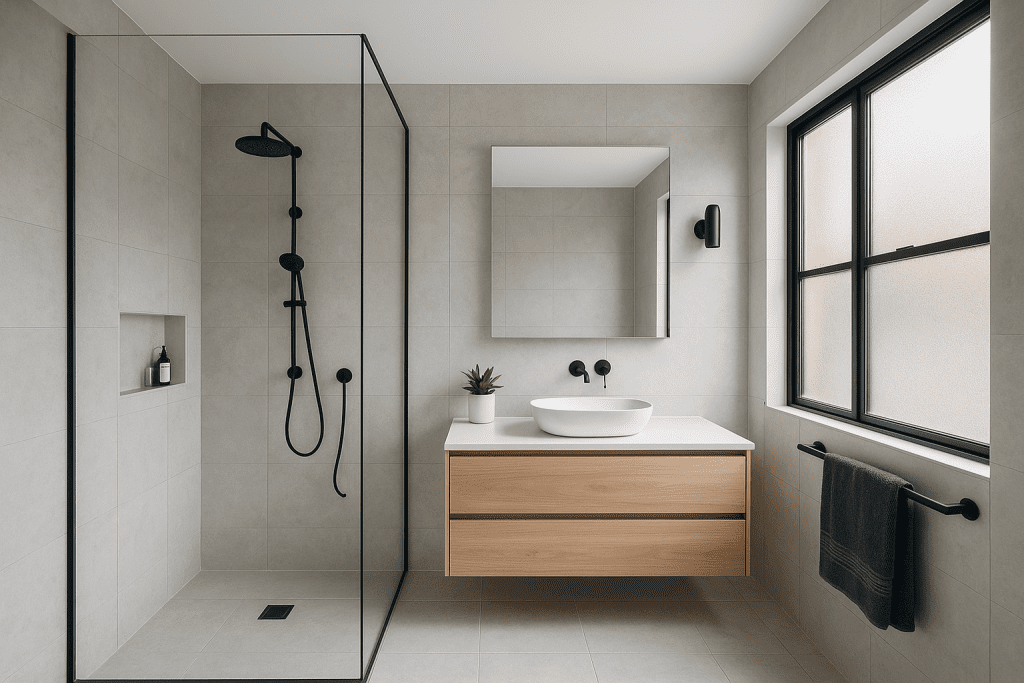
13 Main Bathroom Renovation Ideas For Modern Melbourne Homes

Your main bathroom does more heavy lifting than any other room in the house. It’s where your day starts and ends, yet it’s often the last space to get any real attention. If you’ve been searching for main bathroom renovation ideas that actually suit Melbourne homes, not just recycled Pinterest boards from overseas, you’re in the right place. The good news: a well-planned bathroom renovation can completely change how your home feels without the cost or disruption of a full rebuild. At Transformer Homes, we’ve renovated bathrooms across Melbourne’s Northern and Western suburbs for years. We’ve seen what works in real Melbourne homes, from compact Northcote terraces to larger family builds in Thomastown. That hands-on experience shapes every idea on this list. These aren’t generic suggestions; they’re grounded in what we’ve built, what our clients love, and what holds up over time. Below, we’ve pulled together 13 practical and stylish ideas to guide your next main bathroom project. Whether you’re after a full gut-and-redo or a smart refresh that stretches your budget, you’ll find options worth considering. From layout choices and tile trends to storage solutions and fixture upgrades, each idea is tailored for the kind of homes we work on every day. Let’s get into it. 1. Plan it with a design and build team Starting a bathroom renovation without a clear plan is one of the most expensive mistakes you can make. Working with a design and build team from the beginning means your ideas, your budget, and your timeline all move in the same direction from day one. This is especially true for main bathroom renovation ideas that involve layout changes, structural work, or anything beyond a simple cosmetic refresh. What this idea changes in a main bathroom A design and build approach changes the entire process of how your bathroom takes shape. Instead of hiring a designer separately and then finding a builder, you work with one team that handles both. This removes the gap where miscommunication usually happens, and it means your design is always grounded in what’s actually buildable within your space and budget. This matters because decisions made on paper are far cheaper to change than decisions made on site. A combined team catches structural limitations, waterproofing requirements, and council considerations early, before those issues cost you time or money mid-build. Design choices that suit modern Melbourne homes Melbourne homes, particularly in the Northern and Western suburbs, often come with constraints that generic plans don’t account for, including narrow layouts, older plumbing configurations, or heritage overlays that affect what you can modify. A local design and build team understands these conditions and steers you toward finishes, layouts, and fixtures that work with your home’s structure rather than against it. Working with a team that already knows Melbourne’s building environment means fewer surprises once work begins on site. Budget and timeframe expectations For a full main bathroom renovation with a design and build team, expect to invest between $20,000 and $40,000 depending on size, finishes, and the extent of structural changes. Timeframes typically run six to twelve weeks from design sign-off to completion, though solid upfront planning can shorten this considerably. Renovation scope Estimated cost Typical timeframe Cosmetic refresh $8,000 to $15,000 2 to 4 weeks Full renovation, layout retained $20,000 to $30,000 6 to 8 weeks Full renovation, layout changed $30,000 to $40,000+ 8 to 12 weeks Mistakes to avoid before you start The biggest mistake people make is jumping straight to fixtures and finishes before locking in a solid design brief. Without a clear scope, costs increase quickly as decisions get made on site rather than on paper. Also avoid signing contracts that separate design and construction into two unrelated agreements, as this is typically where budget overruns and timeline blowouts begin. 2. Keep plumbing in place where you can Moving plumbing is one of the fastest ways to blow a bathroom budget. When you shift drains, pipes, or waste lines, you’re paying for labour, re-routing, and often patching up floors and walls afterward. If your main bathroom renovation ideas include a fresh layout, check first whether the existing positions actually cause a problem, because sometimes they don’t. What this idea changes in a main bathroom Keeping your wet areas, toilet, and vanity in roughly the same positions reduces the cost and complexity of your renovation significantly. Trades work faster, waterproofing is more straightforward, and you’re less likely to uncover unexpected issues inside walls or subfloors mid-project. Design choices that suit modern Melbourne homes Most Melbourne bathrooms, particularly in older homes in Preston, Northcote, and Reservoir, have plumbing on external or shared walls. Working within those positions doesn’t limit your design as much as you’d think. You can still update tiles, fixtures, storage, and lighting while keeping the structural layout intact. The biggest visual transformation usually comes from what’s on the surface, not where the pipes sit. Budget and timeframe expectations Renovating without relocating plumbing can keep your total project cost 20 to 30 percent lower than a layout change requires. A straightforward refresh with plumbing in place typically runs between $15,000 and $22,000 for a full main bathroom, with a shorter programme of four to six weeks. Mistakes to avoid before you start Don’t assume you need to move anything before a plumber has inspected your current setup. Many homeowners pay to shift plumbing unnecessarily because they didn’t get advice early enough. Ask your builder to assess the existing configuration before committing to a new floor plan. 3. Build a walk-in shower wet zone A walk-in shower wet zone is one of the most popular main bathroom renovation ideas for good reason. Removing the screen or enclosure opens up your bathroom visually and makes cleaning far simpler. If your current shower feels cramped or dated, this single change can make the entire room feel newer and larger without altering the footprint. What this idea changes in a main bathroom A wet zone replaces your framed or semi-frameless shower screen with

Dual Occupancy vs Granny Flat: Key Differences In Victoria
Uncategorized

Dual Occupancy vs Granny Flat: Key Differences In Victoria

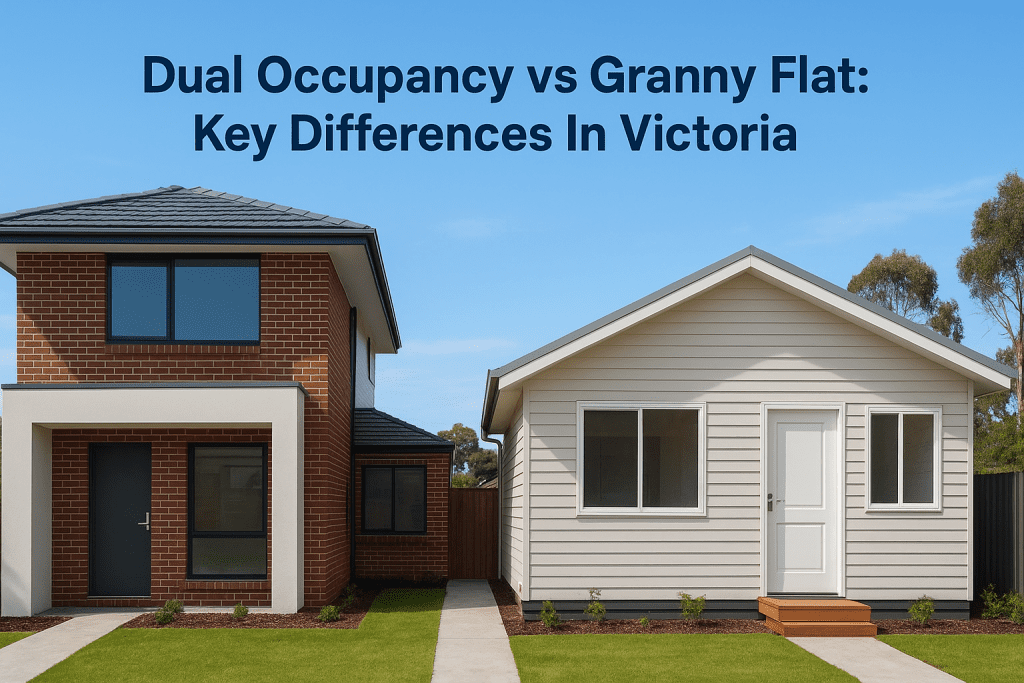
If you own a block of land in Melbourne and want to make more of it, you’ve probably weighed up dual occupancy vs granny flat at some point. Both options let you add a second dwelling to your property, but they sit in very different categories under Victorian planning rules, and that distinction affects everything from what you can build to what it’s worth down the track. A granny flat (or dependant person’s unit) comes with specific restrictions on size, occupancy, and resale. A dual occupancy, on the other hand, creates two fully independent homes that can each be separately titled and sold. The right choice depends on your goals, your site, and how much flexibility you need. Getting this wrong can mean wasted time, money, and planning applications that lead nowhere. At Transformer Homes, we design and build dual occupancy developments across Melbourne’s northern and western suburbs. We’ve helped property owners in areas like Northcote, Preston, and Thomastown navigate exactly this decision. This guide breaks down the legal definitions, cost differences, planning requirements, and investment potential of each option so you can figure out which one actually makes sense for your property, before you commit to a path that doesn’t align with your end goal. What dual occupancy and granny flat mean in Victoria Understanding these two options starts with the legal definitions used in Victoria, because what each term means here is not what you might assume from common usage. Many people treat them as interchangeable when they are actually two fundamentally different categories under planning law, with different rules, restrictions, and outcomes attached to each. What a granny flat is under Victorian law In Victoria, a granny flat is formally known as a dependant person’s unit (DPU). The planning scheme defines it as a movable building on the same lot as an existing dwelling, intended for occupation by a person who is dependent on the main dwelling’s occupants, such as an elderly parent or adult child needing close support. The key word in that definition is "movable": the structure must be capable of being removed from the site. This classification carries significant limitations that catch many property owners off guard. The unit cannot be separately sold or titled, and it must remain genuinely connected to the main home in terms of occupancy. If the dependant occupant leaves and no replacement who fits the definition moves in, the dwelling may no longer comply with your permit conditions. Understanding this restriction before you start planning saves a lot of wasted time and money. A dependant person’s unit in Victoria cannot be subdivided or sold separately from the main dwelling, making it unsuitable if your goal is long-term investment or equity release. What a dual occupancy is under Victorian law A dual occupancy means two separate dwellings on a single lot, either positioned side by side or stacked on top of each other. Unlike a DPU, each dwelling functions as a fully independent home with its own entry, utilities, and living spaces. There is no requirement that the occupants share any family relationship or even know each other. The defining advantage of dual occupancy is the ability to subdivide the land under the Subdivision Act 1988 (Vic), which lets you create two separate titles. Once you have two titles, you can sell one dwelling independently, rent both, or live in one and use the rental income from the other to offset your mortgage. That flexibility is what makes dual occupancy the stronger choice for most property investors and owner-occupiers with a long-term financial goal. How these definitions shape your decision When you compare dual occupancy vs granny flat, the legal definitions alone tell you a great deal about which path fits your situation. A DPU is designed for a specific family circumstance, and the planning system treats it accordingly. A dual occupancy is treated as a residential development, which means more process upfront but considerably more freedom once the project is complete. Your block size, zone, and local council overlay also affect which option is even available to you. Not every property in Melbourne’s northern and western suburbs qualifies for dual occupancy development, and not every situation calls for a DPU either. The definitions are your starting point, but your specific site conditions and long-term goals are what ultimately determine which path makes sense to pursue. Why the difference matters for cost and approvals The distinction between a DPU and a dual occupancy is not just a technical label. It determines which planning pathway your project follows, how much you spend to get approval, and what the finished development is actually worth. Choosing the wrong option for your situation can add months to your timeline and tens of thousands of dollars to your costs before a single slab is poured. How the planning process differs A dependant person’s unit typically requires a straightforward permit from your local council. Because the planning scheme treats a DPU as an ancillary structure rather than a full residential development, the assessment process is generally faster and less document-heavy than what a dual occupancy requires. That said, the DPU pathway closes the door on subdivision entirely, so speed at the approval stage comes at the cost of long-term flexibility. A dual occupancy application triggers a full planning permit process, which often includes neighbour notification, council assessment against your zone’s ResCode requirements, and sometimes referral to other authorities. Dual occupancy planning permits in Victoria require your design to satisfy ResCode standards, covering setbacks, overlooking, overshadowing, and private open space. If your block sits within an overlay such as a Neighbourhood Character Overlay or a Significant Landscape Overlay, additional requirements apply and assessment times increase. This is where working with an experienced builder who understands the local planning environment saves you real money. What this means for your budget When you compare dual occupancy vs granny flat costs, the dual occupancy route involves higher upfront spending across permits, design, and construction. However, the ability to subdivide

What Is a Heritage Impact Statement? Purpose & Inclusions
Uncategorized

What Is a Heritage Impact Statement? Purpose & Inclusions

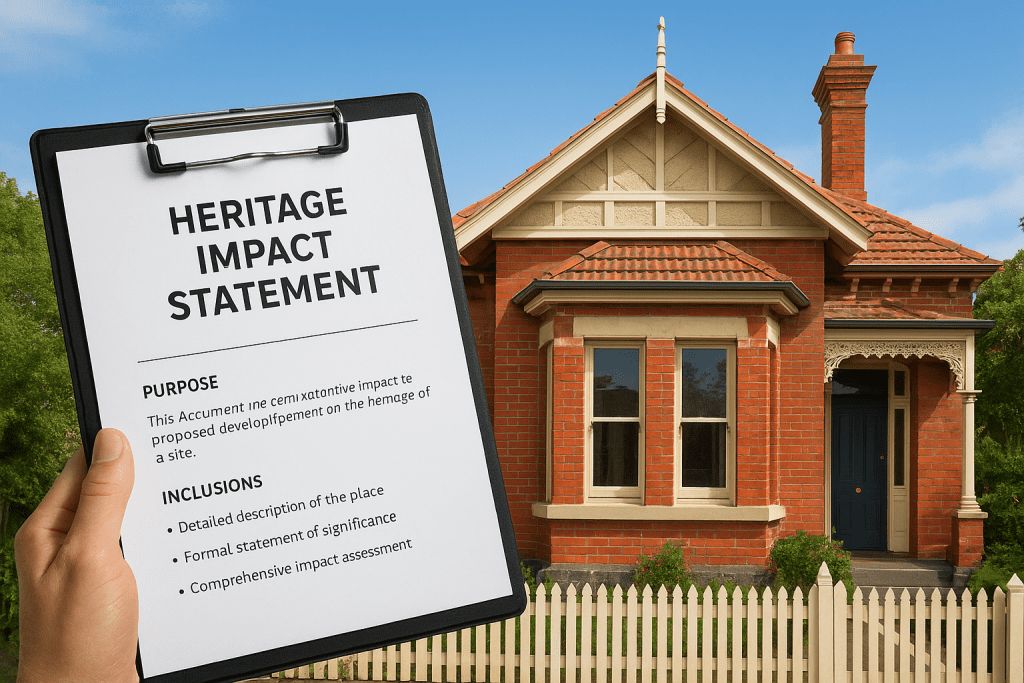
If you’re planning to renovate, extend, or build near a heritage-listed property in Melbourne, you’ll likely need to understand what is a heritage impact statement before submitting your development application. It’s one of those documents that can stall an entire project if you get it wrong, or skip it altogether. Many homeowners in suburbs like Northcote, Preston, and Thornbury encounter this requirement for the first time and aren’t sure where to start. A heritage impact statement (sometimes called a Statement of Heritage Impact) is a formal document that assesses how your proposed works will affect a place with heritage significance. Local councils across Melbourne require it as part of the planning permit process, and it carries real weight in whether your application gets approved or refused. At Transformer Homes, we regularly work with clients on renovations and new builds in heritage overlay areas, so we’ve seen firsthand how important it is to get this step right early. This article breaks down the purpose of a heritage impact statement, what it needs to include, and the practical steps involved in preparing one for your council submission. Whether you’re adding a rear extension or planning a full home transformation, this guide will help you understand exactly what’s expected before you lodge your application. Why heritage impact statements matter in planning A heritage impact statement does more than satisfy a council checkbox. It demonstrates to the relevant planning authority that you’ve genuinely assessed the heritage significance of a place and considered how your proposed works fit within that context. Understanding what is a heritage impact statement helps you see why it carries real weight in the planning process. Without it, your planning permit application is likely to be returned incomplete, adding weeks or months to your project timeline. A heritage impact statement is often the document that determines whether a council planner recommends approval or refusal of your application. How councils use your statement in decision-making When a council planner reviews your application, the heritage impact statement is one of the primary documents they use to assess impact. They look at whether your proposal respects the character, fabric, and setting of the heritage place. If your statement is vague or fails to address specific heritage values, the planner may request additional information or issue a refusal without further review. In Victoria, Heritage Overlay provisions under the Planning and Environment Act 1987 give councils authority to assess and control works to heritage places. The statement you submit needs to align with the guidelines set out by Heritage Victoria and your local planning scheme. Getting this alignment right early means fewer back-and-forth requests and a smoother path to permit approval. Why skipping it costs more in the long run Some homeowners assume that a small rear addition or minor internal change won’t trigger the heritage statement requirement. In practice, even modest alterations to a heritage-listed property or a property within a heritage overlay can require a full statement. Discovering this after lodging your application means delays, additional professional fees, and in some cases, a refused permit that needs to be appealed. Engaging a heritage consultant at the start of your project protects both your budget and your timeline. When you need one in Victoria In Victoria, the Planning and Environment Act 1987 and local planning schemes set out exactly when a heritage impact statement is required. The short answer is: if your property sits within a Heritage Overlay, you’ll almost certainly need one before council will assess your planning permit application. Understanding what is a heritage impact statement helps you identify this requirement early rather than after you’ve already submitted your application. Properties within a Heritage Overlay Your council’s planning scheme maps show whether your property falls within a Heritage Overlay (HO). This applies to individually heritage-listed properties as well as those located within a precinct-wide overlay, where surrounding buildings contribute to the recognised character of an area. You can check your property’s overlay status through your council’s online planning portal or the Victorian Government’s Planning Maps Online tool. Works that commonly trigger the requirement Not every job requires a full statement, but most external alterations and significant internal works to an overlaid property do. Common triggers include: Rear or side extensions Demolition of any original fabric New dwellings on heritage-affected land Alterations to rooflines, facades, or original windows Construction of outbuildings visible from the street When in doubt, contact your council’s heritage planner before lodging anything. What a heritage impact statement must include Understanding what is a heritage impact statement also means knowing exactly what content it needs to contain. Heritage Victoria and local councils expect a structured document that addresses the heritage values of the place and evaluates the impact of your proposed works against those values. A vague or incomplete statement is one of the most common reasons councils request more information, which adds weeks to your permit timeline. Your statement needs to do more than describe your proposal; it must actively assess the impact against identified heritage values. Core components councils expect Most councils in Victoria require your statement to cover a consistent set of elements, regardless of the scale of your project. Your heritage consultant will typically structure the document around the following: Description of the place: history, original fabric, and current condition Statement of significance: what heritage values the place holds and why Description of proposed works: what you intend to do and where Impact assessment: how the works affect the identified heritage values Mitigation measures: steps taken in your design to minimise harm to significant fabric Each section builds on the last, giving the council planner a clear and complete picture of your project within its heritage context. How the process works from brief to approval Once you understand what is a heritage impact statement and confirm you need one, the process follows a clear sequence of steps from initial brief through to council approval. Most projects move through this process in four to six weeks, assuming

5-Step Home Extension Checklist For Melbourne Renovations
Uncategorized

5-Step Home Extension Checklist For Melbourne Renovations

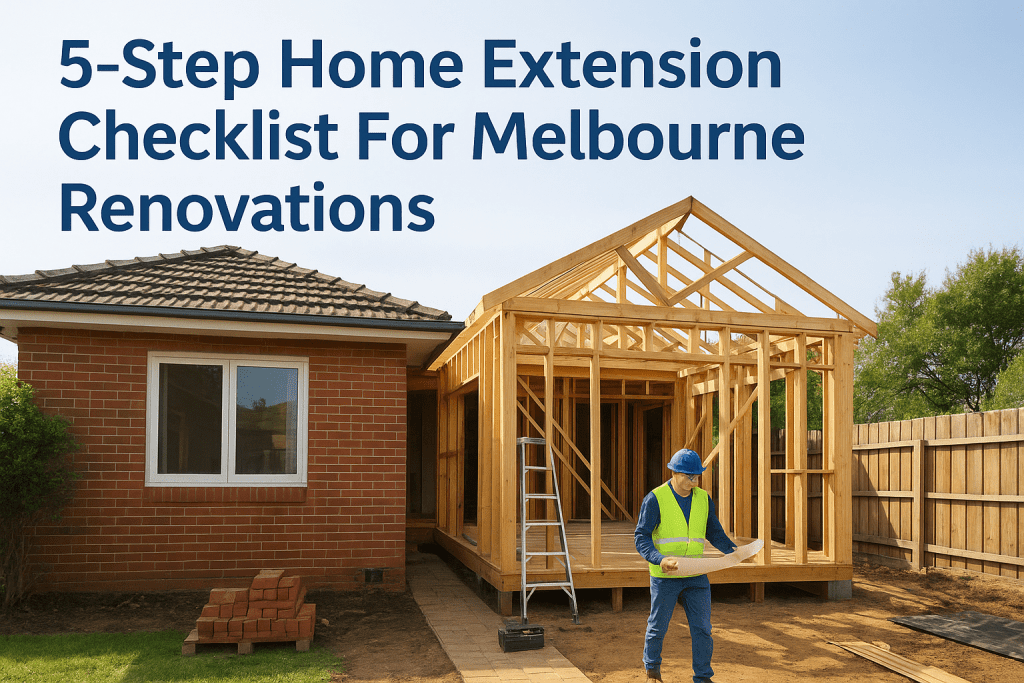
Planning a home extension in Melbourne involves dozens of moving parts, budgets, permits, designs, timelines, and trades all need to line up before a single wall goes up. Miss one step and you’re looking at costly delays, rejected permits, or a finished result that doesn’t match what you had in mind. That’s exactly why having a solid home extension checklist matters. It keeps your project organised and gives you control over every major decision from day one. At Transformer Homes, we’ve guided homeowners across Melbourne’s Northern and Western suburbs through extensions of all sizes, from rear additions in Northcote to full second-storey builds in Preston. We’ve seen what happens when preparation is thorough, and what goes wrong when it isn’t. That hands-on experience is baked into every step of this guide, so you can move forward with clear expectations and fewer surprises. Below, we’ve broken the entire process into five practical steps that cover budgeting, design, council approvals, construction, and final handover. Whether you’re extending your family home or adding a new living zone, this checklist will help you stay on track and avoid the mistakes that catch most Melbourne homeowners off guard. 1. Engage the right Melbourne extension team The first item on your home extension checklist is assembling the right team. Who you hire shapes every decision that follows, including your design options, your permit pathway, and your final build cost. Decide if you need an architect, designer, or design and build An architect suits complex or heritage-sensitive projects where custom design is critical. A design-and-build firm like Transformer Homes handles both the drawings and the construction under one contract, which simplifies communication and reduces the risk of scope gaps. Confirm builder registration, insurance, and extension experience Always verify that your builder holds a current registration with the Victorian Building Authority (VBA) and carries domestic building insurance. Ask specifically about their extension track record in Melbourne’s Northern and Western suburbs, where site conditions and council requirements vary considerably. Checking VBA registration takes two minutes at vba.vic.gov.au and protects you from unlicensed work that can void your insurance. Bring in the right consultants early Depending on your site, you may need a structural engineer, geotechnical assessor, or heritage consultant before design can progress. Bringing these specialists in early prevents costly redesigns and keeps your programme moving without interruption. Define your scope before anyone prices the job Write down what rooms you want, the approximate size, and your preferred finishes before approaching builders for quotes. A clear brief means every quote prices the same job, which makes comparisons accurate and meaningful. Fast checks for Melbourne sites and existing homes Pull your Certificate of Title to check for easements and overlays before your first design meeting. Your local council’s planning portal will show zoning rules and setback requirements that directly affect what you can build on your block. 2. Set a realistic budget and finance plan The second step on your home extension checklist is establishing a realistic budget before design begins. A clear financial plan prevents scope creep and keeps your project on solid ground from the start. Build a budget that matches your goals and site constraints Melbourne extensions generally cost $2,500 to $4,500 per square metre, depending on complexity and finishes. Site conditions such as slope or poor soil can add significant costs before construction even begins. Include soft costs that people forget Permits, engineering reports, and design fees can add 10 to 15 percent to your total project cost. Always budget for surveying, energy assessments, and council contributions to get an accurate overall figure. Leaving soft costs out creates a false sense of affordability before a single trade steps on site. Set a contingency you can actually access Reserve at least 10 percent of your total budget as a contingency. That money must be liquid and accessible, not locked in equity you cannot draw on quickly. Plan cash flow and progress payments Victorian contracts use staged progress payments tied to construction milestones. Confirm each payment trigger upfront so your cash flow aligns with the build schedule. Avoid overcapitalising in your suburb Research recent comparable sales before committing to a large extension. Spending beyond the suburb price ceiling risks not recovering your investment when you sell. 3. Secure permits and approvals in Victoria The third step on your home extension checklist is navigating Victoria’s permit system without delays or rejected applications. Work out if you need a planning permit, building permit, or both Most Melbourne extensions require a building permit, and many also need a planning permit depending on your zone, overlay, or street setback. Confirm both requirements with your local council before you finalise any drawings. Check overlays, easements, and title restrictions early Your Certificate of Title and your council’s planning portal reveal easements, heritage overlays, and neighbourhood character controls that directly limit what you can build and where. Discovering a heritage overlay after your design is complete means redoing drawings at your own cost, so check your title on day one. Prepare drawings and reports councils commonly expect Planning applications typically require architectural drawings with site analysis, shadow diagrams, and neighbourhood character statements. Building permit submissions also need a structural engineer’s report and an energy assessment. Handle neighbours and boundary conditions the right way Boundary setbacks and overlooking provisions under ResCode govern what you can build near a shared fence. Notifying adjoining neighbours before you lodge reduces the risk of formal objections slowing your approval. Know what can delay approvals and how to reduce risk Incomplete applications are the leading cause of permit delays in Victoria. Submit a complete, well-prepared package the first time and follow up with your council regularly to keep your application progressing. 4. Lock in your contract and get the site ready The fourth step on your home extension checklist is signing a solid contract and preparing your property before construction starts. Compare quotes on a like-for-like basis Review every quote against the same scope and specifications. A lower price often

How To Manage A Home Renovation Project: Start To Finish
Uncategorized

How To Manage A Home Renovation Project: Start To Finish

You’ve decided to renovate. Maybe it’s a dated kitchen in your Northcote weatherboard, or a full rear extension on your Preston home. Either way, you’re now facing the real question: how to manage a home renovation project without it blowing out in cost, time, or stress. It’s a fair concern, and one we hear from homeowners across Melbourne’s north and west every single week. The truth is, most renovation headaches don’t come from bad tradespeople or unexpected site conditions. They come from poor planning and unclear processes at the start. A renovation without a management plan is just a series of expensive surprises. At Transformer Homes, we’ve built and renovated hundreds of homes across Melbourne, and we’ve seen firsthand what separates a smooth project from a painful one. That experience is exactly what shaped this guide. We’re going to walk you through every stage of managing a renovation, from setting a realistic budget and locking in a timeline, through to coordinating trades, handling approvals, and keeping the whole thing on track. Whether you’re managing the project yourself or working alongside a builder, this is the practical, start-to-finish roadmap you need before a single wall gets touched. What you must manage and why it matters Understanding how to manage a home renovation project properly starts with knowing what "managing" actually covers. Most homeowners think about tiles and tapware, but they forget about council permits, trade sequencing, and cash flow. A renovation involves five interconnected areas, and if any one of them drifts, the whole project feels it. Getting across all five before work starts is what separates a controlled renovation from a reactive one. The five moving parts of every renovation Every residential renovation, whether it’s a bathroom update in Thornbury or a full rear extension in Preston, involves the same core areas you need to stay across consistently. Area What it covers Scope What work is being done, to what standard, and what is excluded Budget All costs including materials, labour, permits, and contingency Schedule When each trade starts and finishes, and how they depend on each other Quality Whether the work meets the specification, the building code, and your expectations Communication How decisions get made, who is responsible for what, and how issues get resolved These five areas don’t operate independently. A delay in your schedule will affect your budget. A gap in your scope will affect your quality. Managing a renovation means keeping all five in view at once, not just the one sitting in front of you that week. Why one overlooked area can derail the whole project Consider a common scenario in Melbourne’s northern suburbs: you’ve signed a contract, your builder starts on site, and three weeks in you realise the electrical upgrade was never included in the scope of works. The sparky can’t rough-in until it’s sorted. The plasterer is now waiting. Your timeline has shifted by two weeks, and that delay triggers a variation cost you weren’t budgeting for. Suddenly your contingency is gone before the frame is even complete. The moment you stop actively managing one area of your renovation, it starts managing you. This is not an unusual story. It’s a pattern that traces back almost every time to a planning gap at the start. The fix is rarely more money. It’s a clearer process before the first trade sets foot on your property. The difference between managing and just watching There’s a real distinction between actively managing your renovation and simply turning up on site occasionally to check what’s been done. Managing means you understand the next two weeks of work before they happen. You’ve confirmed material deliveries are booked. You know which trade follows which, and why the order matters. Watching means you find out about problems after they’ve already cost you time or money. Your level of involvement will vary depending on whether you’re owner-building, working with a dedicated project manager, or using a full-service builder like Transformer Homes. But regardless of who holds the formal role on your project, you need to understand what active management looks like. That knowledge lets you hold the right people accountable and make informed decisions when issues surface. Problems will come up on every renovation, without exception. The difference between a project that handles them smoothly and one that spirals comes down to whether someone is paying consistent, deliberate attention to all five moving parts, from the day planning starts right through to final inspection and handover. Define your renovation brief and priorities Before you talk to a builder, designer, or anyone else, you need a written renovation brief. This is the single document that captures what you want to achieve, why you’re renovating, and what your non-negotiables are. Without it, every conversation you have with a trade or designer starts from scratch, and you’ll keep making decisions reactively rather than from a clear position. Write down what you actually need versus what you want Most homeowners mix up needs and wants from the start, and that confusion drives scope creep and budget blowouts. A need is functional: you need a second bathroom because your family has outgrown one. A want is preferential: you want that second bathroom to have a freestanding bath. Both are valid, but they sit in different categories when you’re learning how to manage a home renovation project and making trade-off decisions under pressure later. Use this simple template to separate them: Category Example Must have Second bathroom, open-plan kitchen, structural wall removed Should have Ensuite off main bedroom, butler’s pantry Nice to have Heated floors, skylight, feature tiling Out of scope Landscaping, external repaint, new driveway Knowing what sits out of scope is just as important as knowing what sits in scope. Set your priorities before you speak to anyone Once you’ve separated needs from wants, rank your three most important outcomes for this renovation. Is it adding a bedroom before your second child arrives? Improving liveability before you sell in two years? Reducing energy costs

Australian Building Codes Board National Construction Code
Uncategorized

Australian Building Codes Board National Construction Code

Every home built or renovated in Australia must comply with a single, unified set of technical standards. The Australian Building Codes Board National Construction Code (NCC) is that standard, a document that governs everything from structural integrity and fire safety to energy efficiency and accessibility. Whether you’re planning a new custom build, a dual occupancy project, or a kitchen renovation in Melbourne’s northern suburbs, the NCC directly shapes what can and can’t be done on your site. At Transformer Homes, we work with the NCC every day. It informs our design decisions, our material selections, and our construction methods across every project we deliver. Understanding this code isn’t just our job, it’s something every homeowner benefits from knowing, especially before signing a building contract. When you understand the rules your builder operates under, you’re in a stronger position to ask the right questions and make informed choices. This article breaks down what the NCC is, who publishes it, what it covers, and how it applies to residential construction in Victoria. We’ll walk you through its structure, recent updates that affect home builds, and what compliance actually looks like in practice, so you’re not left guessing when your project gets underway. What the ABCB and the NCC are The Australian Building Codes Board (ABCB) is an intergovernmental body jointly funded by the Australian Government and each state and territory government. Its core responsibility is to develop and maintain the National Construction Code, which sets the minimum performance requirements for the design and construction of buildings across Australia. The ABCB doesn’t conduct inspections or enforce the code on building sites. That responsibility sits with local councils and state-based building authorities. The ABCB focuses specifically on writing, updating, and publishing the standards that every licensed builder, private building surveyor, and designer must follow. The role of the ABCB The ABCB operates under an Intergovernmental Agreement, which means its work is backed by every level of government in Australia. This structure gives the code genuine weight: when the ABCB updates a requirement, that change flows through to building regulations in Victoria, New South Wales, Queensland, and every other state and territory. The board draws on technical experts, industry stakeholders, and public consultation rounds before finalising any changes, which means updates reflect current construction practices and emerging priorities like sustainability and accessibility. Beyond writing the code, the ABCB also publishes a wide range of supporting materials, including handbooks, compliance guides, and advisory notes. These resources help builders, certifiers, and designers interpret and apply requirements correctly in real situations, particularly when a performance-based solution is being used instead of a prescriptive one. The National Construction Code (NCC) The australian building codes board national construction code is a single, nationally consistent document that covers all building work in Australia. It’s divided into three volumes: Volume One addresses Class 2 to 9 buildings (commercial, multi-residential, and public buildings), Volume Two covers Class 1 and 10 buildings (houses, garages, sheds, and similar structures), and Volume Three deals specifically with plumbing and drainage systems. For residential construction in Victoria, Volume Two is the key reference point, covering minimum standards for everything from structural framing and foundations through to waterproofing, glazing, and energy performance. For most homeowners, the NCC operates in the background throughout a project. Your builder and building surveyor reference it constantly to ensure every system and element in your home meets the minimum performance requirements. The code doesn’t always prescribe a specific product or method. Instead, it defines outcomes: your home must withstand certain structural loads, achieve a minimum energy rating, and protect occupants from specific hazards. How you meet those outcomes can vary, which is why qualified builders and designers have genuine flexibility in how they choose to comply on any given project. Why the NCC matters for Australian homes The NCC sets the minimum acceptable standard for any building work completed in Australia. For homeowners, this matters because it establishes a legal baseline that every licensed builder must meet, whether they’re constructing a new home in Thomastown or adding a second storey to a property in Preston. Without this baseline, there would be no consistent way to assess whether a building is safe, energy efficient, or structurally sound across different states and territories. Protecting your investment and your safety When a building surveyor issues an occupancy permit at the end of your project, they’re confirming that your home meets or exceeds every applicable NCC requirement. This matters far beyond the construction phase. If you ever sell, refinance, or insure your property, compliance documentation directly affects your asset’s value. A home built or renovated without proper NCC compliance can face costly rectification orders and complications at the point of sale. A building that meets NCC requirements is not just legally sound, it’s built to protect the people living in it from structural failure, fire, and health hazards. Your safety is the code’s core purpose. Requirements around structural loads, fire separation, waterproofing, and ventilation all exist to reduce the risk of harm to occupants. These aren’t bureaucratic formalities. They reflect decades of research and incident data that shaped the current form of the australian building codes board national construction code. Energy efficiency requirements Since NCC 2022, residential buildings in Victoria must achieve a minimum 7-star NatHERS energy rating, a significant step up from the previous 6-star standard. This change directly affects the design decisions your builder and designer make early in the project, including: Insulation levels in walls, ceilings, and underfloor Glazing specifications such as double glazing or low-e coatings Building orientation to maximise passive solar gain Understanding this requirement before your design is finalised gives you the best chance of meeting the code without unnecessary cost increases later in the process. How the NCC is structured and updated The australian building codes board national construction code is divided into three volumes, each covering a distinct category of building work. Volume One applies to Class 2 through 9 buildings, including apartments, commercial premises, and public buildings. Volume

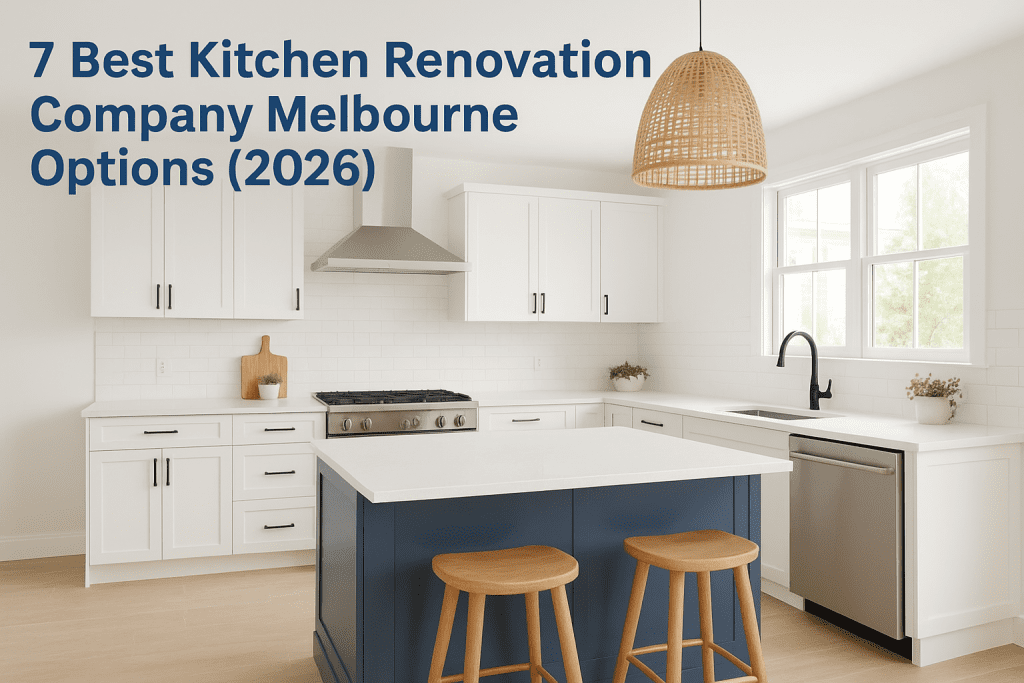
7 Best Kitchen Renovation Company Melbourne Options (2026)
Uncategorized

7 Best Kitchen Renovation Company Melbourne Options (2026)

Choosing a kitchen renovation company Melbourne homeowners can actually trust is harder than it should be. Between vague quotes, cookie-cutter designs, and builders who ghost you mid-project, the search can feel like a full-time job. Your kitchen is the most-used room in the house, getting the renovation right matters. The good news? Melbourne has no shortage of skilled renovation companies, but they’re not all built the same. Some specialise in high-end custom work, others focus on fast turnarounds or budget-friendly packages. Knowing what each company does best, and where they fall short, saves you from expensive regrets. The key is matching your priorities (design style, budget, timeline) with a builder whose strengths align. As a residential construction and renovation company based in Melbourne’s north, we at Transformer Homes have spent years working alongside, and occasionally competing with, many of the companies on this list. That hands-on experience gives us a grounded perspective on what separates a good kitchen renovation from a great one. Below, we’ve compiled seven of Melbourne’s strongest options to help you make a confident, informed decision. 1. Transformer Homes Transformer Homes is a Thomastown-based residential builder that handles kitchen renovations as part of broader home improvement and construction projects. While many companies on this list focus exclusively on kitchens, Transformer Homes brings a whole-of-home perspective that suits homeowners who want their kitchen to integrate seamlessly with a wider renovation or extension. Services and renovation approach Transformer Homes takes a fully managed approach to kitchen renovation, coordinating design, trades, and materials under one roof. Rather than handing you a catalogue and stepping back, the team works through your brief in detail and develops a custom design tailored to your specific space and lifestyle. The company’s Titanium Difference philosophy means inclusions and finishes consistently exceed what volume builders deliver as standard. If you’re renovating a kitchen as part of a larger addition or remodel, having a single builder manage the entire scope significantly reduces coordination headaches. Best fit and project types Transformer Homes suits homeowners in Melbourne’s Northern and Western suburbs who are undertaking a comprehensive renovation rather than a simple cosmetic refresh. The company handles projects where the kitchen sits within a broader scope, such as a home extension, second storey addition, or full home remodel. If you own your land and want to redesign your entire floor plan around a new kitchen layout, this builder has the capacity and experience to manage that complexity from start to finish without handoffs to separate contractors. Typical budget and timeline Kitchen renovations through Transformer Homes sit in the mid-to-high budget range, reflecting the custom design work and quality inclusions involved. A standalone kitchen renovation typically runs between 6 and 12 weeks once construction begins, with additional time upfront for design, council permits where required, and material lead times. Questions to ask before you sign Before committing to any kitchen renovation company Melbourne homeowners should put these questions directly to the builder: What does your project management process look like from design through to handover? How do you handle variations if the scope changes mid-project? Who are your key subcontractors, and do you use the same trades consistently? Can you provide references or examples of kitchen renovations similar in scale to mine? 2. Rosemount Kitchens Rosemount Kitchens is a Melbourne-based kitchen design and installation specialist with showrooms that let you see materials, cabinetry, and finishes in person before locking in any decisions. Services and renovation approach Rosemount manages the complete process from design consultation through to installation, with their team guiding you through cabinetry selections, benchtop options, and hardware choices in a physical showroom setting. This hands-on approach works particularly well for clients who find it difficult to visualise a finished kitchen from digital renders alone. Reviewing physical samples under real lighting conditions helps you avoid costly finish mismatches once the renovation is complete. Best fit and project types Their model suits homeowners who want a dedicated kitchen specialist rather than a general builder handling multiple trades across a broader scope. Rosemount’s strength sits with mid-range to full kitchen redesigns where the primary focus is cabinetry, layout reconfiguration, and finishes rather than significant structural changes to the home. Typical budget and timeline As a kitchen renovation company Melbourne homeowners frequently compare, Rosemount generally operates in the mid-range budget bracket. Most projects move from design sign-off to completed installation within 4 to 8 weeks, though lead times on custom cabinetry can extend this depending on your selections. Questions to ask before you sign Do you manage plumbing and electrical trades directly, or subcontract them? What warranty applies to cabinetry and installation workmanship? Will you conduct a site measure before providing a final quote? 3. Mint Kitchen Group Mint Kitchen Group is a Melbourne-based kitchen renovation specialist focused on delivering modern, functional kitchen designs for residential homes. Their model centres on a streamlined design-to-install process that keeps the project moving without unnecessary handoffs between separate contractors. Services and renovation approach The company handles the full renovation scope, covering cabinetry, benchtops, splashbacks, and appliance integration from a single point of contact. Their design team works with you upfront to develop a layout that maximises storage and workflow, rather than simply replacing what was already there with updated finishes. Rethinking your layout at the same time as your finishes gives you far better long-term functionality than a cosmetic-only update. Best fit and project types Mint Kitchen Group suits homeowners looking for a contemporary aesthetic and a clear, predictable process. Their work fits well with mid-size kitchen renovations where the primary goal is a complete design refresh rather than structural changes to walls or load-bearing elements. Typical budget and timeline As a kitchen renovation company Melbourne residents regularly compare in the mid-range bracket, Mint Kitchen Group typically completes projects within 6 to 10 weeks from design approval to final installation. Costs vary depending on your material selections and kitchen footprint. Questions to ask before you sign Do you handle trades coordination directly, or does the

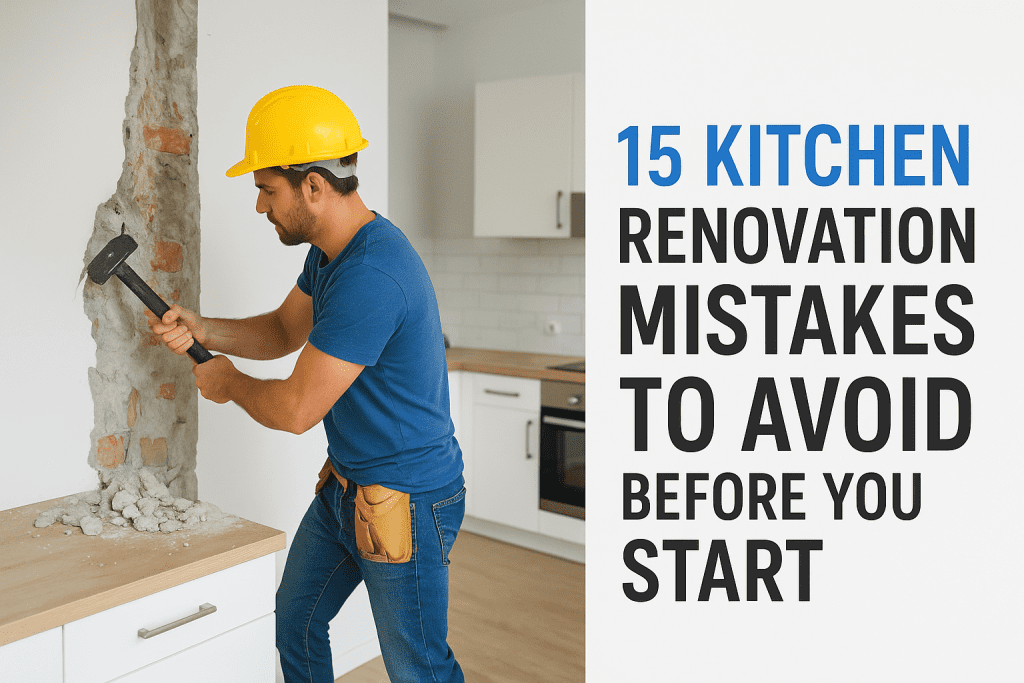
15 Kitchen Renovation Mistakes To Avoid Before You Start
Uncategorized

15 Kitchen Renovation Mistakes To Avoid Before You Start

A kitchen renovation is one of the biggest investments you’ll make in your home, and one of the easiest to get wrong. From blown budgets to layouts that look great on paper but fail in practice, the kitchen renovation mistakes to avoid are often the ones you don’t see coming until you’re mid-build and it’s too late to course-correct. For homeowners across Melbourne’s northern and western suburbs, where older homes often need thoughtful updates, getting it right the first time matters. At Transformer Homes, we’ve guided countless Melbourne homeowners through kitchen remodels, and we’ve seen firsthand what happens when planning falls short. Poor ventilation choices, undersized benchtops, cheap cabinetry that doesn’t last, these aren’t rare horror stories. They’re common problems that come up project after project. The good news? Nearly all of them are preventable with the right knowledge before you pick up a hammer or sign a contract. This guide covers 15 of the most frequent kitchen renovation mistakes we encounter, along with practical advice to help you sidestep each one. Whether you’re planning a full gut renovation or a targeted upgrade, this is the checklist you’ll want to read before anything else. 1. Picking a builder after you have locked in the design Many homeowners treat the builder as the last piece of the puzzle, someone you bring in once the plans are drawn, the materials are selected, and the design is signed off. This sequence feels logical, but it’s actually one of the most costly kitchen renovation mistakes to avoid. When your builder has no input on the design, you end up with a kitchen drawn by people who won’t be held accountable for building it. Why it happens Most people start their renovation journey with inspiration, magazine tearouts, showroom visits, and saved photos. They find a kitchen designer or architect, get excited, and lock in a design before they’ve even thought about who will do the build. The design process feels creative and enjoyable, while finding a builder feels like a task you can handle later. The problem is that later often becomes too late, and by then you’re already committed to drawings that may not be buildable within your budget. How to avoid it Bring your builder into the conversation as early as possible, ideally before the design is finalised. A good builder will flag practical issues with a layout, point out where drawings don’t match what’s physically achievable, and give you a realistic cost picture before you’ve committed to anything. This matters especially in older Melbourne homes, where walls often hide load-bearing structures, asbestos sheeting, or plumbing that runs in awkward positions. Getting your builder involved before you lock in the design saves you from paying to redraw plans, change materials, or reverse work that was never buildable in the first place. Running your design past a builder early doesn’t mean losing creative control. It means your creative decisions stay grounded in reality, so you’re not redesigning on the fly once the build has already started and costs are climbing. Specs and questions to ask your team Before you sign off on any plans, sit down with your builder and work through these specifics: What is the structural condition of the walls you plan to move or remove? Are the proposed plumbing and electrical locations achievable without major relocation costs? What are the lead times on the materials and appliances included in the design? Does the design account for the existing ceiling height, floor levels, and window positions? Which design choices carry the highest risk of triggering unexpected cost variations once work begins? 2. Demolishing before you finalise plans and approvals Starting demolition before your plans are approved and permits are secured is one of the most common kitchen renovation mistakes to avoid. Acting too early can stall the whole project, force costly rework, and in some cases attract attention from your local council. Why it happens The excitement of finally starting a long-overdue renovation pushes many homeowners to act before the paperwork catches up. Demo work feels productive, and waiting on councils or certifiers can stretch for weeks. Some people also assume that because they’re working inside their own home, permits aren’t required. In Victoria, that’s often not the case, particularly where plumbing, structural changes, or electrical work are involved. How to avoid it Treat approvals as part of the build timeline, not a separate box to tick after you’ve already started. Book your builder and certifier early so the approval stage runs in parallel with your design finalisation rather than after it. This keeps the project moving without forcing you to demo walls before anyone has confirmed what’s actually behind them. Starting demolition without confirmed approvals is one of the fastest ways to turn a six-week renovation into a six-month one. Specs and questions to ask your team Before any demolition begins, get clear written answers on the following: Does your project require a building permit under Victorian building regulations? Has your builder arranged an inspection of any walls marked for removal? Are there asbestos, gas lines, or plumbing behind surfaces scheduled for demolition? Has council sign-off been confirmed in writing before physical work starts? 3. Designing a layout that fights your daily workflow A kitchen can look stunning in a render and still fail you every single day you use it. Layout decisions that ignore how you actually move through the space rank among the most common kitchen renovation mistakes to avoid, because you live with the consequences long after the build is complete. Why it happens Most people design a kitchen based on aesthetics first, choosing the look they want before thinking through how they’ll cook, clean, and move around. Designers who skip questions about your daily habits often default to layouts that photograph well rather than function well. How to avoid it Start by mapping your actual kitchen habits before you touch a floor plan. Think about where you unpack groceries, how you move between the fridge, sink,

Scroll to Top